Coolant level should always be checked by simply looking at the level in the overflow tank. If there is a coolant leak, the level in the tank will drop as the coolant is drawn back into the radiator. If there is no coolant visible in the tank, the coolant level needs to be checked by removing the radiator cap. Also, if there are indications that the engine is overheating, it is wise to check the level in the radiator, as a defective cap may permit the level to drop there even though there is an ample supply in the overflow system.
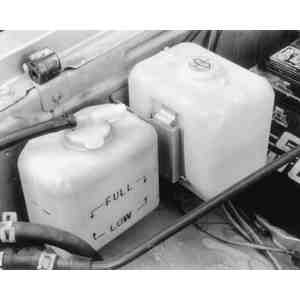
| Fig. 1: Simply check the overflow system level by comparing
the fluid level with the FULL and LOW level indicators on the overflow
container
|
One of the reasons for the use of an overflow system is that it is often hazardous to remove the radiator cap. Under normal operating conditions, the temperature of the engine block exceeds the boiling point of the coolant. The pressure cap increases pressure in the cooling system, thereby increasing the boiling point of the fluid in the system. Thus, removing the cap on an engine that is still near operating temperature will usually result in a discharge of boiling hot coolant. The situation worsens substantially if the cooling system is dirty or the engine is overheating.
Thus the first rule to remember is: NEVER REMOVE THE RADIATOR CAP UNTIL THE ENGINE HAS COOLED SUBSTANTIALLY BELOW OPERATING TEMPERATURE. Then, unless the engine is dead cold, USE A HEAVY RAG TO COVER THE CAP. Finally, TURN THE CAP SLOWLY TO THE FIRST NOTCH. This will release the system pressure. Give the pressure time to drop, and then remove the cap. If the radiator cap is badly worn, the pressure may not be released. This is why it is necessary to use the rag, cool the engine first, and still proceed cautiously and slowly.
Once the cap has been removed, you can add a 50–50 mix of antifreeze and water slowly to the radiator until the level increases. Once the level is near the top of the radiator tank, start the engine. Let the engine idle until the thermostat opens (you'll see coolant flow through the top of the radiator tank and the upper radiator hose will become hot). Air in the system will be expelled at this point, causing the level of coolant to drop again. Keep adding coolant until the level remains near the top of the radiator. Then, install the cap, add coolant to the overflow tank until it is well past the lower mark and install the overflow tank cap as well.
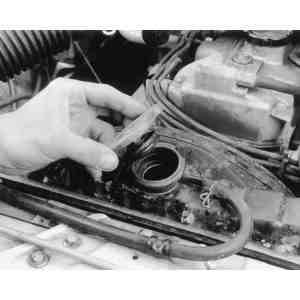
| Fig. 2: Once the engine has cooled down and the pressure
in the system is relieved, remove the radiator cap
|
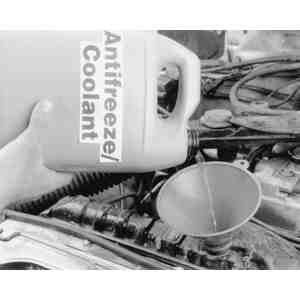
| Fig. 3: With the radiator cap removed, fill the system
with a 50–50 mixture of water and antifreeze
|
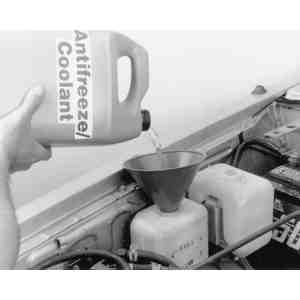
| Fig. 4: Once the system is completely filled, fill
the overflow reservoir to the FULL mark
|