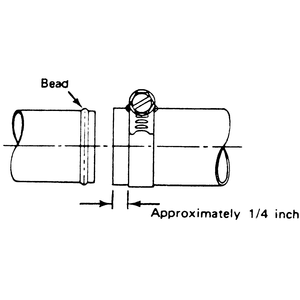
There is usually no problem in replacing hoses. Just make sure you allow the engine to cool and then drain the cooling system before starting work. Also make sure to fully loosen clamps and pull them back from the connections before attempting to disconnect hoses. If hoses are tough to break loose from their connections, a twisting motion often works best. If they have been on a hot-running engine for a long time (and you know you are going to replace them), you might want to make a cut with a sharp knife going in the direction of the length of the hose. Cut until you pass the end of the connector on the block or engine accessory. This will loosen the grip the hose has on the fitting and make it easier to remove. Be careful not to cut deeply into relatively soft aluminum fittings. When the hoses are in place on the connections, position the hose clamps about 1⁄4 in. (6mm) from the end of the hose and tighten them down. Hose clamps do not require that much force to form a good seal.
As a final note, don't throw those old hoses away. If they have not been cut or damaged, shake them out to remove the coolant, seal them in a plastic bag and store them in your truck. Old hoses will serve as good short term repair if by chance one of your hoses breaks. Of course, if you keep up on your maintenance, you may never need them.
| Fig. 1: Position the hose clamp so that it is about
1/4 inch (6mm) from the end of the hose
|