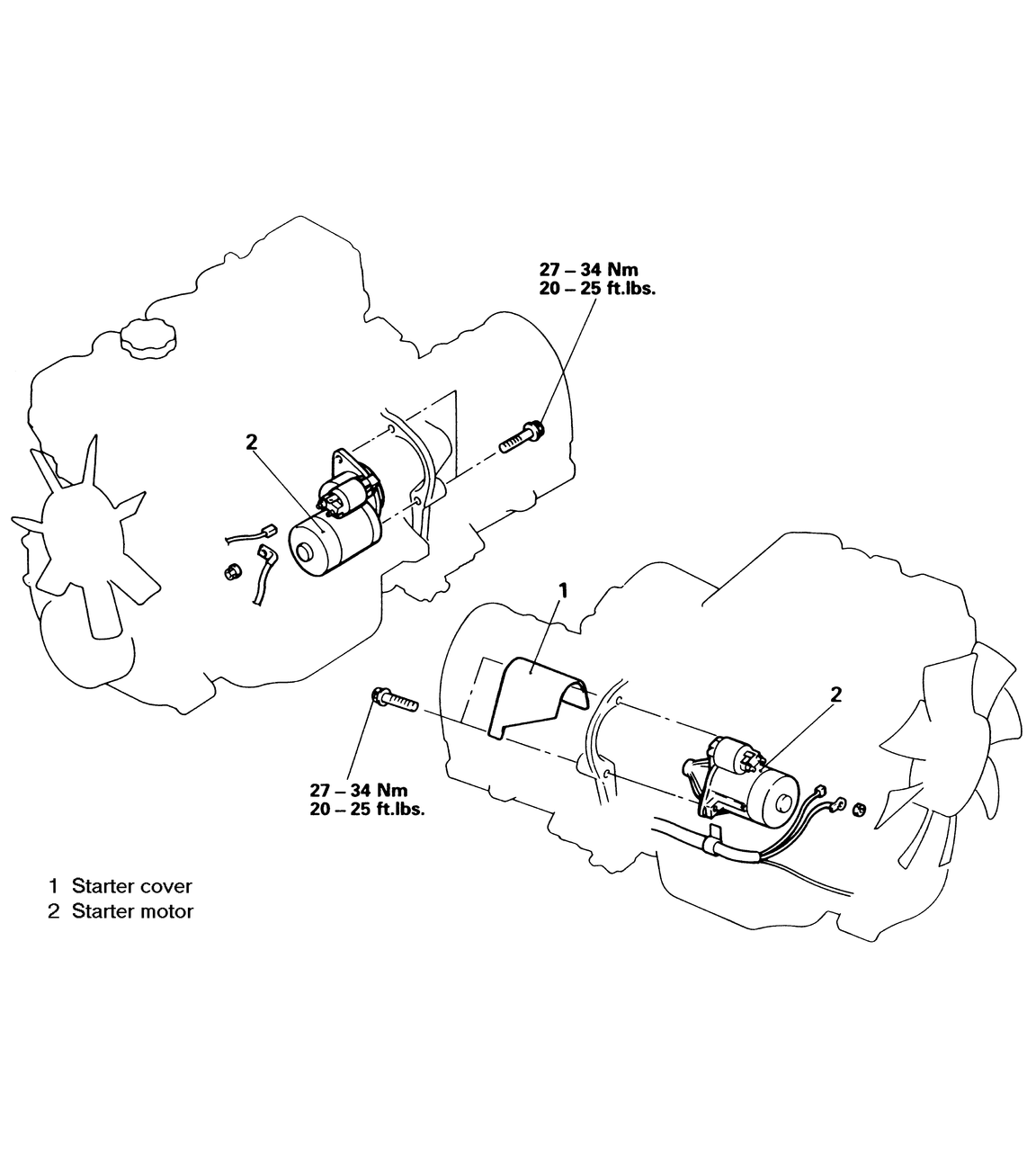
The starter motor is located on either the lower right hand (passenger) or
left hand (driver) side of the engine, bolted to the transmission housing with
two mounting bolts.
- Disconnect the negative battery cable.
NOTE: Removal and installation of the starter motor will
require access from both the top and bottom of the engine compartment.
| Fig. 1: Common starter location and installation — the
starter is a fairly heavy component, be careful when lifting it out
of the vehicle
|
- Apply the parking brake and block the rear wheels.
- Raise the front of the vehicle with a floor jack, using the proper frame
positions.
- Support the vehicle on the frame or transmission crossmember, with jackstands.
Before working under the vehicle, make sure the vehicle is stable on the jackstands.
If it is not, reposition the jackstands so that it is.
- Label and disconnect all wiring connectors at the starter.
- Slowly loosen the two starter mounting bolts until they are loose enough
to take out by hand. Since the starter motor is uncommonly heavy for its size,
it is important to support it well with one hand, while removing the two mounting
bolts with the other hand. If the starter is not adequately supported, it
could fall causing injury. Remove the starter from the vehicle.
To install:
- Clean the surfaces of the starter motor flange and the flywheel housing
where the starter attaches.
- Reinstall the starter and install the retaining bolts. Tighten the bolts
to 16–23 ft. lbs. (22–31 Nm).
- Connect the wiring to the starter, making sure the terminals and connectors
are clean and tight.
- Lower the truck to the ground
- Connect the negative battery cable.