CAUTION
Always perform this work on a completely cool engine. The coolant will retain
heat and pressure for several hours after use. Never remove the radiator cap
or hoses if the radiator feels hot or warm to the touch. Liquid under pressure
can turn to steam instantly when released; severe scalding can result. Before
beginning any work, make certain the ignition is OFF.
NOTE: On some models the battery and shroud(s) may have to
be removed for additional working access.
- Disconnect the negative battery cable. Set the heater temperature control
to HOT inside the truck.
- Using a large capacity container, loosen the radiator drain plug and drain
the cooling system. It will drain quicker with the radiator cap removed.
CAUTION
When draining the coolant, keep in mind that cats and dogs are attracted
by ethylene glycol antifreeze, and are quite likely to drink any that is
left in an uncovered container or in puddles on the ground. This will prove
fatal in sufficient quantity. Always drain the coolant into a sealable container.
Coolant should be reused unless it is contaminated or several years old.
- Disconnect the upper and lower hoses at the radiator and disconnect the
overflow hose to the reserve tank.
- If equipped with an automatic transmission, disconnect the oil cooler lines
at the radiator and at the transmission. Be prepared to contain oil spillage.
Remove the hose assembly from the truck; plug the transmission ports and hose
ends quickly to keep oil in and dirt out.
- Remove the radiator mounting bolts and lift out the radiator.
To install:
- Position the radiator in the truck, making certain all the mounts and bushings
are correctly installed. Tighten the mounting bolts enough to hold well but
do not overtighten them. Double check the draincock to make sure it is closed.
- Reassemble the automatic transmission oil cooler lines and install the retaining
bracket. Make certain the hoses are properly routed and firmly attached at
both ends.
- Connect the upper and lower radiator hoses and the overflow hose. Check
each fitting and the inside of the hose for any corrosion or debris which
would prevent a good seal.
- Fill the system with coolant.
- Start the engine and allow it to idle with the radiator cap removed. When
the engine has warmed enough, the thermostat will open and water flow will
be visible within the radiator. Fill the coolant to the bottom of the radiator
neck and install the cap.
CAUTION
Do not lean over the radiator neck while the engine is running. Hot coolant
may be splashed out by air trapped within the system. Keep hands, tools
and clothing away from the fans which may engage at any time as the coolant
heats up.
- Shut the engine off and check the hose connections carefully for leaks.
With the engine fully warm, a small leak may be emitting steam rather than
liquid. If any leaks are found, allow the engine to cool completely before
attempting repairs.
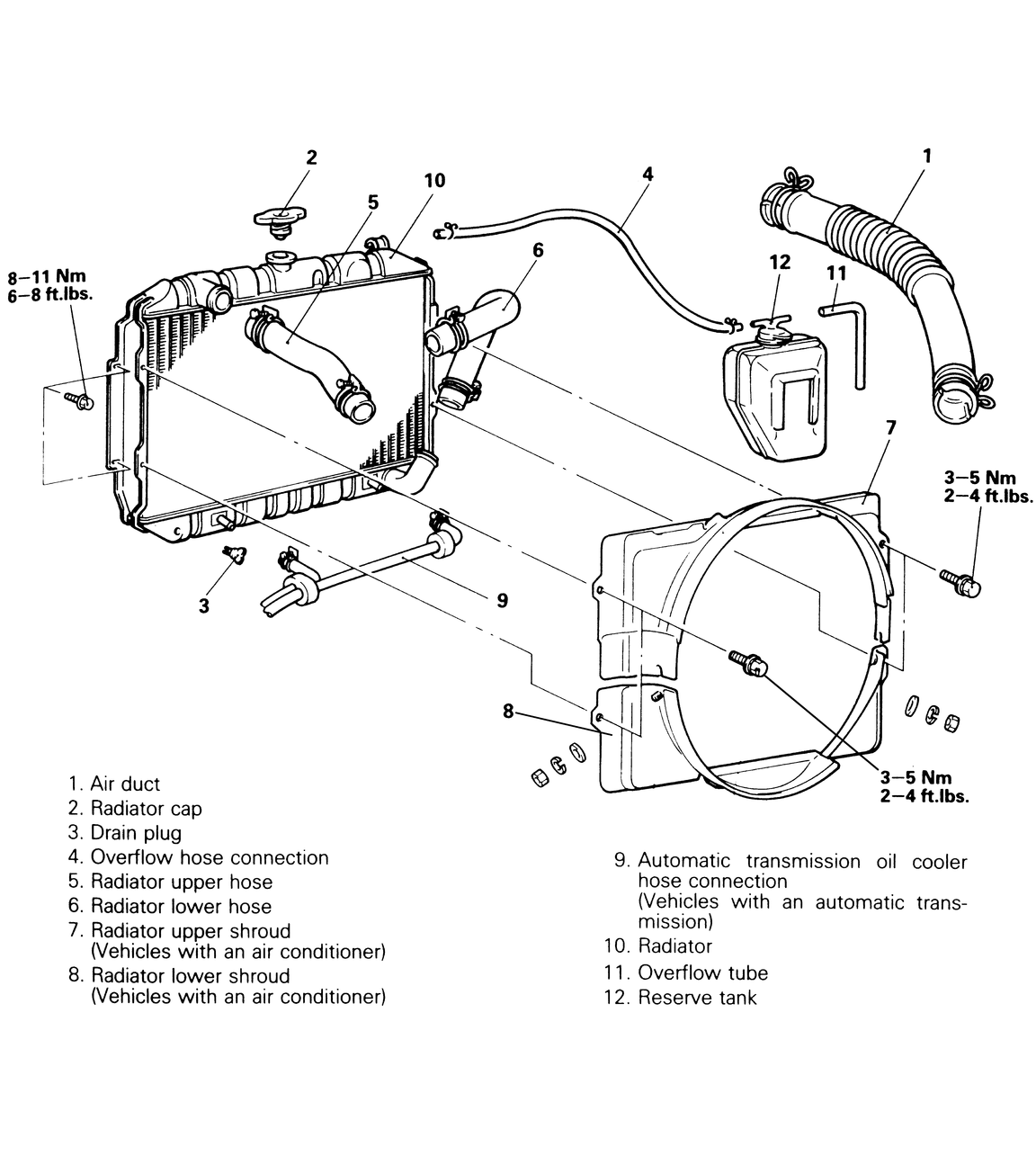
| Fig. 1: Radiator assembly — 2.0L,
2.3L Diesel and 2.6L Engines
|
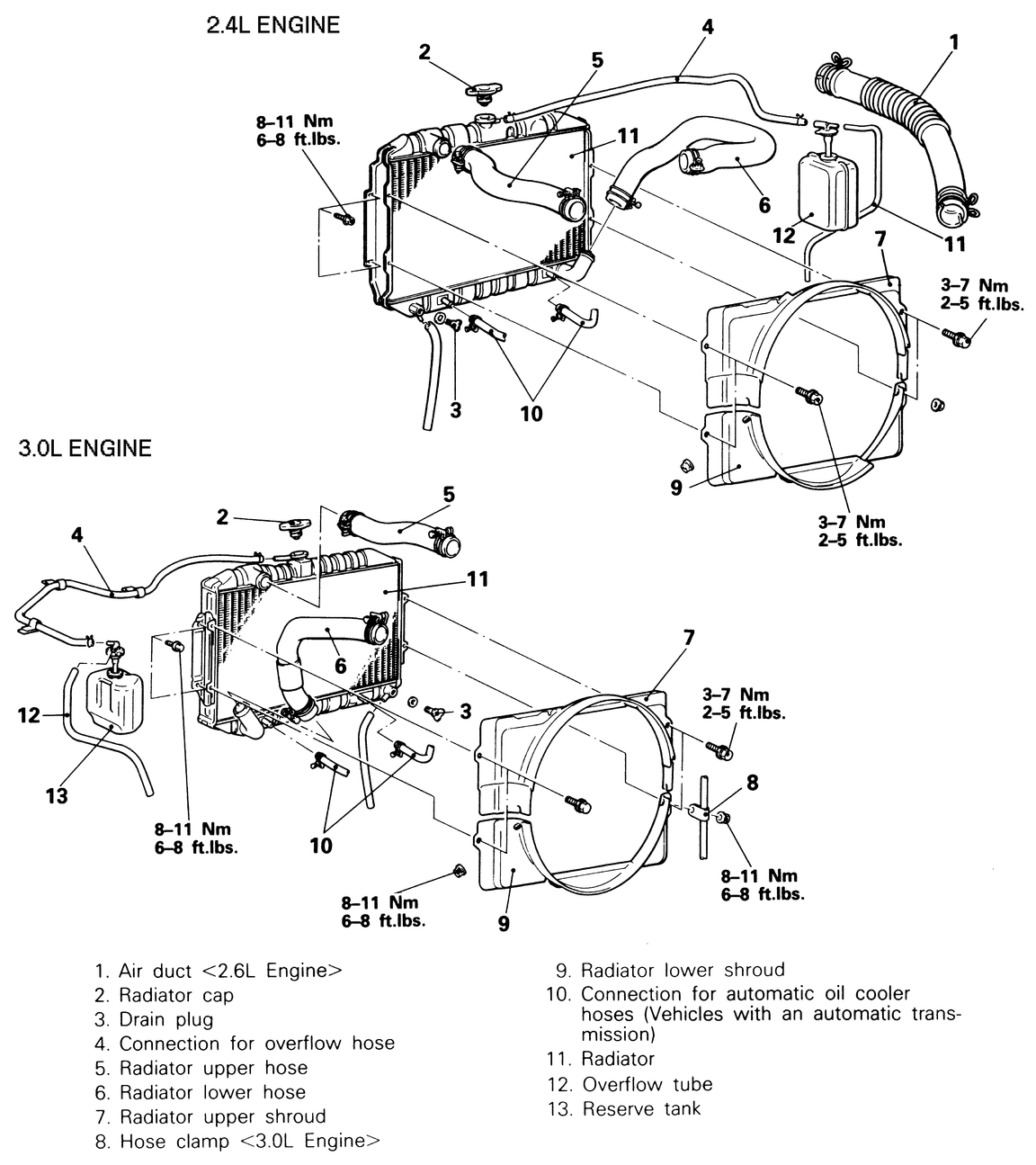
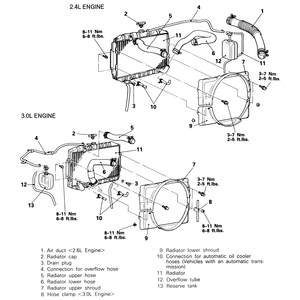
| Fig. 2: Radiator assembly — 2.4L
and 3.0L (12 Valve) Engines
|
CAUTION
If vehicle if equipped with SRS airbag system refer to Section 6 for the system
precautions. Be extremely careful not to subject the front impact sensor to
any shocks during removal and installation of the radiator assembly. The SRS
system can be extremely dangerous; heed all system cautions.
- Set the heater temperature control to HOT inside the vehicle.
- Disconnect and remove the battery.
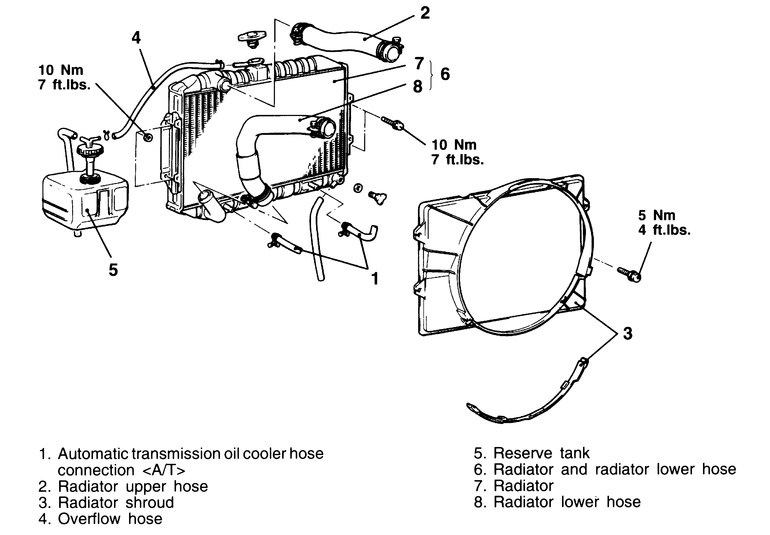
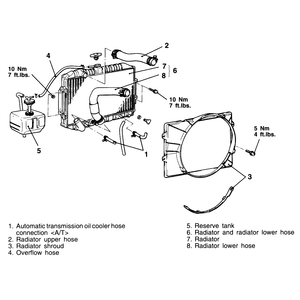
| Fig. 3: Radiator assembly — 3.0L
(24 Valve) and 3.5L Engines
|
- Using a large capacity container, loosen the radiator drain plug and drain
the cooling system. It will drain quicker with the radiator cap removed.
CAUTION
When draining the coolant, keep in mind that cats and dogs are attracted
by ethylene glycol antifreeze, and are quite likely to drink any that is
left in an uncovered container or in puddles on the ground. This will prove
fatal in sufficient quantity. Always drain the coolant into a sealable container.
Coolant should be reused unless it is contaminated or several years old.
- Disconnect the upper and lower hoses and disconnect the overflow hose to
the reserve tank.
- Remove the upper fan shroud, then the lower fan shroud for the 3.0L (12
valve) engines. For the 3.0L (24 valve) and 3.5L engines, the fan shroud is
one piece.
- Disconnect the automatic transmission cooler lines.
- Remove the radiator retaining bolts and remove the radiator.
To install:
- Reinstall the radiator in position, making certain all the mounts and bushings
are correctly installed. Tighten the mounting bolts enough to hold well but
do not overtighten them. Double check the draincock to make sure it is closed.
- Connect the automatic transmission cooler lines.
- Install the lower shroud first, then the upper shroud.
- Connect the upper and lower radiator hoses and the overflow hose. Check
the each fitting and the inside of the hose for any corrosion or debris which
would prevent a good seal.
- Install the battery and connect the terminals.
- Fill the system with coolant. Start the engine and allow it to idle with
the radiator cap removed. When the engine has warmed enough, the thermostat
will open and water flow will be visible within the radiator. Fill the coolant
to the bottom of the radiator neck and install the cap.
CAUTION
Do not lean over the radiator neck while the engine is running. Hot coolant
may be splashed out by air trapped within the system. Keep hands, tools
and clothing away from the fan.
- Shut the engine off and check the hose connections carefully for leaks.
With the engine fully warm, a small leak may be emitting steam rather than
liquid. If any leaks are found, allow the engine to cool completely before
attempting repairs.