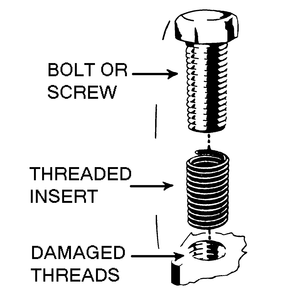
Several methods of repairing damaged threads are available. Heli-Coil® (shown here), Keenserts® and Microdot® are among the most widely used. All involve basically the same principle––drilling out stripped threads, tapping the hole and installing a pre-wound insert––making welding, plugging and oversize fasteners unnecessary.
Two types of thread repair inserts are usually supplied: a standard type for most inch coarse, inch fine, metric course and metric fine thread sizes and a spark plug type to fit most spark plug port sizes. Consult the individual manufacturer's catalog to determine exact applications. Typical thread repair kits will contain a selection of pre-wound threaded inserts, a tap (corresponding to the outside diameter threads of the insert) and an installation tool. Spark plug inserts usually differ because they require a tap equipped with pilot threads and a combined reamer/tap section. Most manufacturers also supply blister-packed thread repair inserts separately in addition to a master kit containing a variety of taps and inserts plus installation tools.
Before effecting a repair to a threaded hole, remove any snapped, broken or damaged bolts or studs. Penetrating oil can be used to free frozen threads. The offending item can be removed with locking pliers or with a screw or stud extractor. After the hole is clear, the thread can be repaired, as shown in the series of accompanying illustrations.
| Fig. 1: Damaged bolt holes can be repaired with thread
repair inserts
|
| Fig. 2: Standard thread repair insert (left) and spark
plug thread insert (right)
|
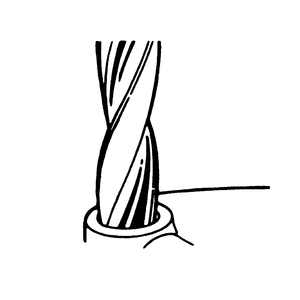
| Fig. 3: Drill out the damaged threads with specified
drill bit — Be sure to drill completely through the hole
or to the bottom of a blind hole
|
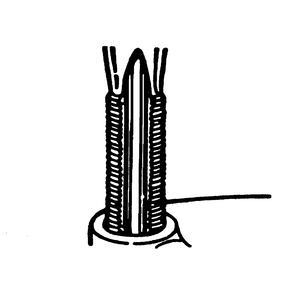
| Fig. 4: With the tap supplied, tap the hole to receive
the thread insert — Keep the tap well oiled and back it
out frequently to avoid clogging the threads
|
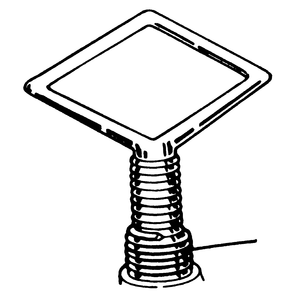
| Fig. 5: Screw the threaded insert onto the installation
tool until the tang engages the slot — Screw the insert
into the tapped hole until it is 1/4–1/2 turn below the top surface.
After installation break off the tang with a hammer and punch
|