If the head is to be resurfaced (planed), it must be completely stripped of all components and taken to a machine shop. At this point, it is worthwhile considering having the head crack–checked by the shop. Commercial methods allow much more sophisticated checking than can be done by eye. Additionally, having the head cleaned in a solvent bath will remove deposits from all the passages within the head.
WARNING
Do not allow the head to be immersed in "hot tank'' cleaners designed for iron
heads. The chemicals will attack the aluminum alloy in the Mitsubishi head and
make the head unusable. Specify to the shop that the head contains aluminum.
Resurfacing the head involves removing metal from the face of the head, much as a wooden surface is leveled with a plane. This can remove the high and low spots and give a true surface to mount onto the engine, clamping the gasket evenly across its surface. The two critical dimensions in resurfacing the head are the amount of metal removed (usually expressed in thousandths of a millimeter) and the overall thickness of the head.
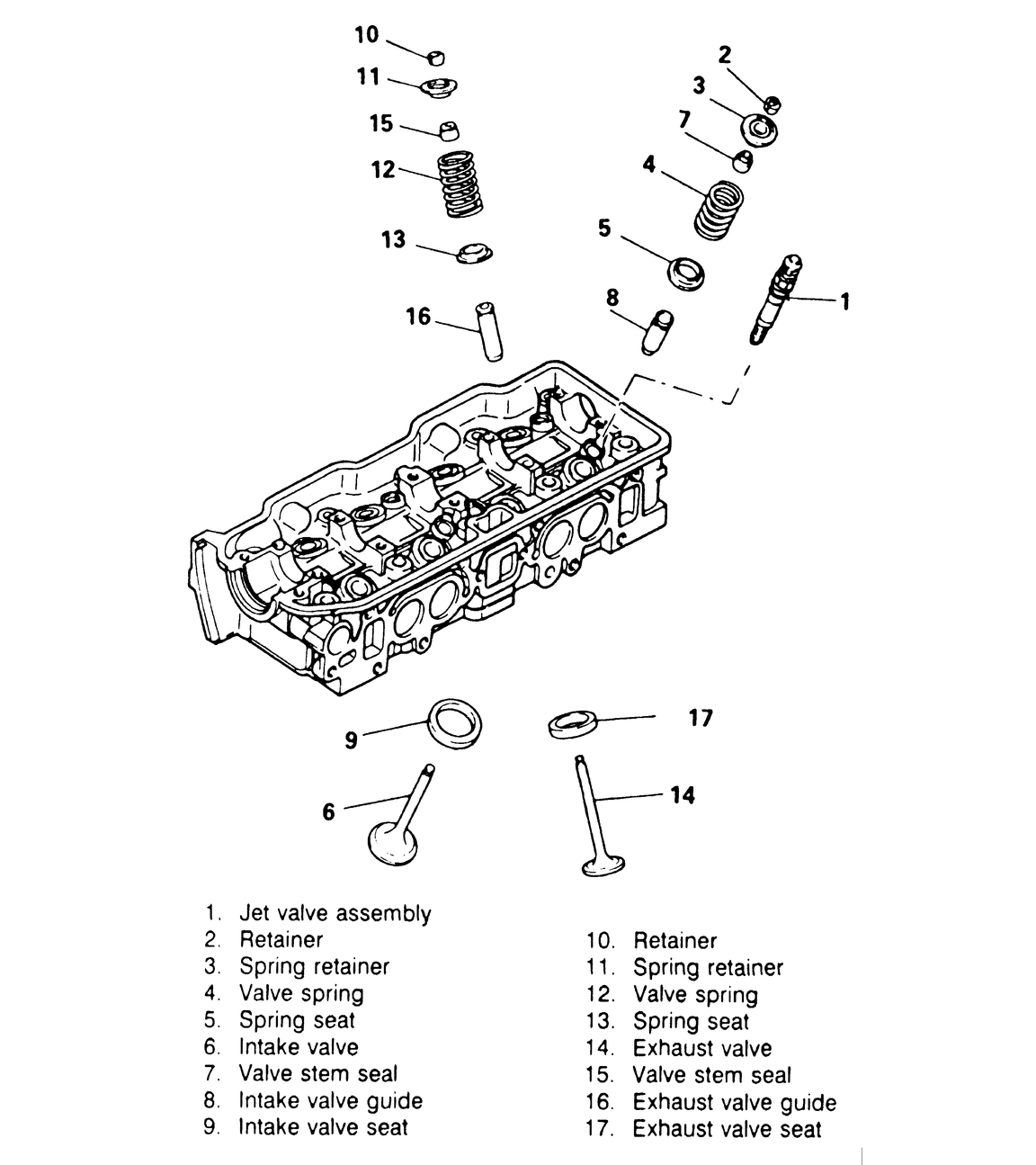
| Fig. 1: Common type of cylinder head assembly — the
jet valve is not found on all engines
|
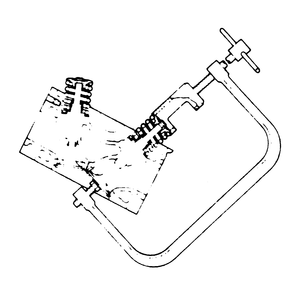
| Fig. 2: Use a spring compressor when removing and installing
valve springs and retainers
|
The minimum head thickness must NOT be exceeded under any circumstance. If the amount of resurfacing required would cause the head to become too thin, the head is unusable and must be discarded. The maximum thickness allowed to be removed from a Mitsubishi head is 0.0080 in. (0.20mm). This figure is valid for a head which has never been cut (original thickness) and would reduce it to minimum thickness.
An additional reminder: when resurfacing a V6 head, the profile of the intake manifold mating surface will change (relative to the manifold) after the head is cut. The intake manifold face will have to be resurfaced to compensate for this. Most machine shops will do this automatically; remind them anyway.
After the head is reconditioned, build it back up on the workbench by installing any and all removed components. It is much easier to install a head complete with cam, rockers and manifolds than to attempt final assembly with the head on the block. Keep the head clean and free of grit. Refer to the applicable procedures of this section for details and tighten specifications for individual components (camshaft, manifolds, etc.)