NOTE: A vacuum pump capable of producing more than 10 in. Hg
(33.8 kPa) of vacuum will be needed to perform these tests.
- Disconnect the vacuum hose (white stripe) from the device box and connect
a hand vacuum pump up to the port.
- Apply a vacuum of 15.70 in. Hg (53 kPa) and check the VRV condition as follows:
- With the engine not running, the vacuum should leak.
- With the engine running at 3,500 rpm, the vacuum should not leak.
- Remove the hand vacuum pump and reconnect the vacuum hose to the device
box.
- Locate the three vacuum hoses plugged into the back of the carburetor together.
One leads to the EGR valve, one leads to the distributor and the last leads
to the VRV. Disconnect the VRV vacuum hose.
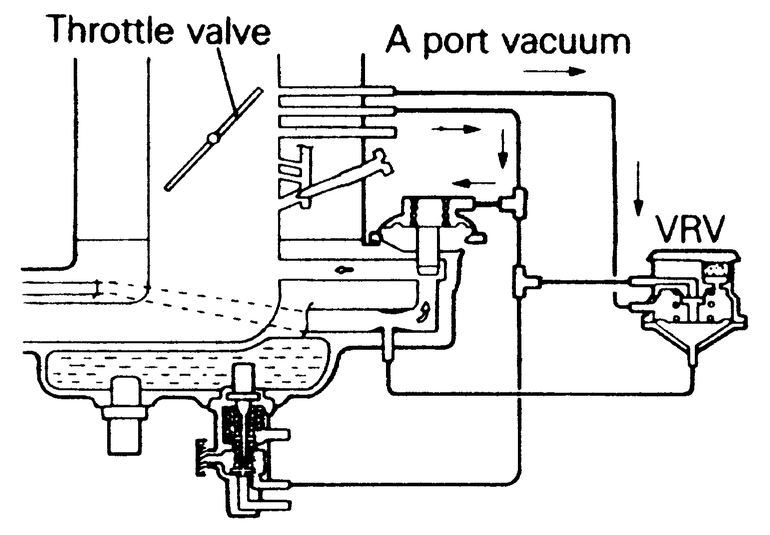
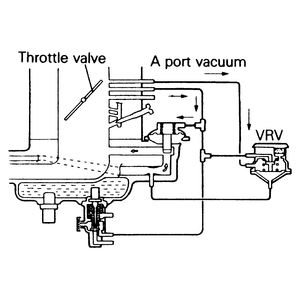
| Fig. 1: The Vacuum Regulator Valve (VRV) system vacuum
hose configuration
|
- Connect a hand vacuum pump to the VRV carburetor nipple.
- Start and race the engine to make sure that the VRV vacuum increases gradually
with the engine speed. If an abnormality is found in the change of vacuum,
the VRV carburetor port could be blocked. Clean the port as necessary.
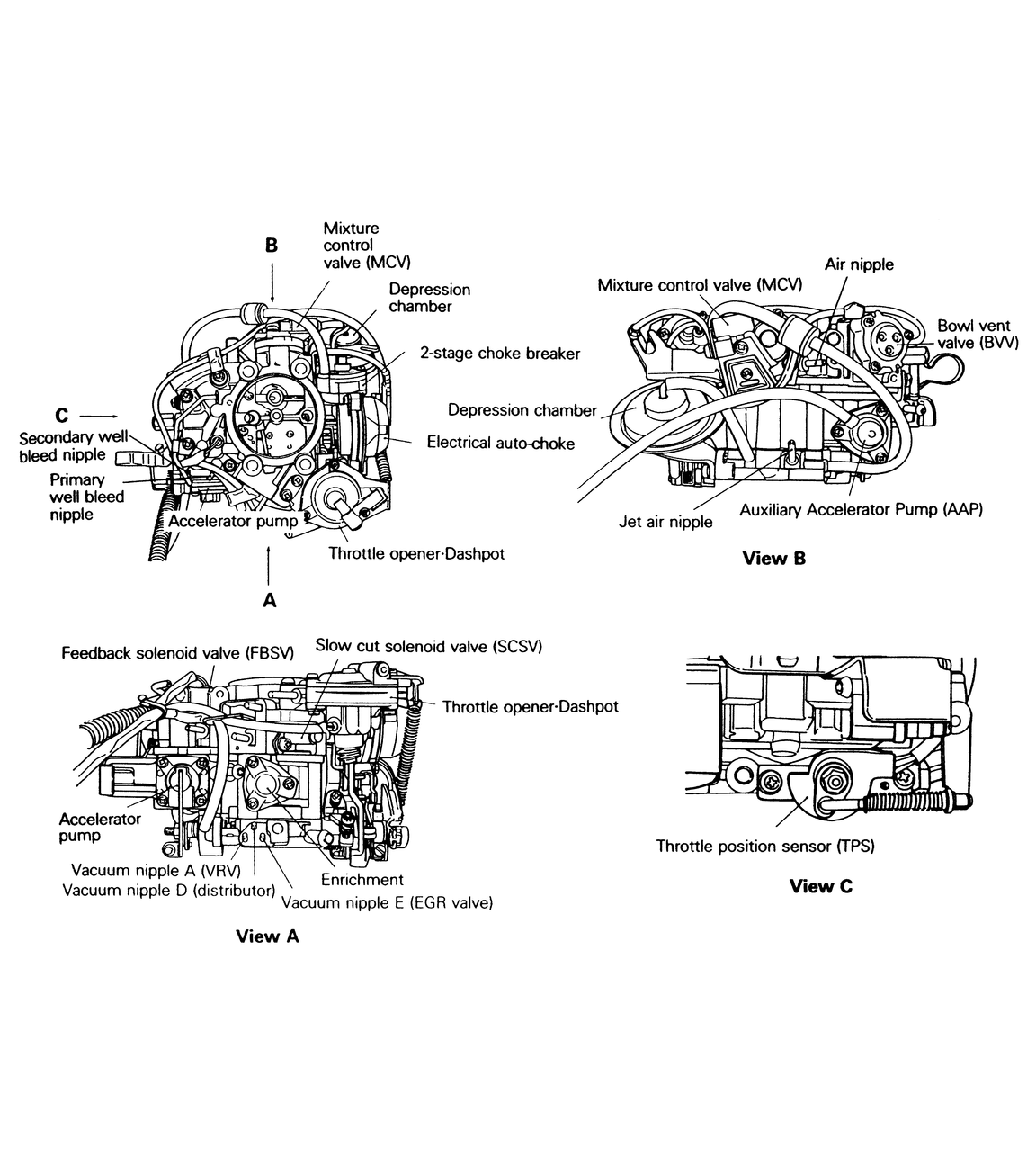
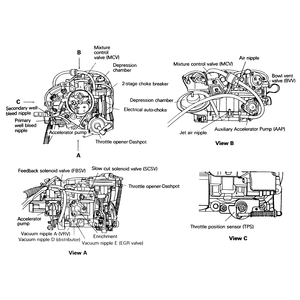
| Fig. 2: The external vacuum connections and components
of the Mitsubishi carburetor
|