NOTE: This system is only found on the 2.0L and 2.6L engines.
The carburetor meters fuel according to the volumetric flow rate of air and supplies the resultant mixture to the engine. Therefore, even if the carburetor is set for optimum air-fuel rate at low altitude, the mixture becomes too rich at high altitude since the air is less dense at high altitudes.
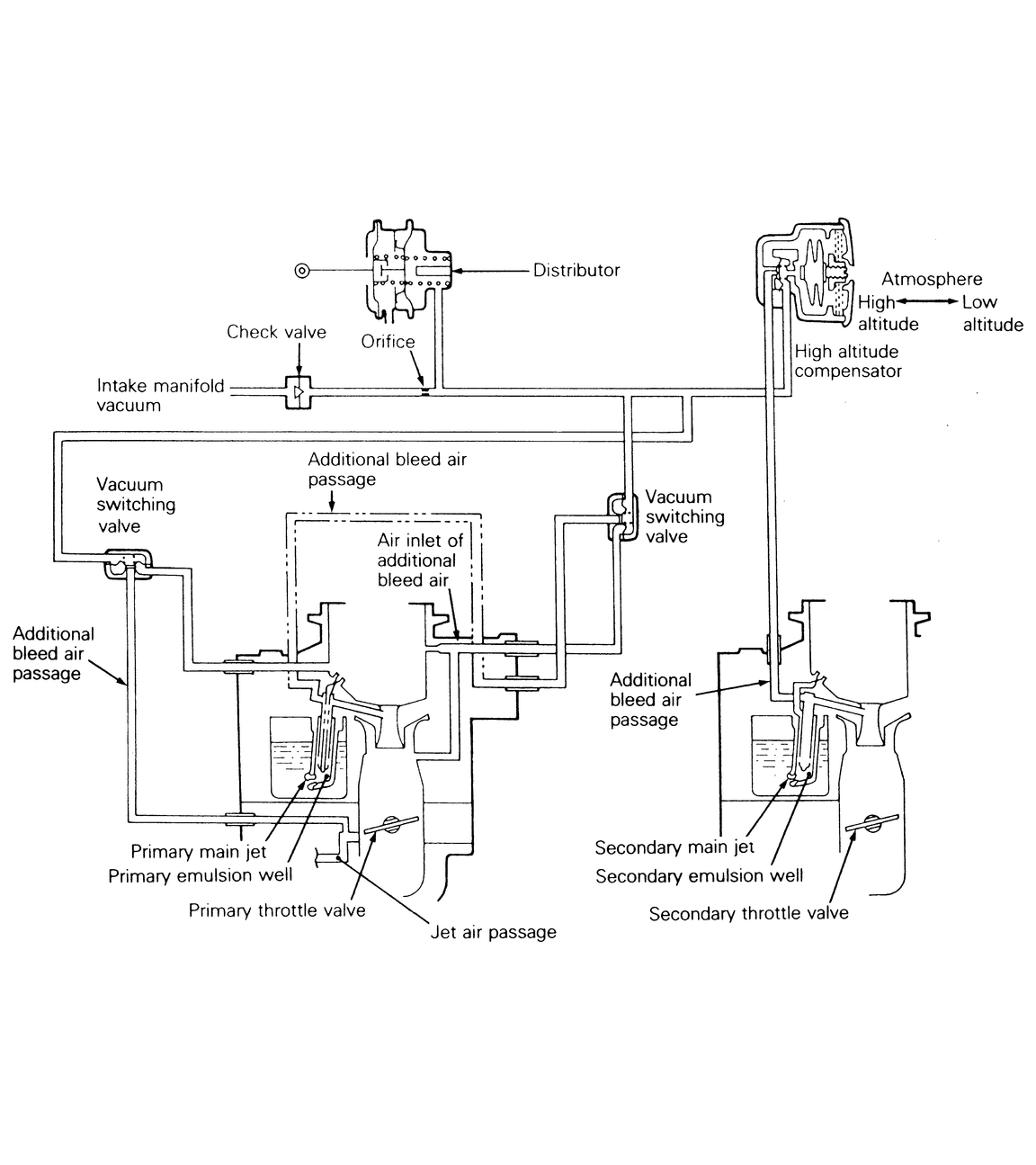
| Fig. 1: Diagram of the high-altitude compensation system — 2.0L
and 2.6L engines
|
At high altitude, this high altitude compensation system supplies additional bleed air to the carburetor emulsion well and jet air passage to dilute the fuel, preventing an over-rich air-fuel mixture caused by the drop of air density at high altitudes.
The system also advances the ignition timing by a fixed amount to reduce CO and HC emission and to secure driveability at high altitudes.
At low altitudes, the HAC opens to allow the intake manifold vacuum to escape from the HAC into the atmosphere. Therefore, the vacuum switching valve and HAC's additional bleed air passage remain closed and bleed air is not supplied to the carburetor. At high altitudes, the HAC closes and the intake manifold vacuum is applied to the vacuum switching valve, HAC's additional bleed air passage and distributor. As a result, the vacuum switching valve and HAC's additional bleed air passage are opened to supply bleed air to the carburetor. At the same time, the distributor advances the ignition timing.