Previous Next

REMOVAL & INSTALLATION

2.4L Engines
  1. Disconnect the negative battery cable.
  2. Remove any components obstructing access to the TPS.

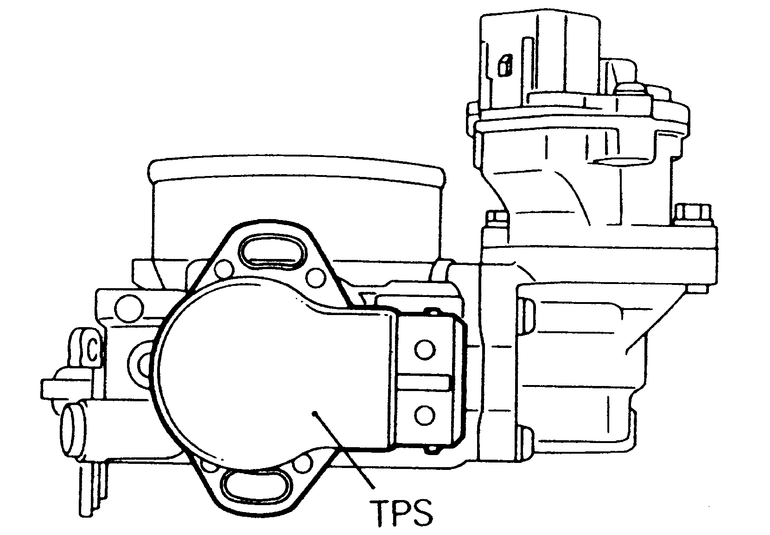
    Fig. 1: Install the TPS as shown in this illustration — 2.4L engines

  3. Unplug the engine wiring harness connector from the sensor connector.
  4. Loosen and remove the two mounting screws, then extract the sensor from the throttle body.

    To install:

  5. Install the TPS to the throttle body as shown in the illustration.
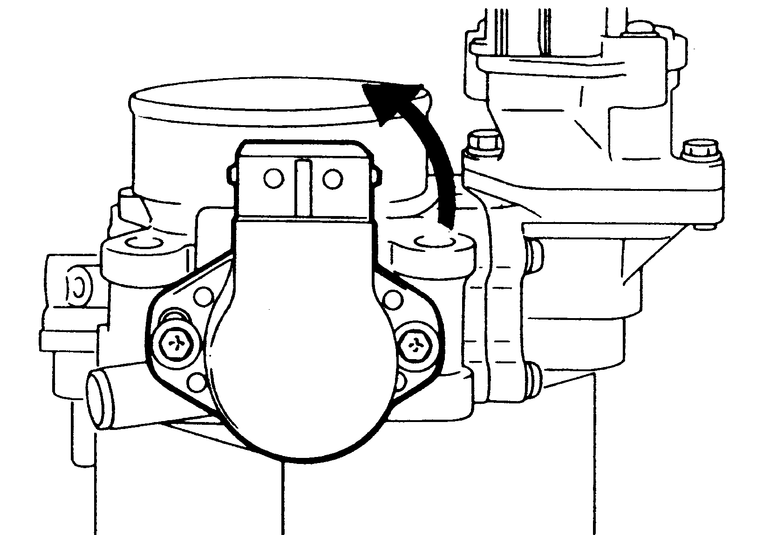
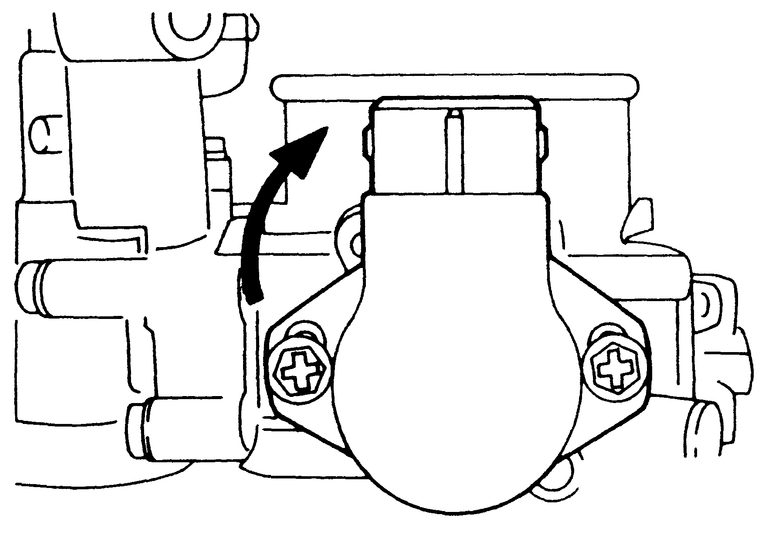
  6. Turn the TPS 90°in the clockwise direction to set it and tighten the screws.

    Fig. 2: Rotate the TPS 90°clockwise to set it — 2.4L engines

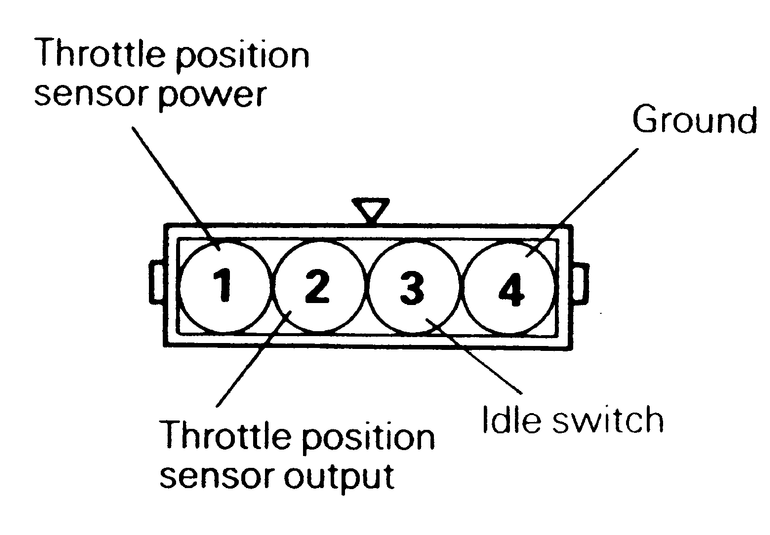
  7. Connect the circuit tester between terminal 4 (ground) and 2 (output), or between 2 (output) and 1 (power). Then, make sure that the resistance changes smoothly when the throttle valve is slowly moved to the wide open throttle position.

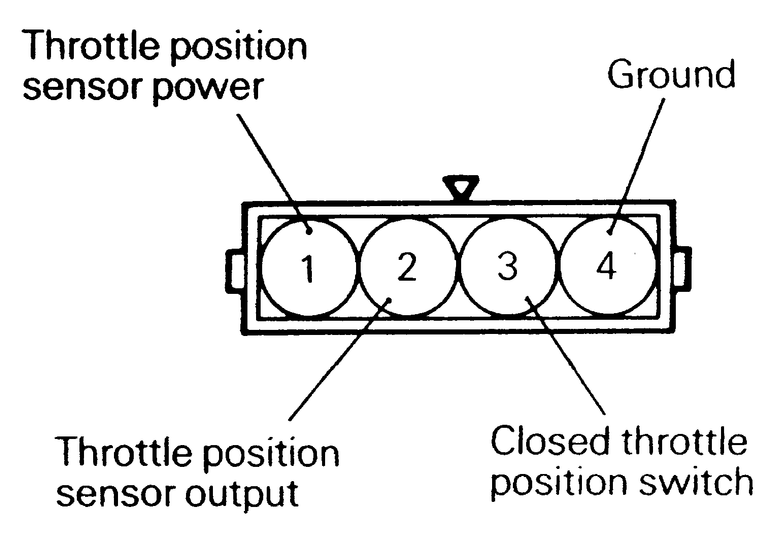
    Fig. 3: The configuration of the TPS harness connector — 2.4L engines

  8. If the resistance does not change smoothly, adjust the TPS following the previously described procedures.
3.0L Engines
  1. Disconnect the negative battery cable.
  2. Remove any components obstructing access to the TPS.
  3. Unplug the engine wiring harness connector from the sensor connector.
  4. Loosen and remove the two mounting screws, then extract the sensor from the throttle body.

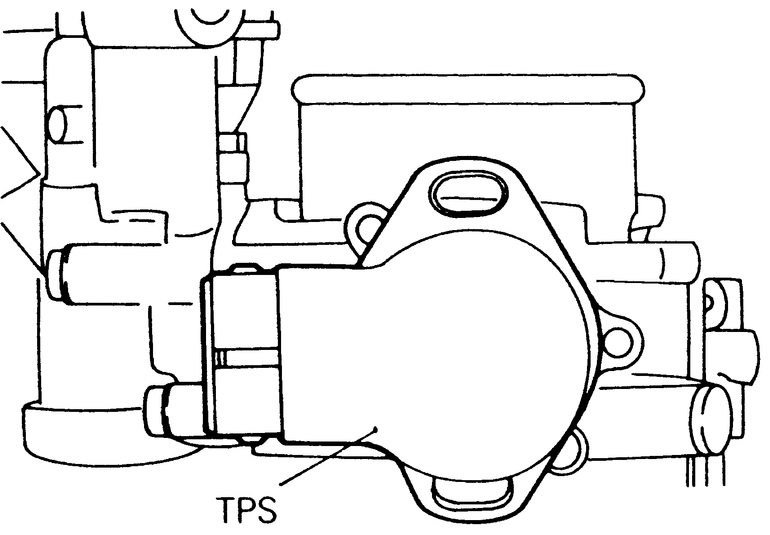
    Fig. 4: Install the TPS as shown in the illustration — 3.0L engines

    Fig. 5: Turn the TPS 90°counter-clockwise to set it — 3.0L engines

    To install:

  5. Install the TPS to the throttle body as shown in the illustration.
  6. Turn the TPS 90°counter-clockwise to set it, and tighten the screws.
  7. Connect the circuit tester between terminal 4 (ground) and 2 (output), or between 2 (output) and 1 (power). Then, make sure that the resistance changes smoothly when the throttle valve is slowly moved to the wide open throttle position.
  8. Check for continuity across terminals 2 (closed throttle position switch) and 1 (ground) with the throttle valve both fully closed and fully open. With the throttle valve fully closed, there should be continuity, and when the throttle valve is fully open there should be no continuity. If there is no continuity with throttle valve fully closed, turn the TPS clockwise, and check again.
  9. If the TPS does not conform to the above standards, this unit needs to be replaced with a new one.
3.5L Engines
  1. Disconnect the negative battery cable.
  2. Remove any components obstructing access to the TPS.
  3. Unplug the engine wiring harness connector from the sensor connector.
  4. Loosen and remove the two mounting screws, then extract the sensor from the throttle body.

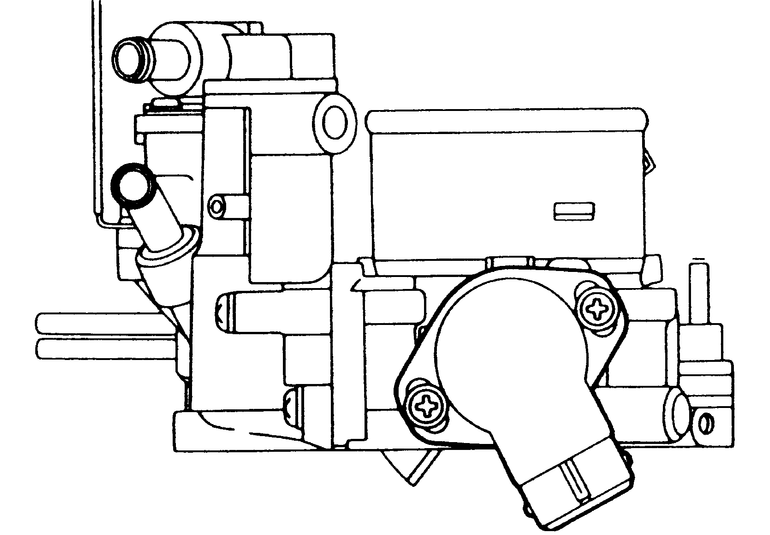
    Fig. 6: Install the TPS as shown in the illustration — 3.5L engines

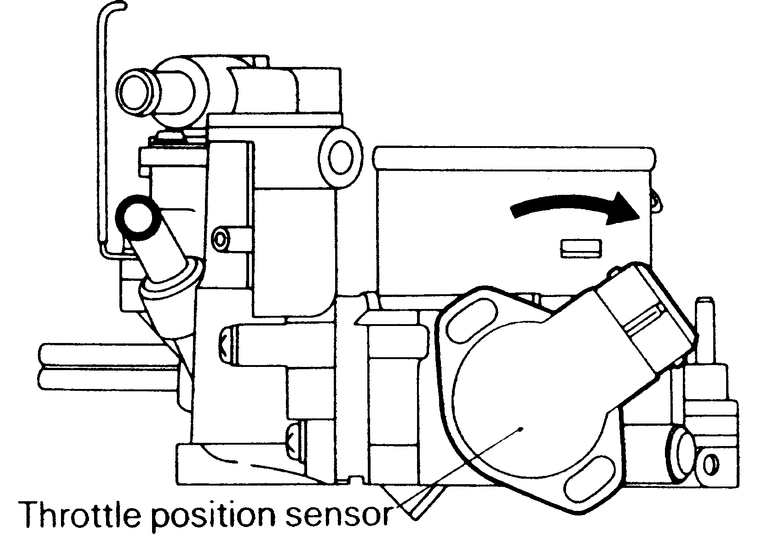
    Fig. 7: Turn the TPS 90°clockwise to set it — 3.5L engines

    To install:

  5. Install the TPS to the throttle body as shown in the illustration.
  6. Turn the TPS 90°in the clockwise direction to set it and tighten the screws.
  7. Connect the circuit tester between terminal 4 (ground) and 2 (output), or between 2 (output) and 1 (power). Then, make sure that the resistance changes smoothly when the throttle valve is slowly moved to the wide open throttle position.

    Fig. 8: The configuration and numbering of the TPS terminals — 3.5L engines

  8. Check for continuity across terminals 3 (closed throttle position switch) and 4 (ground) with the throttle valve both fully closed and fully open. With the throttle valve fully closed, there should be continuity, and when the throttle valve is fully open there should be no continuity. If there is no continuity with throttle valve fully closed, turn the TPS counter-clockwise, and check again.

    NOTE: Some TPS units are not provided with the position switch. In that case, the check described in Step 4 cannot be accomplished.
  9. If the previous specifications are not met, replace the TPS unit.

Previous Next