NOTE: A vacuum pump capable of producing more than 10 in. Hg (33.8 kPa) of vacuum will be needed to perform this test.
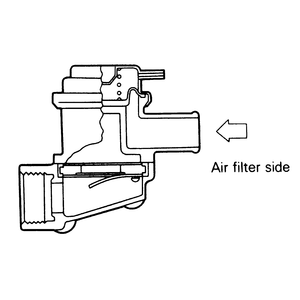
Although this system rarely fails, to check the secondary air control valve, remove the valve from the pipes connecting it to the right-hand exhaust manifold. Blow air into the valve from the air filter side to ensure that air does not blow through. Connect a hand vacuum pump to the secondary air control valve nipple. Apply a vacuum of 19.75 in. Hg (67 kPa) and check for air tightness (air does not blow through). Apply a vacuum of 40.75 in. Hg (20 kPa) and blow air into the valve from the air filter side; air should blow through. Still with the vacuum applied, blow through the valve from the exhaust manifold side; air should not blow through. If any fault is found in the above checks, replace the secondary air control valve. Install the secondary air control valve to 37–44 ft. lbs. (50–60 Nm).
| Fig. 1: The secondary air control valve is a vacuum assisted
reed type valve — attach the hand vacuum pump to the top
vacuum port to test
|
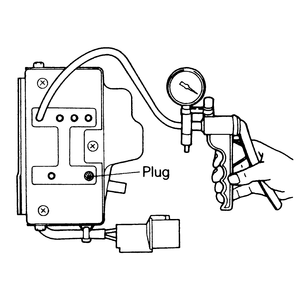
| Fig. 2: Connect the vacuum pump to the port which contained
the red stripe and apply a vacuum
|
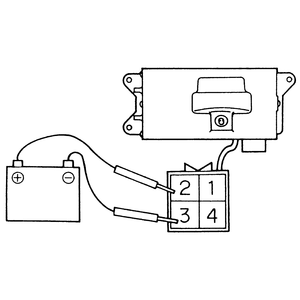
To test the secondary air control solenoid valve, label and remove the vacuum hoses, taking note of the location of each. Generally, the hoses are marked with a blue, yellow and white stripe OR a green stripe and a white stripe or a red stripe. Attach the vacuum pump to the port which contained the red striped hose. Use jumper wires to bridge battery voltage to the terminals. The 4-cylinder Pick-up and Montero use a four conductor plug; apply the voltage to terminals 2 and 3.
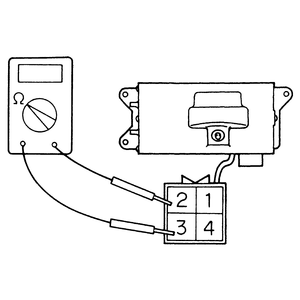
Draw vacuum with the pump and check that the unit holds vacuum when power is applied and the other hose nipples are blocked or plugged. Remove the other nipple's plug and the vacuum should leak. When the power is removed and the other nipple is unplugged, the vacuum should leak. Use an ohmmeter to check the resistance across the terminals; correct resistance is 36–44 ohms at 68°F (10°C).
| Fig. 3: Connect a 12 volt direct current power source
to the No. 2 (+) and No. 3 (-) terminals — check to see
if the vacuum leaks or is held
|
| Fig. 4: Measure the resistance between the two terminals
|