The throttle body itself does not need any adjustments, however, the throttle
body does hold or contain many items which do need occasional adjusting, such
as: the throttle position sensor, the idle speed control motor, the idle air
control motor, the accelerator position sensor, etc. For adjusting procedures
regarding these components, please refer to Section 4 in this manual.
The throttle body also holds the accelerator cable, which needs to be adjusted
occasionally upon reinstallation. For accelerator cable adjustment, use the
following procedures:
NOTE: Adjust the accelerator cable with no load on the engine
or electrical system
- Turn the air conditioning and lamps off.
- Warm the engine until stabilized at idle.
- Confirm that idle rpm is at the prescribed rpm — refer to
Section 2 for more extensive procedures regarding idle speed.
- Stop the engine (turn the ignition switch OFF.
- Confirm that there are no sharp bends in the accelerator cable.
- Check the inner cable for the correct amount of slack. The slack should
be 0.04–0.08 in. (1–2mm) for a manual transmission, and 0.12–0.02
in. (3–5mm) for an automatic transmission.
- If there is too much or not enough slack, adjust the play by the following
procedure:
- Turn the ignition switch to the ON position and hold
the switch in that position for 15 seconds (with the engine not running).
- Loosen the adjusting nut so that the throttle lever is free. Turn the
accelerator adjusting nut to the point where the throttle lever just starts
moving, then back off one turn and lock the adjusting nut with the lock
nut.
- The accelerator cable free-play should now be the standard setting.
- Confirm that the throttle cable stopper touches the air idle control actuator.
CAUTION
The above inspection should be done after turning the ignition switch
ON (engine stopped) and leaving it in that condition for 15
seconds.
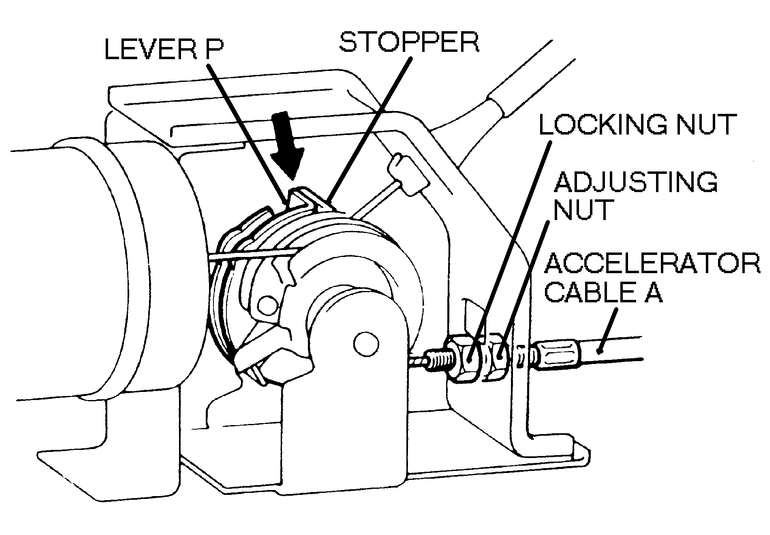
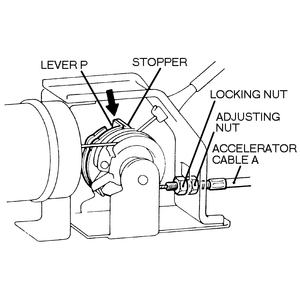
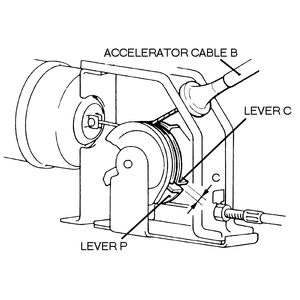
| Fig. 1: Make certain that lever P is against the
stopper while adjusting the slack in the cable — 2.4L
and 3.0L Pick-up engines
|
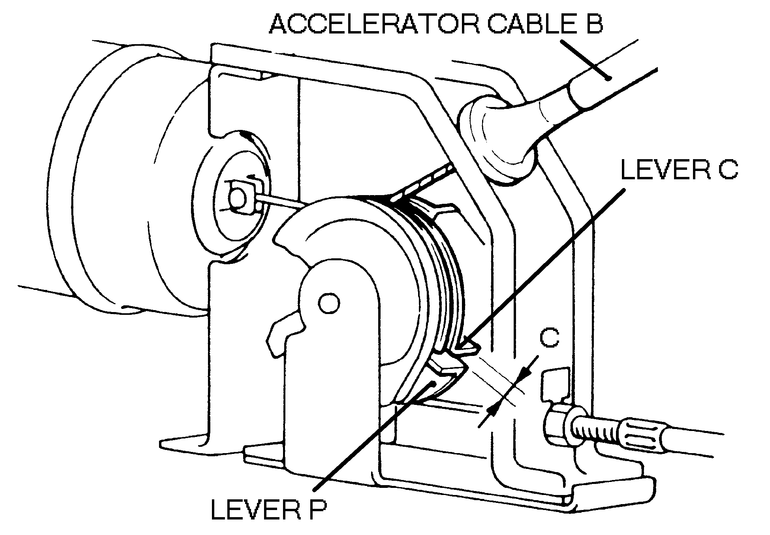
| Fig. 2: The gap (C), between lever C and lever P
should be 0–0.08 in. (0–2mm) — 2.4L and
3.0L Pick-up engines
|
- Check that there are no sharp bends in the routing of the accelerator cable.
- Check that the throttle link is touching the fixed SAS (stopper).
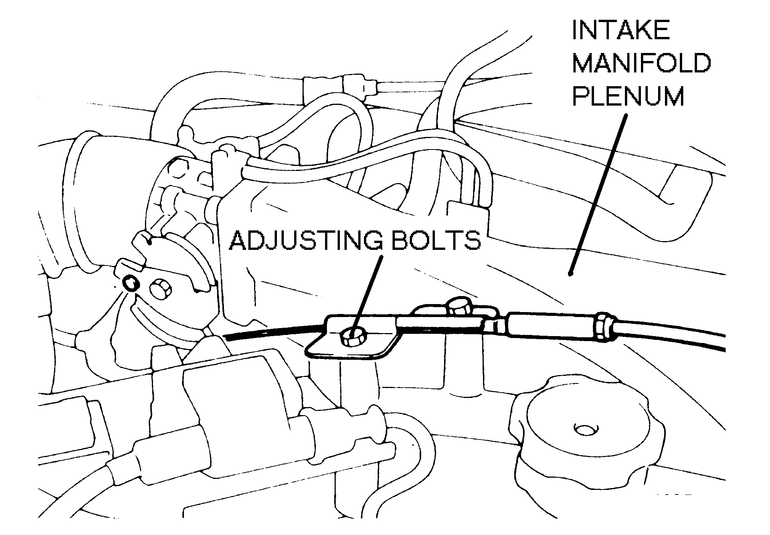
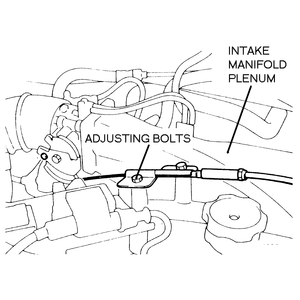
- Loosen the adjusting bolts on the intake manifold plenum, then secure the
outer cable so that the free-play of the inner cable will be the standard
value of 0.04–0.08 in. (1–2mm).
NOTE: If there is excessive play in the accelerator cable,
the vehicle speed drop ("undershoot'') when climbing a slope will be large.
If there is no play (excessive tension) in the accelerator cable, the idling
speed will increase.
- After adjustment confirm that the throttle valve fully opens and closes
by operating the pedal.
| Fig. 3: Loosen the adjusting bolts on the intake
manifold plenum to adjust the free-play in the cable — 3.0L
engines
|
- Check to see if there is any sharp bend in the wiring of the accelerator
cable.
- Confirm that the throttle lever is touched by the fixed SAS.
- Make certain that the inner cable play is at the standard value: 0.04–0.08
in. (1–2mm).
- If the play is outside of the standard value, adjust by turning the adjusting
nut so that the inner cable play is brought to the standard value and then
tighten the lock nut.
- Depress the accelerator pedal and check to be sure that the throttle lever
moves smoothly from fully open to fully closed.
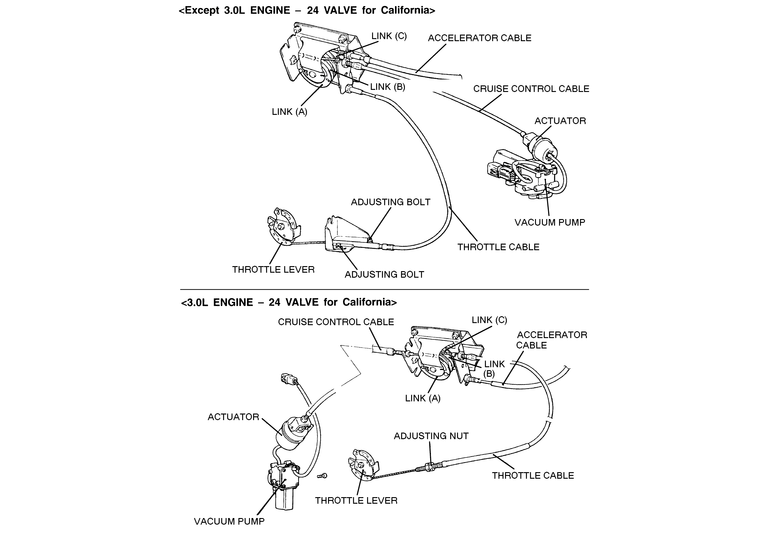
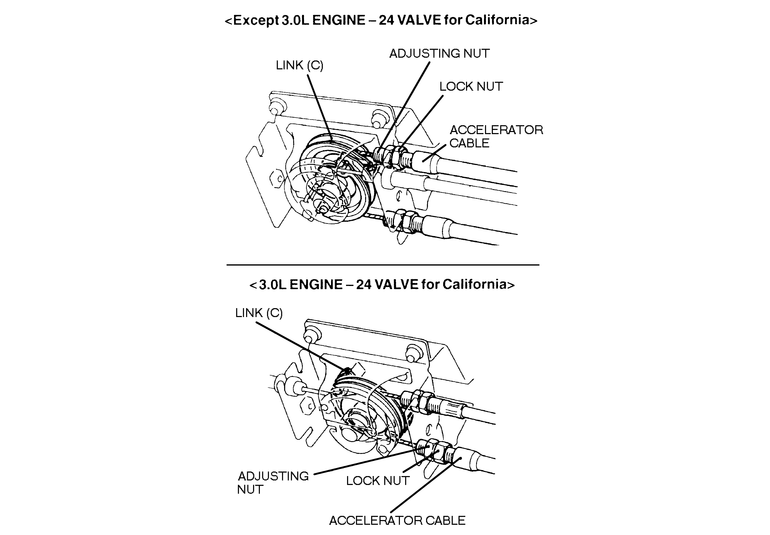
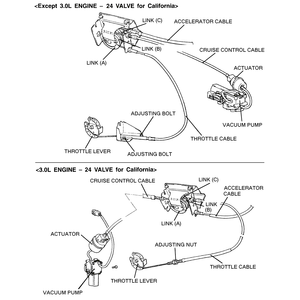
| Fig. 4: Accelerator cable location and assembly components — 3.0L
and 3.5L engines
|
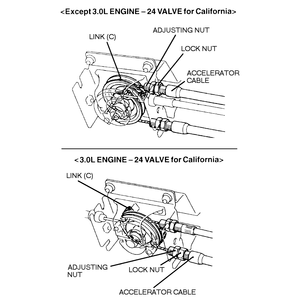
| Fig. 5: Hold link C against the stopper and adjust
the play with the adjusting nut — 3.0L and 3.5L engines
|
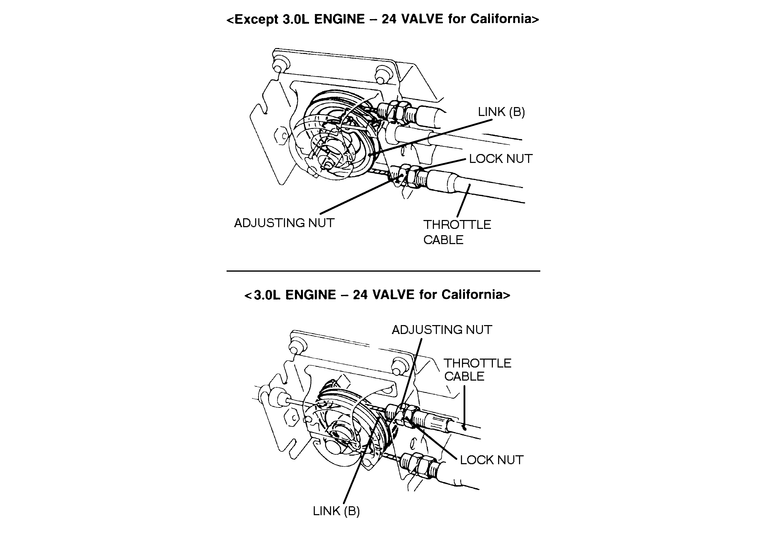
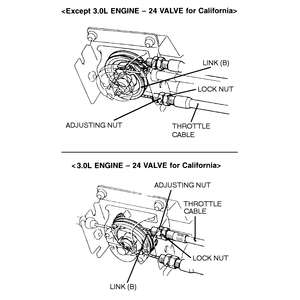
| Fig. 6: Hold link B against link C and adjust the
free-play to 0.04–0.08 in. (1–2mm) — 3.0L
and 3.5L engines
|
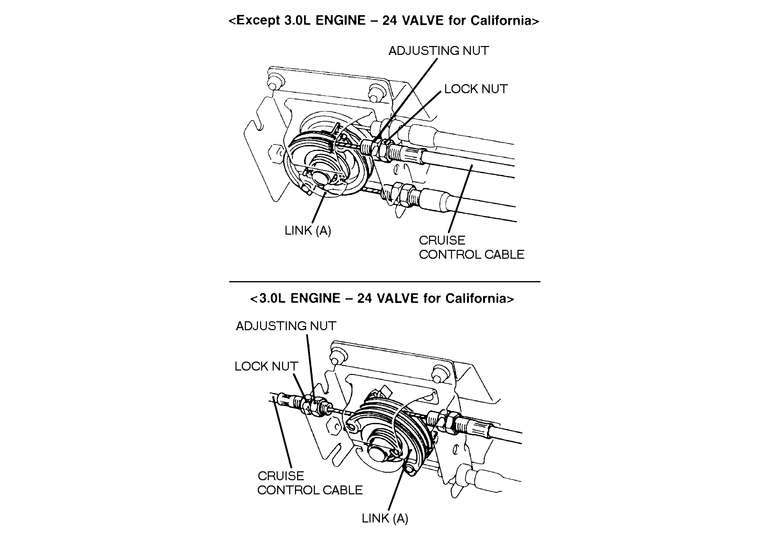
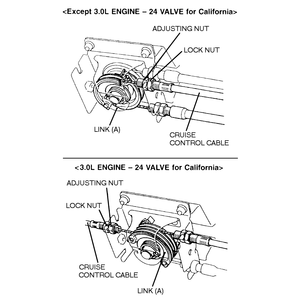
| Fig. 7: Adjust the free-play in the cruise control
cable while holding link A against link B — 3.0L and
3.5L engines
|
- If there is excessive sagging of the inner cable of the accelerator cables
A and B, or if there is no sagging at all, first check the arrangement and
placement of the cable, then adjust as described below.
- Idle the engine to warm it up to a steady rpm.
- Confirm that the idle rpm matches the specified rpm. In this case the
specified rpm is 650–850 rpm (2.4L engines) or 600–800 rpm
(3.0L Engines) at idle.
- Stop the engine and remove the cover of the actuator.
- Loosen the lock nuts of the accelerator cables A and B and let the inner
cables sag.
- While keeping lever P and the stopper in contact with each other, turn
the adjusting nut (in the direction that causes the outer cable to become
longer) until just before the lever P begins to operate, then turn the
nut 1/2 turn back and secure it with the locking nut. This operation will
ensure that the free-play of the accelerator cable A is correctly adjusted.
The standard value of free-play for cable A is 0–0.04 in. (0–1mm).
- In order to get the play of accelerator cable B (the distance C, between
levers C and P) to the standard value, alter the adjusting nuts of the
throttle body and adjust. The standard value for accelerator cable B is
0–0.08 in. (0–2mm).
NOTE: If there is excessive play of the accelerator
cables, the vehicle speed drop ("undershoot'') when climbing a slope
will be large. If there is no play (excessive tension) of the cables,
the idling speed will increase.
- After adjusting the cables, operate the accelerator pedal, turn the lever
steadily and make sure that the throttle lever is being activated. Also move
the actuator, turn the lever steadily and make sure that the throttle lever
is being activated.
- Install the actuator cover.
- Remove the link protector plate.
- Check if there is any deflection in the inner cables of the the accelerator
cable, cruise control cable and the throttle cable. If there is excessive
deflection or no play in the inner cables, loosen the adjusting bolts and
nuts to release each link from the throttle lever. Do not remove the adjusting
nuts or bolts.
Accelerator cable:
- While holding link C so that it is touching the stopper, adjust the play
of the accelerator cable with the adjusting nut so that the cable play is
at the standard value. If the vehicle is equipped with the ELC–4A/T
automatic transmission, the values should be 0.08–0.12 in. (2–3mm),
otherwise the standard value is 0–0.04 in. (0–1mm).
- After adjusting, secure the cable with the locknut.
Throttle cable:
- While holding link B so that it is touching link C, adjust the play of the
throttle cable with the adjusting nut and adjusting bolts (throttle lever
side) so that the cable play is at 0.04–0.08 in. (1–2mm).
- After adjusting, secure the cable with the lock nut.
Cruise control cable:
- While holding link A so that it is touching link B, adjust the play of the
cruise control cable with the adjusting nut so that the cable play is at the
standard value of 0.04–0.08 in. (1–2mm).
- After adjusting, secure the cable with the locknut.
- Install the link protector plate.