CAUTION
Gasoline in either liquid or vapor form is EXTREMELY explosive. An empty tank
can sometimes be more hazardous than a full one due to vapor accumulation. Observe
no smoking/no open flame rules during this procedure. Take extreme care to avoid
sparks from any source, including electric switches and dropped tools. Have
a dry powder (type B-C) fire extinguisher within arm's reach at all times and
know how to use it. Always store drained fuel in metal containers with an airtight
lid. Liquid gasoline may cause skin irritation or allergic reaction; avoid splashing
fuel on clothing.
NOTE: Common sense dictates that the tank be very close to
empty before draining it. Have a funnel and a supply of rags on hand before
beginning.
- Disconnect the negative battery cable.
- Elevate and safely support the vehicle on jackstands. For 1986–89
trucks, remove the small side skirt panel on the left side.
- Remove the filler cap to equalize pressure within the tank.
- Remove the drain plug and in-tank filter. Drain the fuel into a suitable
metal container with an airtight lid. Later models may not have the in-tank
filter.
- Loosen the fuel hose clamps (main, return and vapor) at the fuel tank and
disconnect the hoses. Label or identify each hose and port.
- Remove the electrical harness from the fuel gauge unit.
- Remove the filler neck retaining bolts from the body. Remove the filler
hose protector.
- Use a floor jack and a broad piece of wood positioned under the fuel tank
to support the tank.
- Remove the tank mounting nuts.
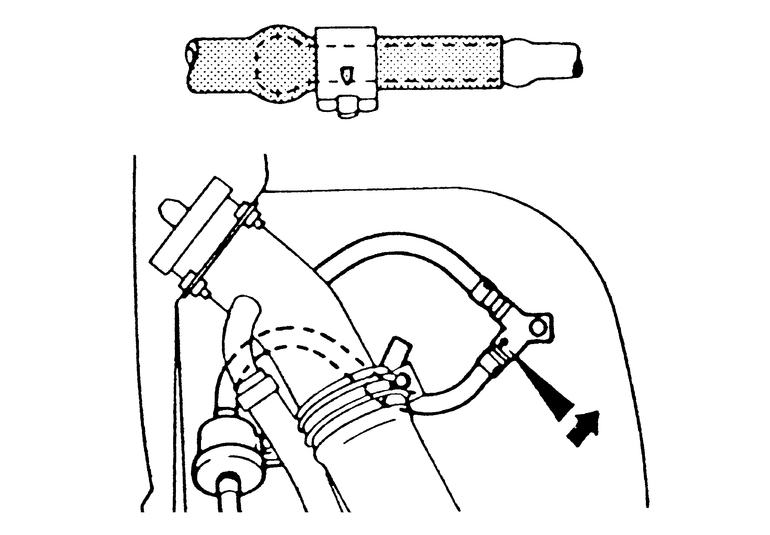
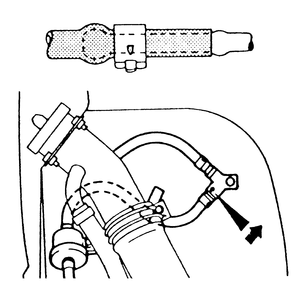
| Fig. 1: On all models, make certain that the fuel
return line is properly connected (upper) and that the check valve
(arrow) is not upside down
|
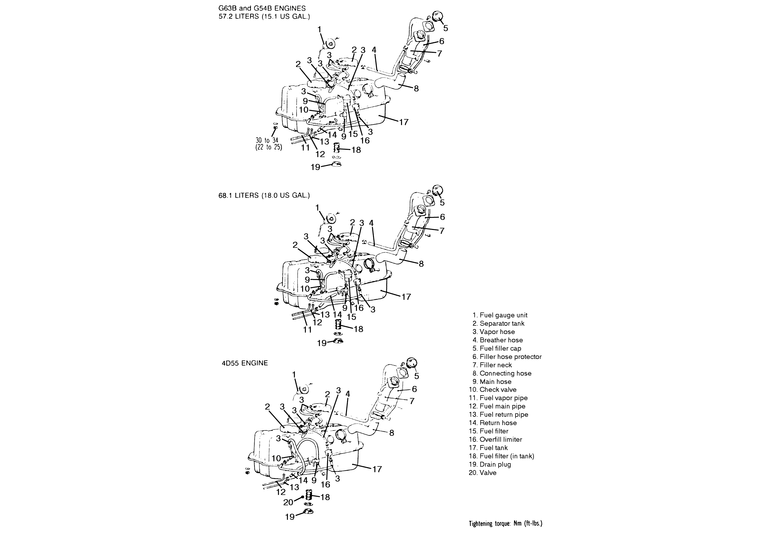
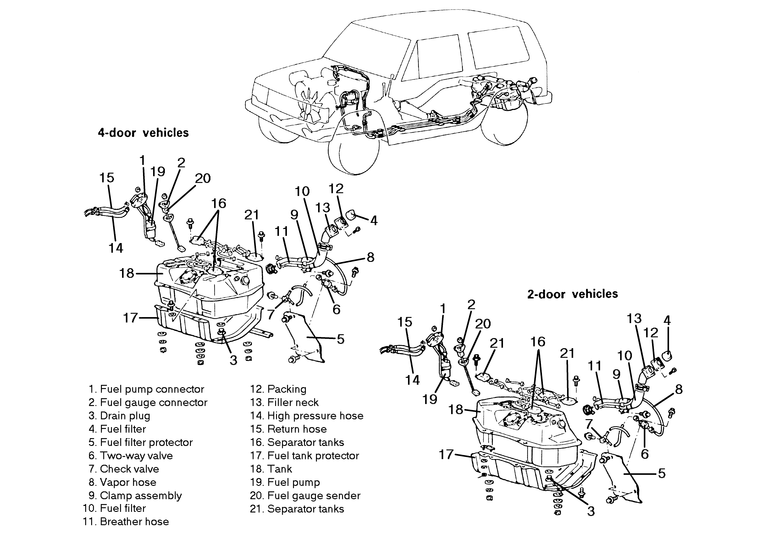
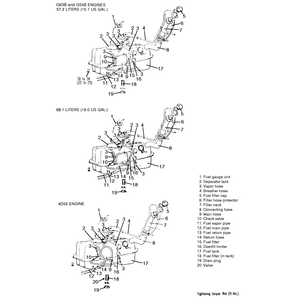
| Fig. 2: Fuel tank assembly and component location — 1983–90
Pick-ups
|
- Lower the tank to the ground.
- Install the new tank by raising it into place with the jack.
- Install the retaining nuts and tighten them to 32 Nm (24 ft. lbs.). When
the tank is secure, the jack may be removed.
- Connect the electrical harness to the gauge unit.
- Install the filler hose protector and install the neck-to-body retaining
screws.
- Install the hoses to their ports, making certain that each clamp is secure.
- If not already done, install the in-tank filter and drain bolt. Tighten
the bolt to 44 ft. lbs. (59 Nm).
- Using a funnel, carefully refill the tank with the drained fuel. Avoid splashing
fuel onto the painted bodywork. Install the filler cap.
- Lower the vehicle to the ground and connect the negative battery cable.
- Start the engine. It will take a period of cranking before the engine fires
and runs smoothly due to the lines being emptied.
- Check the entire work area carefully for any sign of leakage. A small leak
will not drip but will only show up a slight moisture on the hose. Attend
to all leaks immediately.
Although some slight differences may appear between different model years or
makes, the procedures for all 1991–95 Mitsubishi trucks is essentially
the same. Refer to the illustrations if any discrepancies arise.
- Disconnect the negative battery cable.
- Unplug all wiring harnesses from the fuel tank (fuel pump and fuel gauge
unit connectors).
- Elevate and safely support the vehicle on jackstands.
- Remove the filler cap to equalize pressure within the tank.
- Remove the drain plug and drain the fuel into a clean, suitably-sized container
with a sealable top.
- Remove the side skirt panel stay.
- Remove the main hose, return hose, vapor hose, breather hose and fuel filler
hose connections.
- On vehicles equipped with a 3.0L engine, remove the fuel tank protector.
- Position a floor jack under the fuel tank and support the tank with it.
- Remove the fuel tank mounting nuts and lower the fuel tank with the floor
jack.
- At this time, the fuel tank pressure relief valve, fuel pump assembly, or
fuel gauge sending unit can be removed from the fuel tank.
To install:
- Lift the fuel tank back up into its position with the floor jack.
- Secure the tank in place with the fuel tank mounting nuts. Tighten them
to 18–22 ft. lbs. (25–30 Nm).
- Install the fuel tank protector plate, if so equipped.
- Install the fuel filler hose until its end contacts the fuel tank.
- Install the breather and return hoses to the nipples, making sure that they
are pushed at the least 1–1.20 in. (25–30mm) on.
- Reattach the vapor hose connection.
- Install the main hose. Temporarily tighten the flare nut by hand, then tighten
it to 22–29 ft. lbs. (30–40 Nm), being careful that the fuel hose
does not become twisted.
CAUTION
When tightening the flare nut, be careful not to bend or twist the line,
which could cause damage to the fuel tank connection.
- Attach the fuel pump and the fuel gauge unit connectors.
- Install the side skirt panel stay.
- Fill the tank with approximately 1 gallon of gasoline and connect the negative
battery cable.
- Start the engine and check for any fuel leaks around the hoses going to
the fuel tank and their connections; repair if necessary.
- Disconnect the negative battery cable.
- Remove the gas filler cap to equalize the pressure within the tank.
- Elevate and safely support the vehicle on jackstands.
- Although not required, the job is easier if the rear wheels are removed.
- Remove the drain plug and drain the fuel into a suitable metal container
with an airtight lid.
- Remove the fuel filler protector.
- Disconnect the vapor hose, the check valve and the overfill limiter. Make
sure each line is labeled for correct reassembly.
- Loosen the clamp and remove the large filler hose from the tank.
- Disconnect the breather hose from the tank.
- Label and disconnect the main hose and the return hose from the tank.
- Unplug the fuel gauge electrical connector.
- Position a floor jack and a broad piece of wood under the tank. Remove the
tank retaining nuts and lower the tank from the vehicle.
- The separator tanks and the protective stone shield may be removed if so
desired.
- Reinstall the tank by elevating it with the floor jack. Install the retaining
nuts and tighten them to 20 ft. lbs. (27 Nm).
- Connect the wiring to the fuel gauge sender.
- Connect the main and return hoses and insure the clamps are tight.
- Fit the filler neck and breather hoses onto the tank and secure the clamps.
Make certain the hoses are properly seated on the ports.
- Install the overfill limiter, the check valve and the vapor hose. Make certain
the check valve (roll over valve) is mounted so that the arrow on its case
point upwards.
- Install the filler neck protector.
- If not already done, install the drain plug and tighten it to 12 ft. lbs.
(16 Nm).
- Using a funnel, carefully refill the tank with the drained fuel. Avoid splashing
fuel onto the painted bodywork. Install the filler cap.
- Lower the vehicle to the ground and connect the negative battery cable.
- Start the engine. It will take a period of cranking before the engine fires
and runs smoothly due to the lines being emptied.
- Check the entire work area carefully for any sign of leakage. A small leak
will not drip, but will only show up as slight moisture on the hose. Attend
to all leaks immediately.
- Lift or move aside the carpet in the rear cargo area.
- Remove the oval cover plate from the access hole.
- Disconnect the fuel pump harness connector at the rear of the fuel tank.
- Start the engine, allowing it to run until it runs out of fuel. This relieves
pressure within the fuel system.
- Turn the ignition switch OFF and disconnect the negative
battery cable.
- Remove the fuel filler cap.
- Safely elevate and support the vehicle on jackstands.
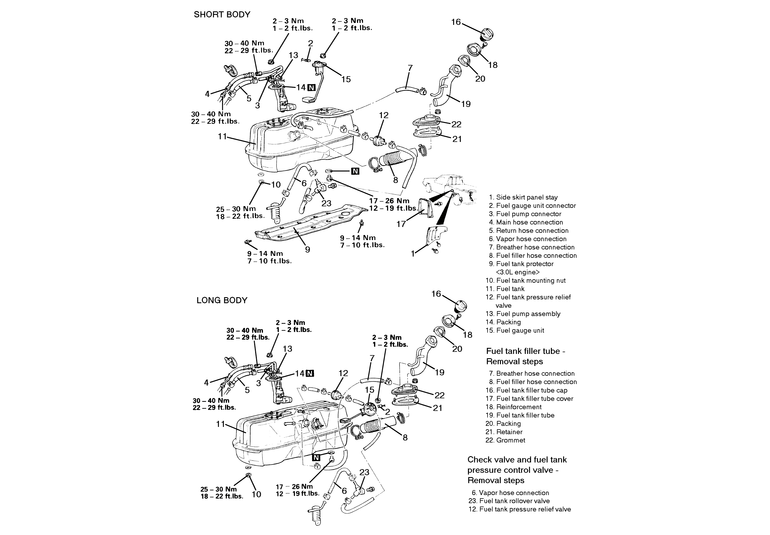
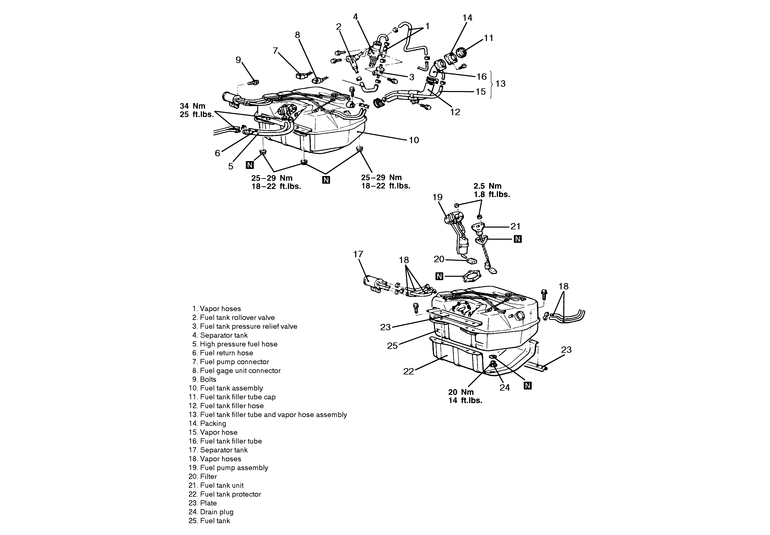
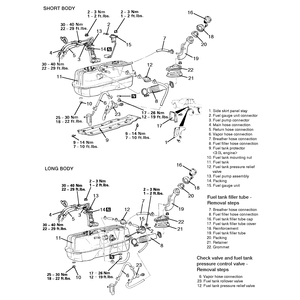
| Fig. 3: Fuel tank assembly and component location — 1991–95
Pick-ups
|
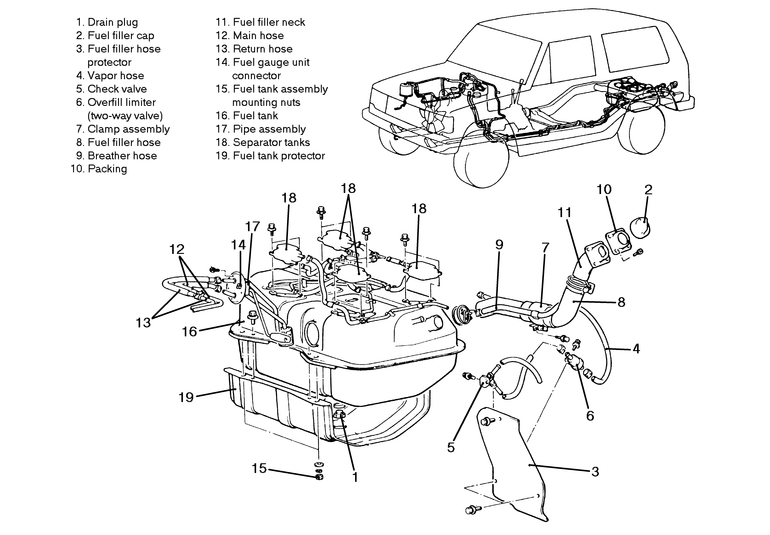
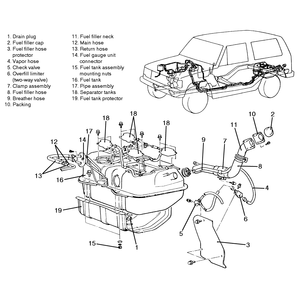
| Fig. 4: Fuel tank assembly and component location — 1983–90
carbureted Monteros
|
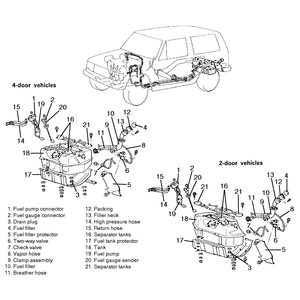
| Fig. 5: Fuel tank assembly and component location — 1989–90
fuel injected Monteros
|
- Drain the fuel from the fuel tank into suitable container(s), each with
an airtight lid.
- Remove the fuel filler protector.
- Label and disconnect the two-way valve, the check valve and the vapor hose.
- Disconnect the clamp holding the filler neck to the body.
- At the tank, disconnect the filler hose and the breather hose.
- Remove the retaining screws at the top of the filler and remove the filler
neck from the car.
- At the fuel pump, disconnect the high pressure line and the return line.
WARNING
Wrap the joints in a rag before loosening. Some pressure may remain within
the system.
- Disconnect and remove the separator tank(s) on top of the fuel tank.
- Position a floor jack and a broad piece of lumber under the tank. Remove
the retaining nuts and lower the tank out of the vehicle with the jack.
- The tank protector, fuel pump and additional components may be removed with
the tank out of the vehicle.
- When reinstalling, elevate the tank with the jack and install the retaining
nuts. Tighten them to 20 ft. lbs. (27 Nm).
- If the tank protector was removed, it may be reinstalled now; tighten the
bolts to 10 ft. lbs. (14 Nm). Install the separator tanks if they were removed.
- Install the fuel return line, making sure it reaches the second bulge on
the pipe.
- Connect the high pressure line by hand, making sure the flare nut threads
in straight and that the hose does not become twisted or kinked. Use a second
wrench to counterhold the joint and tighten the fitting to 26 ft. lbs. (35
Nm).
- Install the fuel filler neck. Tighten the upper screws (at the filler) and
connect the hoses at the tank. Check the clamps for proper fit.
- Install the clamp assembly holding the filler neck to the body.
- Connect the vapor hose, check valve (roll over valve) and the overfill limiter.
Make sure the check valve is installed with the arrow on its case pointing
up.
- Install the filler hose protector.
- If not already done, install the drain plug and tighten it to 14 ft. lbs.
(18 Nm).
- Connect the wiring to the fuel pump and the fuel gauge sender.
- Using a funnel, carefully refill the tank with the drained fuel. Avoid splashing
fuel onto the painted bodywork. Install the filler cap.
- Lower the vehicle to the ground and connect the negative battery cable.
- Start the engine. It will take a period of cranking before the engine fires
and runs smoothly due to the lines being emptied.
- Check the entire work area carefully for any sign of leakage. A small leak
will not drip but will only show up a slight moisture on the hose. Attend
to all leaks immediately.
- Reinstall the access cover panel and reposition the carpeting in the cargo
area.
Although some slight differences may appear between different model years or
makes, the procedures for all 1991–95 Mitsubishi trucks is essentially
the same. Refer to the illustrations if any discrepancies arise.
- Disconnect the negative battery cable.
- Unplug all wiring harnesses from the fuel tank (fuel pump and fuel gauge
unit connectors).
- Elevate and safely support the vehicle on jackstands.
- Remove the filler cap to equalize pressure within the tank.
- Remove the drain plug and drain the fuel into a clean, suitably-sized container
with a sealable top.
- Remove the side skirt panel stay.
- Remove the main hose, return hose, vapor hose, breather hose and fuel filler
hose connections.
- Position a floor jack under the fuel tank and support the tank with it.
- Remove the fuel tank mounting nuts and lower the fuel tank with the floor
jack.
- At this time, the fuel tank pressure relief valve, fuel pump assembly, or
fuel gauge sending unit can be removed from the fuel tank.
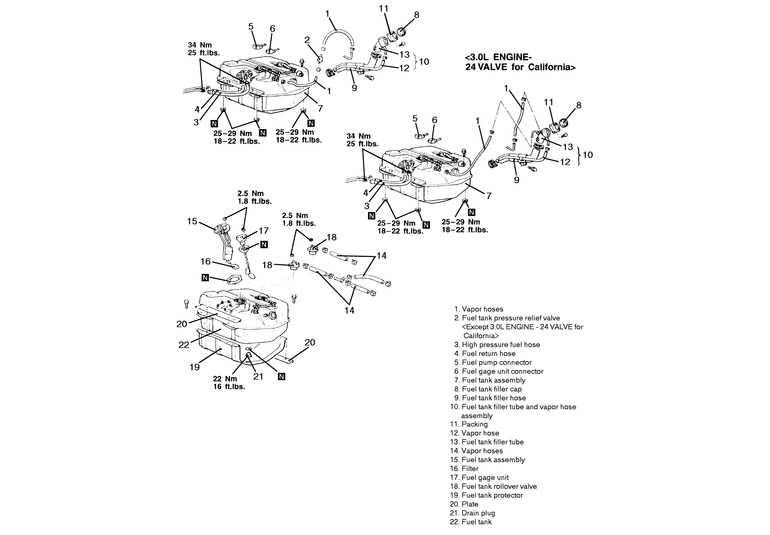
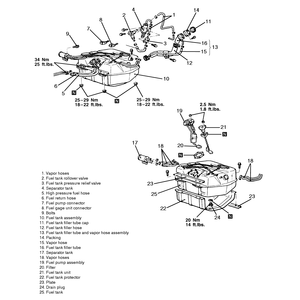
| Fig. 6: Fuel tank assembly and component location — 1991–94
Monteros
|
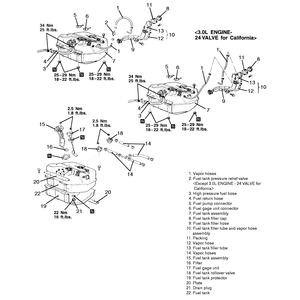
| Fig. 7: Fuel tank assembly and component location — 1995
Monteros
|
To install:
- Lift the fuel tank back up into its position with the floor jack.
- Secure the tank in place with the fuel tank mounting nuts. Tighten them
to 18–22 ft. lbs. (25–30 Nm).
- Install the fuel filler hose until its end contacts the fuel tank.
- Install the breather and return hoses to the nipples, making sure that they
are pushed on at least 1–1.20 in. (25–30mm).
- Reattach the vapor hose connection.
- Install the main hose. Temporarily tighten the flare nut by hand, then tighten
it to 22–29 ft. lbs. (30–40 Nm), being careful that the fuel hose
does not become twisted.
CAUTION
When tightening the flare nut, be careful not to bend or twist the line,
which could cause damage to the fuel tank connection.
- Attach the fuel pump and the fuel gauge unit connectors.
- Install the side skirt panel stay.
- Fill the tank with approximately 1 gallon of gasoline and connect the negative
battery cable.
- Start the engine and check for any fuel leaks around the hoses going to
the fuel tank and their connections; repair if necessary.