Previous Next

OVERHAUL

  1. Remove the master cylinder.
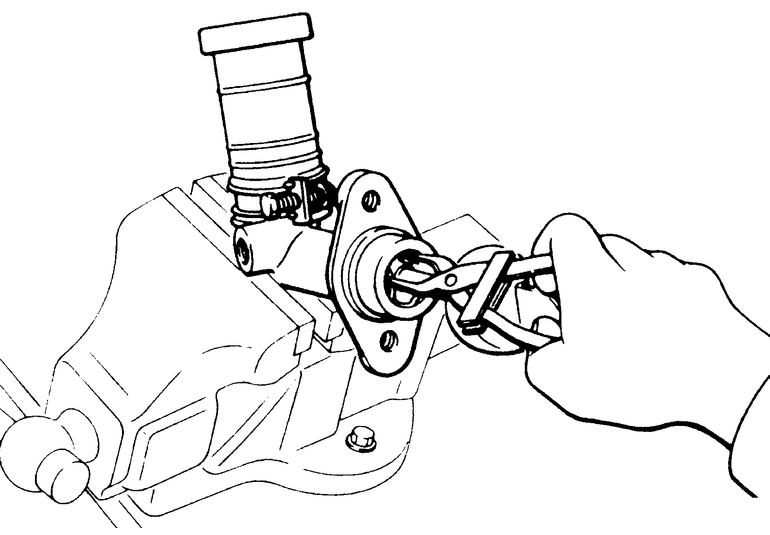
  2. Remove the piston stop ring from the rear of the unit with snapring pliers.
  3. Remove the damper and pushrod, if equipped.
  4. Pull out the piston assembly.
  5. Unscrew the clamp holding the reservoir onto the master cylinder, then pull the reservoir off of the cylinder.
  6. Inspect the cylinder bore for rust or scoring. Inspect the piston cup for wear or damage. Inspect the inner bore of the hydraulic line connection for clogging. Clean a clogged bore or replace scored or damaged parts as necessary.

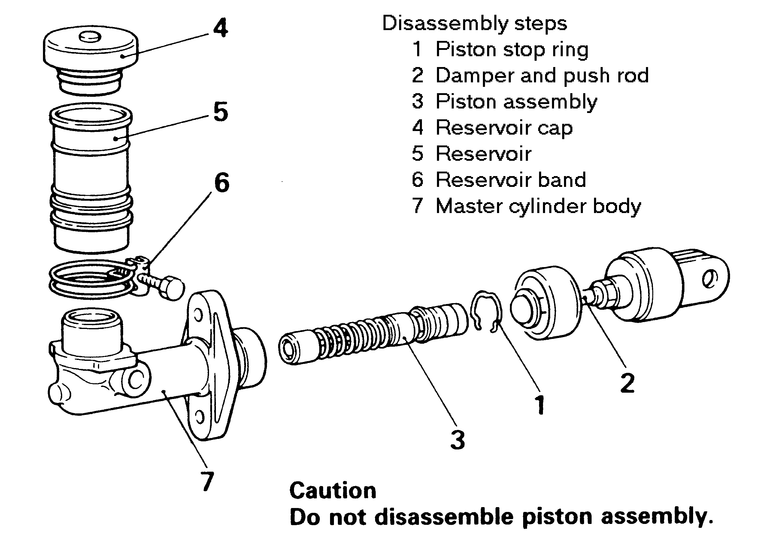
    Fig. 1: Clutch master cylinder disassembly and assembly components — hydraulic clutch systems

    Fig. 2: Using a vice will make disassembly much easier — use snapring pliers to remove the snapring from the master cylinder body

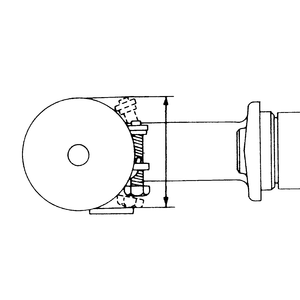
    Fig. 3: Install the reservoir retaining clamp so that the adjusting screw falls within the specified area

  7. Use an inside micrometer to measure the cylinder bore in two directions at right angles to each other in the beginning, middle, and end of the bore. Measure the outer diameter of the piston in a similar way. Compare the figures. If clearance exceeds 0.0059 in. (0.15mm) at any point, replace the cylinder and the piston. This is a critical dimension; measure and compute carefully.

    CAUTION
    Do not disassemble the piston assembly.

    To assemble:
  8. Coat the inner surface of the cylinder and the entire surface of the piston in clean, fresh brake fluid. Install the piston into the bore, making certain not to gouge the cylinder walls.
  9. Attach the damper and pushrod, if applicable.
  10. Install the piston stop ring. Make certain it is seated in the groove all around.
  11. Install the clamp for the reservoir so the clamp screw is behind the reservoir.
  12. Install the cylinder to the firewall and tighten the mounting nuts to 7–10 ft. lbs. (10–15 Nm).
  13. Attach the master cylinder to the clutch pedal (use a new cotter pin).
  14. Fill and bleed the system.

Previous Next