Previous Next

Master Cylinder

REMOVAL & INSTALLATION

  1. Use a clean suction tube (a turkey baster works well) to remove as much fluid as possible from the reservoir.
  2. Disconnect the electrical connector for the fluid level sensor.
  3. Using only a wrench of the correct size (no pliers — ever!), carefully disconnect each brake line from the master cylinder. Label each line with a piece of tape. Plug or tape the end of the line to keep dirt and moisture out.

    WARNING
    Do not bend or crimp the steel brake lines. Handle them with extreme care! If damaged, they must be replaced.

  4. Remove the nuts holding the master cylinder to the brake booster and remove the cylinder. Some fluid will remain within the cylinder; take care not to spill it on painted surfaces.

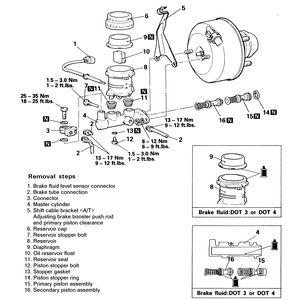
    Fig. 1: Brake master cylinder removal and disassembly components — 1983–86 Pick-ups and Monteros

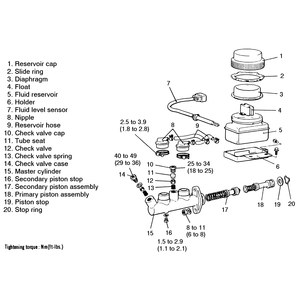
    Fig. 2: Brake master cylinder removal and disassembly components — 1987–95 Pick-ups and Monteros

    Fig. 3: Using a turkey baster to remove the brake fluid from the reservoir works well

    Fig. 4: Disconnect the electrical wiring from the master cylinder

    Fig. 5: Loosen and remove the hard lines from the master cylinder — be careful not to bend the lines

    Fig. 6: Use the hard lines which have the flares in the line are machine made

    Fig. 7: Remove the mounting nuts holding the brake master cylinder to the power booster

    Fig. 8: Remove the master cylinder from the power brake booster — be careful not to spill any brake fluid on painted components, since the fluid will damage paint

  5. Install the master cylinder to the brake booster and tighten the nuts to 9 ft. lbs. (12 Nm).
  6. Carefully connect each brake line to its port on the master cylinder. Start each by hand, making sure that the fitting is at 90°to the port before starting to turn it. Once threaded one or two turns by hand, the wrench may be used to tighten each fitting to 15 ft. lbs. (20 Nm).

    WARNING
    Do not overtighten the flare nuts. Overtightening will cause damage to the nut and/or the master cylinder!
  7. Connect the wiring connectors to the master cylinder.
  8. For cars with remote reservoirs, connect the fluid tubes to the master cylinder. Make sure the lines are firmly seated and the clamps are firmly set.
  9. Fill the system with clean, fresh brake fluid.
  10. Bleed the brake system at all four wheels.

Previous Next