NOTE: Special measuring tools are required for this procedure.
WARNING
Do NOT disassemble the primary or secondary pistons!
| Fig. 1: Mount the brake master cylinder in a vise
so that only the mounting flange (and not the cylinder body) is in
the jaws
|
| Fig. 2: Unfasten the reservoir mounting bolt, then
remove the reservoir from the brake master cylinder
|
| Fig. 3: Remove the reservoir mounting seals — new
seals will be needed for reassembly
|
| Fig. 4: While holding the piston assembly in, remove
the piston stopper bolt
|
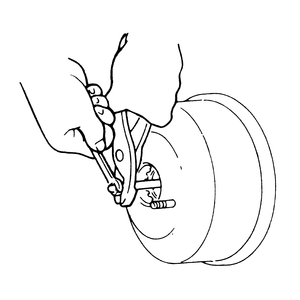
| Fig. 5: Using snapring pliers, remove the snapring
from the piston hole in the master cylinder
|
| Fig. 6: Remove the primary piston assembly from the
master cylinder — do not disassemble the piston assemblies
themselves
|
| Fig. 7: Remove the secondary piston assembly — if
the secondary piston is difficult to remove, apply compressed air
to the secondary side outlet port
|
| Fig. 8: Make certain to note which components are
mounted in which position
|
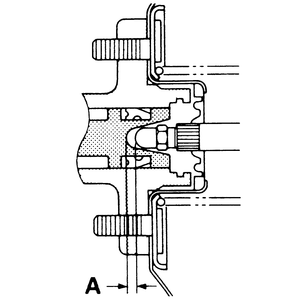
| Fig. 9: Check the clearance (A) between the brake
booster pushrod and the primary piston — follow the
special procedure
|
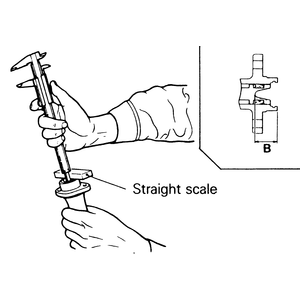
| Fig. 10: Using a Vernier caliper and straight scale
(along the edge of the master cylinder), obtain dimension (B). Be
sure to subtract the thickness of the scale
|
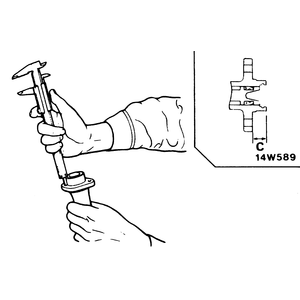
| Fig. 11: Measure dimension (C) from the master cylinder's
brake booster installation surface to the edge
|
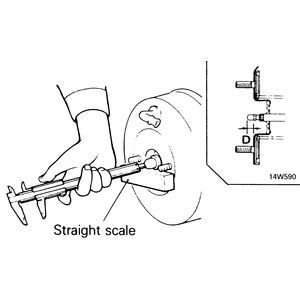
| Fig. 12: Measure dimension (D) from the brake booster's
master cylinder installation surface to the end of the pushrod
|
| Fig. 13: If clearance is not within the standard
value range, turn the pushrod screw to achieve desired length
|
NOTE: Obtain dimension (D) by first placing a straight scale against the edge of the brake booster, then measuring and subtracting the thickness of the straight scale.
WARNING
Insufficient clearance may cause excessive brake drag.