WARNING
On vehicles with rear drum brakes, the shoe-to-drum clearance must be adjusted
before adjusting the cable. If the brake clearance is out of adjustment, the
cable adjustment will not cure the problem.
- Apply the brake with normal pressure (about 40 lbs. or 182 N) and count
the number of clicks required to bring the lever tight enough to hold the
vehicle. Don't try to pull the lever into the back seat, 4–5 clicks
are sufficient. If the number of clicks is incorrect, proceed with the remaining
steps.
- Release the brake lever and tighten the cable adjuster (located under the
vehicle, at the center of the cable equalizer) until all cable slack is just
removed.
- Start the engine, allowing it to idle and apply the footbrake and release
it. Then apply the handbrake and release it, apply the footbrake and release
it, etc. in a continuous cycle until the automatic adjusters at the rear stop
clicking.
- Recheck the number of clicks required to apply the brake. Adjust the cable
adjuster and repeat the check until the number of clicks required is correct.
- Raise the rear of the vehicle and support it safely. Release the handbrake
and rotate each rear wheel to make sure the brakes are not dragging.
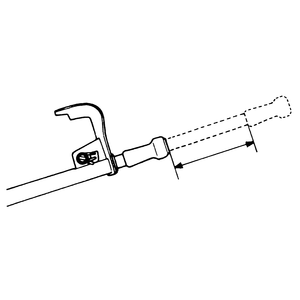
- Pull the parking brake lever and pull up until the parking brakes will hold
the vehicle from moving. The handle should only have to be pulled up 4–6
clicks.
- If the handle stroke is not within the standard value range, make the following
adjustments.
- Loosen the adjuster to slacken the parking brake cable.
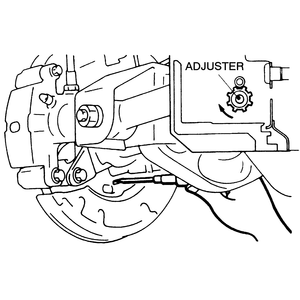
- Remove the adjustment hole plug on the rear brake assemblies, and then use
flat-tipped prytool to turn the adjuster in the direction of the arrow (the
direction which expands the shoe) so that the disc will not rotate.
| Fig. 1: Turn the adjuster in the direction of the
arrow so that the disc will not rotate — 1992–95
Montero
|
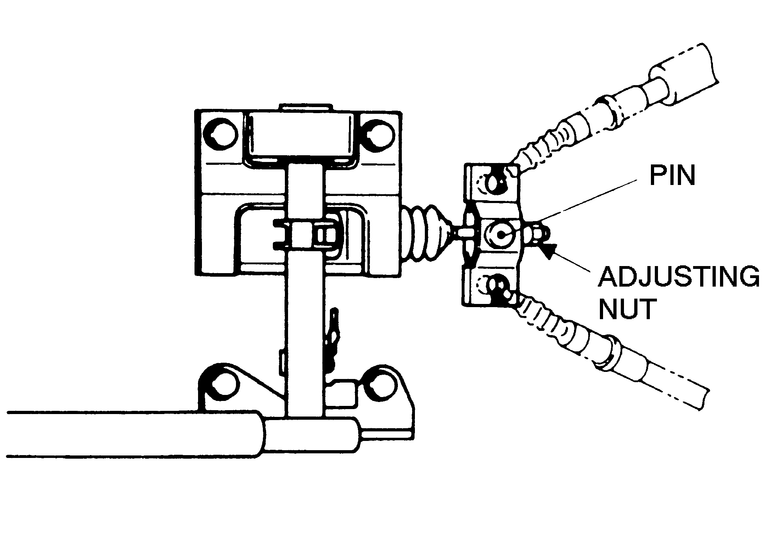
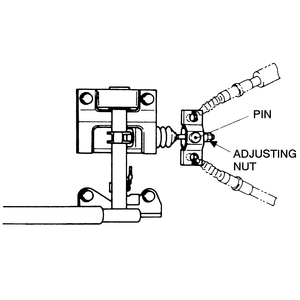
| Fig. 2: The adjustment components on 1992–95
Montero parking brakes
|
- Return the adjuster 3–4 notches in the direction opposite to the direction
of the arrow.
- Turn the adjusting nut to adjust the parking brake lever stroke to within
the standard value range.
NOTE: If the number of brake lever notches engaged is less
than the standard value, the cable has been pulled excessively. Be sure
to adjust it to within the standard value.
- After making the adjustment, check to be sure that there is no play between
the adjusting nut and the pin. Also check that the adjusting nut is securely
held at the nut holder.
- After adjusting the lever stroke, jack up the rear of the vehicle and support
the vehicle with jackstands.
- With the parking brake lever in the released position, tun the rear wheel
to confirm that the rear brakes are not dragging.
- Lower the vehicle back to the ground.
- Pull the lever up with a force of about 66 lbs. (300 N) and count the number
of notches or clicks. Correct number is 16 or 17.
- If the number of clicks is incorrect, elevate and safely support the vehicle
on stands; block the front wheels.
- Under the vehicle, loosen the adjusting nuts to slacken each brake cable
(one runs to each rear wheel from the equalizer).
- Tighten the adjusting nuts just to the point of taking the slack out of
the cable. Repeatedly pull and release the brake lever to adjust the rear
brake shoes.
| Fig. 3: Pull the parking brake handle out until the
parking brakes will hold the vehicle from rolling — Pick-ups
|
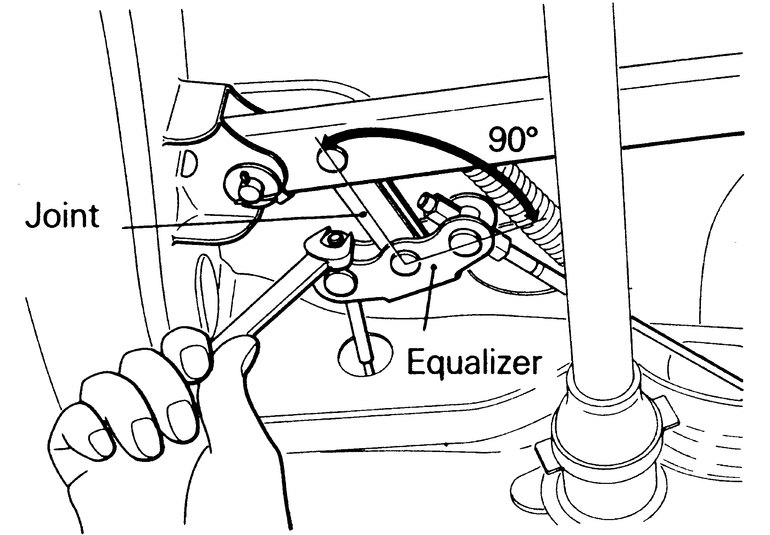
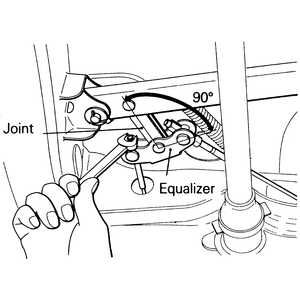
| Fig. 4: Under the truck, tighten the nuts to the
cables so that the equalizer forms a 90°angle with the bracket — Pick-up
trucks
|
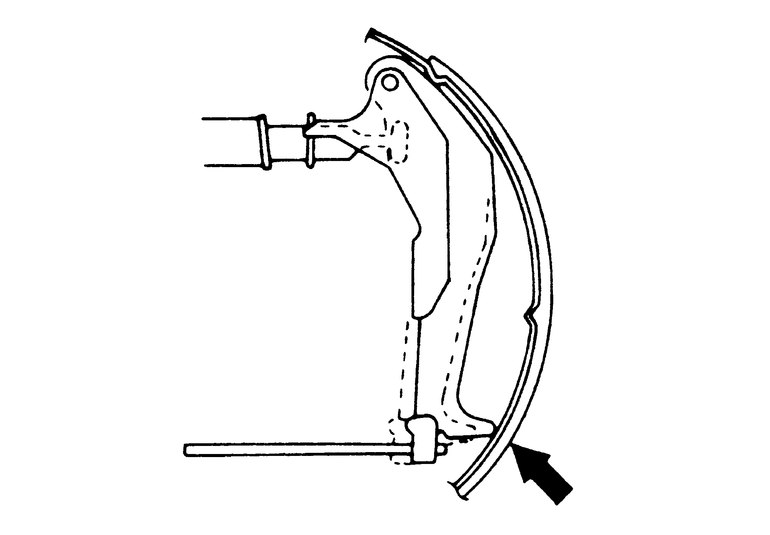
| Fig. 5: Remove the rear drums and check to make sure
that the brake lever is just touching the brake shoe
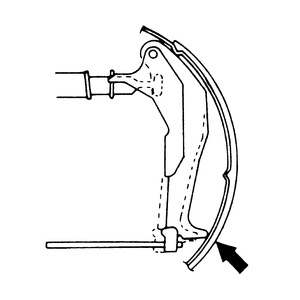
|
- Tighten the adjusting nuts until the lever has the correct number of clicks.
NOTE: Make certain that the joint and equalizer are at
right angles when the adjustment is finished. An angle other than 90°will
cause uneven brake application.
- Fully release the parking brake lever and remove each rear wheel and brake
drum. Make certain the brake lever is just touching the shoe.
WARNING
If the parking brake cable is pulled too far, the adjuster lever will not
fit the adjuster, resulting in faulty operation.
- Reinstall the drum and install the wheel.
- Apply and release the parking brake once or twice. With the brake fully
released, spin each rear wheel by hand and check for dragging brakes.