Previous Next

REMOVAL & INSTALLATION

Pick-up
FRONT CABLE
  1. Elevate and safely support the vehicle on stands.
  2. Inside the vehicle, under the dash, identify and unplug the parking brake indicator switch. Remove the switch and bracket.
  3. The end of the cable sheath is held in place by a snapring. Remove it. You are reminded that these snaprings tend to vanish if not removed carefully.
  4. Lift the pawl from the ratchet and push the parking brake lever all the way in. In this position, the cable may be disconnected from the lever.
  5. Under the vehicle, trace the cable and remove the clips and brackets holding it to the body.
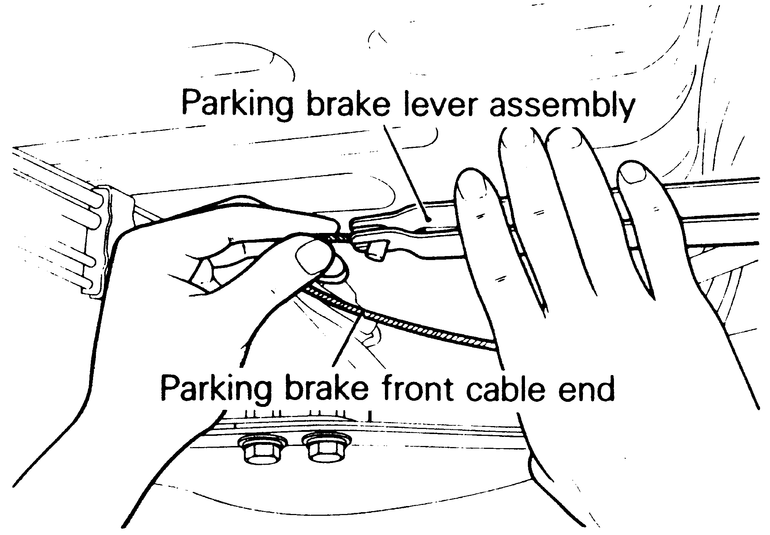
  6. Disconnect the cable from the lever assembly. Remove the cable from the vehicle. Don't damage the body grommet while removing it.

    Fig. 1: Make certain to connect the front cable to the lever assembly correctly — Pick-up trucks

  7. Route the new cable into position. It's usually easier to attach the inner end to the lever first, then deal with the equalizer end. Loosen the adjusting nuts on the rear cables if necessary.
  8. Once both ends are secured, install the clips and brackets holding the cable to the body.
  9. Fit the rubber body grommet into place and make certain it is secure.
  10. Install the snapring on the end of the cable.
  11. Install the brake indicator switch in place and connect the wiring but do not final tighten the switch mount.
  12. Adjust the parking brake lever stroke according to procedures given earlier in this section.
  13. With the cable correctly adjusted, adjust the switch so that the warning light illuminates when the lever is pulled one notch. Tighten the switch mount.
REAR CABLE
  1. Elevate and safely support the vehicle on stands.
  2. Remove the rear wheels.
  3. Remove the brake drum.

    CAUTION
    Brake pads and shoes may contain asbestos, which has been determined to be a cancer causing agent. Never clean the brake surfaces with compressed air! Avoid inhaling any dust from brake surfaces! When cleaning brakes, use commercially available brake cleaning fluids.

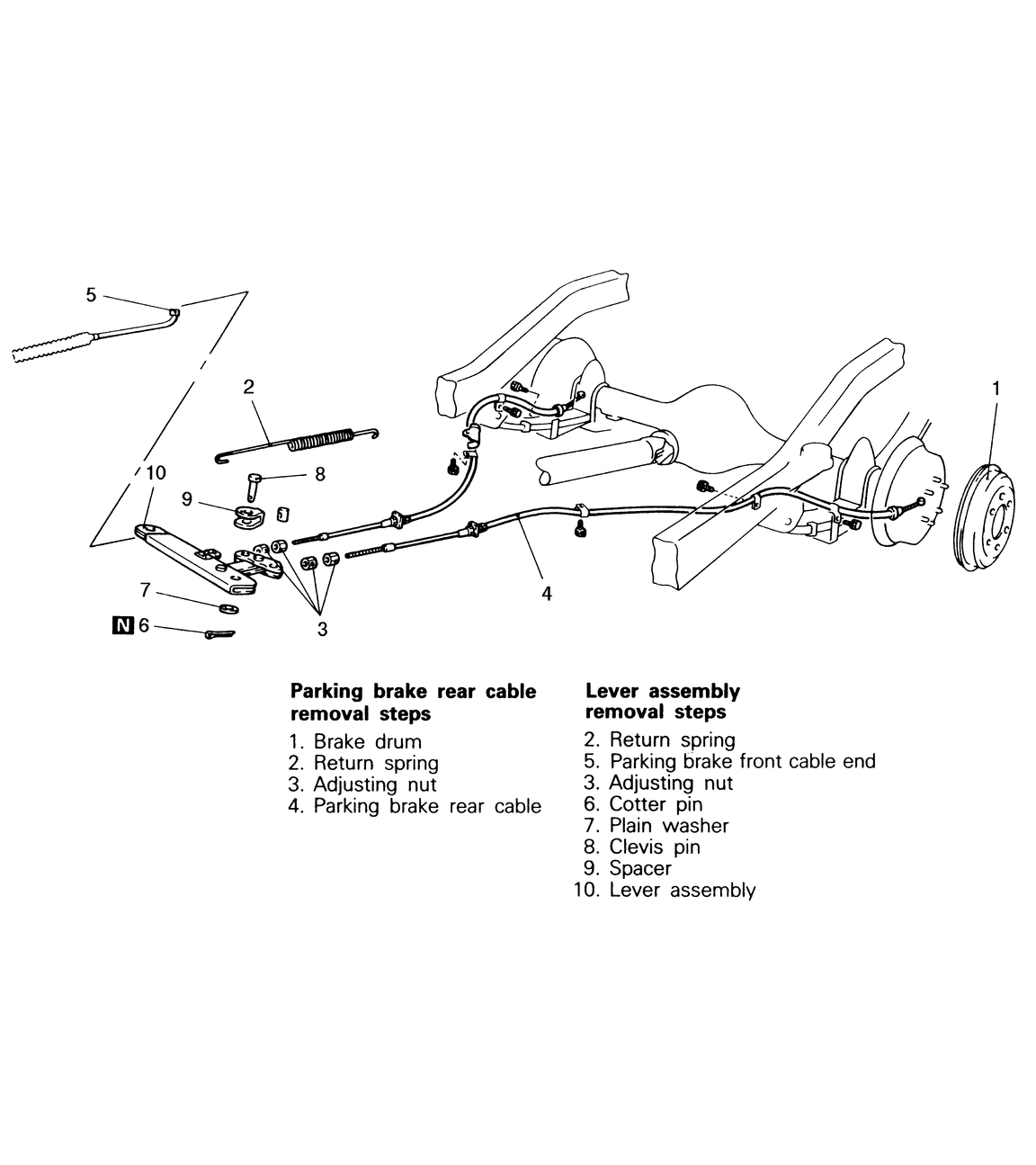
  4. At the equalizer, disconnect the return spring.
  5. With the parking brake released, remove the adjusting nut from the cable to be removed. If only one cable is being removed, loosen the other adjuster to make the job easier. If both cables are being removed, loosen the nuts alternately and evenly.
  6. Disconnect the brake cable from the brake shoe. You may find it easier to remove the shoes as a unit, then disconnect the cable.

    Fig. 2: Rear parking brake cable removal and installation components — 1983–95 Pick-ups

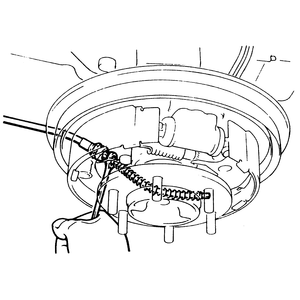
    Fig. 3: Use a box end wrench to remove the parking brake cable from the rear brake assembly — 1983–95 Pick-up trucks

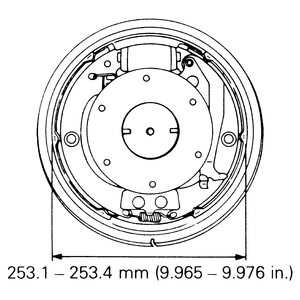
    Fig. 4: Adjusting the rear brake shoes to specification will allow the brakes to properly adjust themselves after installation — 1987–95 Pick-ups

  7. Remove the cable from the backing plate. This can be made easier by feeding an offset box wrench (12mm) over the end of the cable and pushing it up until it reaches the stopper. Push on the wrench to release the tabs on the stopper and pull the cable free from behind the backing plate.
  8. Remove the clips and brackets holding the cable to the body. Remove the cable from the vehicle.
  9. When reinstalling, thread the cable into position. Make certain the stopper at the brake backing plate is securely fitted and the tab is engaged.
  10. Install the cable end to the brake shoe. If the brakes were removed, reinstall them.
  11. Turn the brake shoe adjuster to set the outside diameter of the shoes to 9.45–9.47 in. (240.0–240.5mm) for 1983–86 rear-wheel drive and 9.96–9.98 in. (253.0–253.5mm) for all other Pick-ups. This is an important dimension and must be observed.
  12. Install the brake drum.
  13. Connect the brake cable to the equalizer and tighten the adjuster nut just enough to remove slack from the cable.
  14. Install the return spring correctly.
  15. Install the rear wheels.
  16. Adjust the parking brake lever travel according to instructions given previously in this section.
  17. Lower the vehicle to the ground.
Montero
  1. Elevate and safely support the vehicle on stands.
  2. Remove the rear wheels.
  3. Remove the rear brake drum or brake disc.

    CAUTION
    Brake pads and shoes may contain asbestos, which has been determined to be a cancer causing agent. Never clean the brake surfaces with compressed air! Avoid inhaling any dust from brake surfaces! When cleaning brakes, use commercially available brake cleaning fluids.

  4. At the equalizer, remove the adjusting nut. Disconnect the cable to be replaced from the equalizer yoke. Remove the small heat shield from the cable.
  5. At the rear wheel, remove the shoe return spring, the shoe retainer spring and the shoe hold-down pins. Remove the shoes as a unit, then disconnect the cable.
  6. Remove the cable from the backing plate. This can be made easier by feeding a 0.47 in. (12mm) offset box wrench over the end of the cable and pushing it up until it reaches the stopper. Push on the wrench to release the tabs on the stopper and pull the cable free from behind the backing plate.
  7. Remove the clips and brackets holding the cable to the body. Remove the cable from the vehicle.
  8. When reinstalling, thread the cable into position. Make certain the stopper at the brake backing plate is securely fitted and the tab is engaged.
  9. Install the cable end to the brake shoe. Install the brake shoes as an assembly and make certain the springs and retaining clips are properly placed.

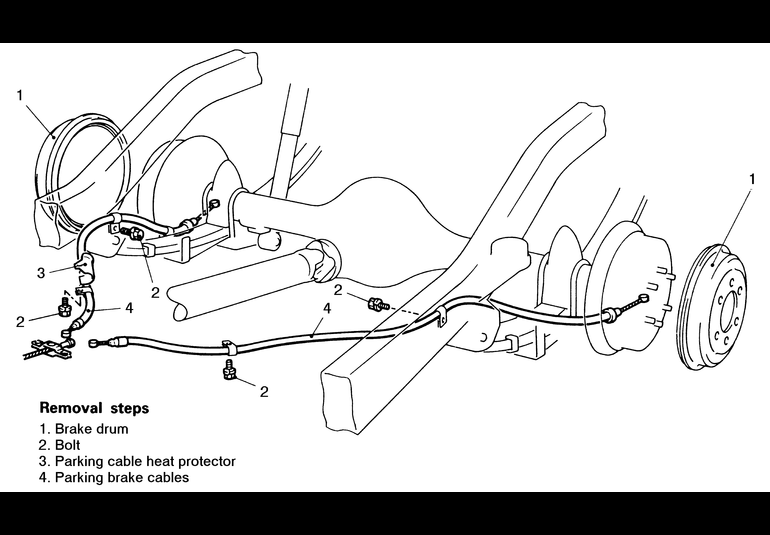
    Fig. 5: Parking brake cable removal and installation components — 1983–91 Monteros

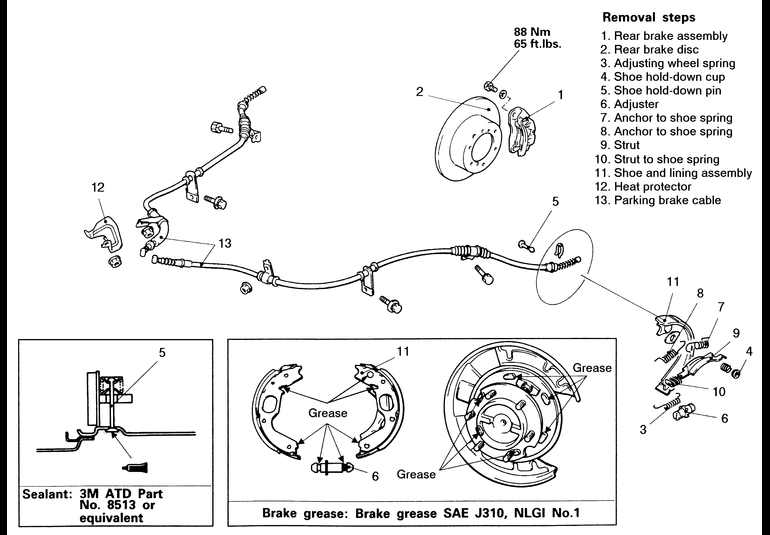
    Fig. 6: Parking brake cable removal and installation components — 1992–95 Monteros

  10. Turn the brake shoe adjuster to set the outside diameter of the shoes to 9.96–9.98 in. (253.0–253.5mm) on rear drum brake systems. This is an important dimension and must be observed.
  11. Install the brake drum or brake disc.
  12. Connect the brake cable to the equalizer yoke. Install and tighten the adjuster nut just enough to remove slack from the cable.
  13. Install the rear wheels.
  14. Install the cable retaining clips and install the small cable heat shields.
  15. Adjust the parking brake lever travel according to instructions given previously in this section.
  16. Lower the vehicle to the ground.

Previous Next