NOTE: Adjustments can be made on external regulators only,
internal regulators cannot be adjusted.
This test should be made after the engine compartment and the regulator have
had a chance to cool down. The test should never be performed on a hot engine.
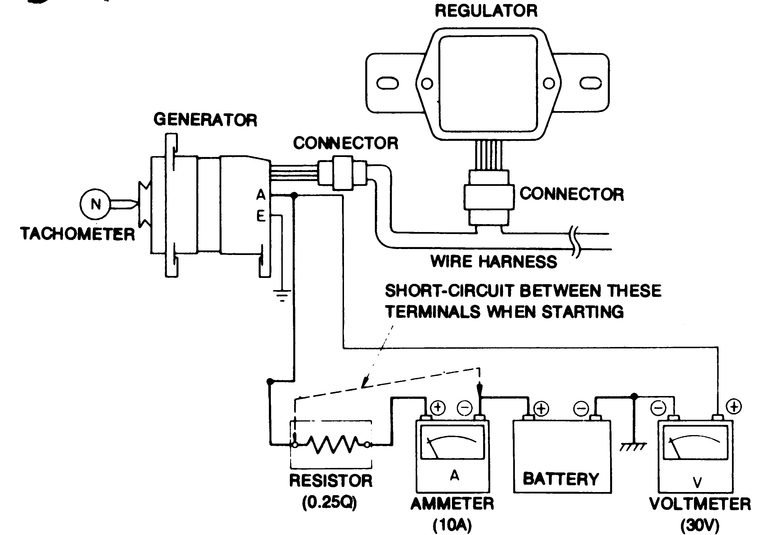
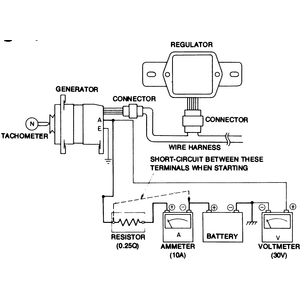
| Fig. 1: Voltage adjustment test circuit
|
- Make sure all electrical equipment on the car is turned OFF or
disconnected.
- Using an ammeter, a voltmeter, and a resistor rated at 0.25ω, connect
a test circuit as shown in the illustration.
- BEFORE STARTING THE ENGINE: Connect a jumper wire from
the far terminal of the 0.25ω resistor to the negative (-) terminal
of the ammeter. See illustration. After the engine is started, disconnect
the jumper, but be sure to reconnect it each time the engine is restarted.
- Turn the engine ON and gradually increase the speed from
idle to about 2000 rpm. 2000 engine rpm is equal to about 1200 alternator
rpm.
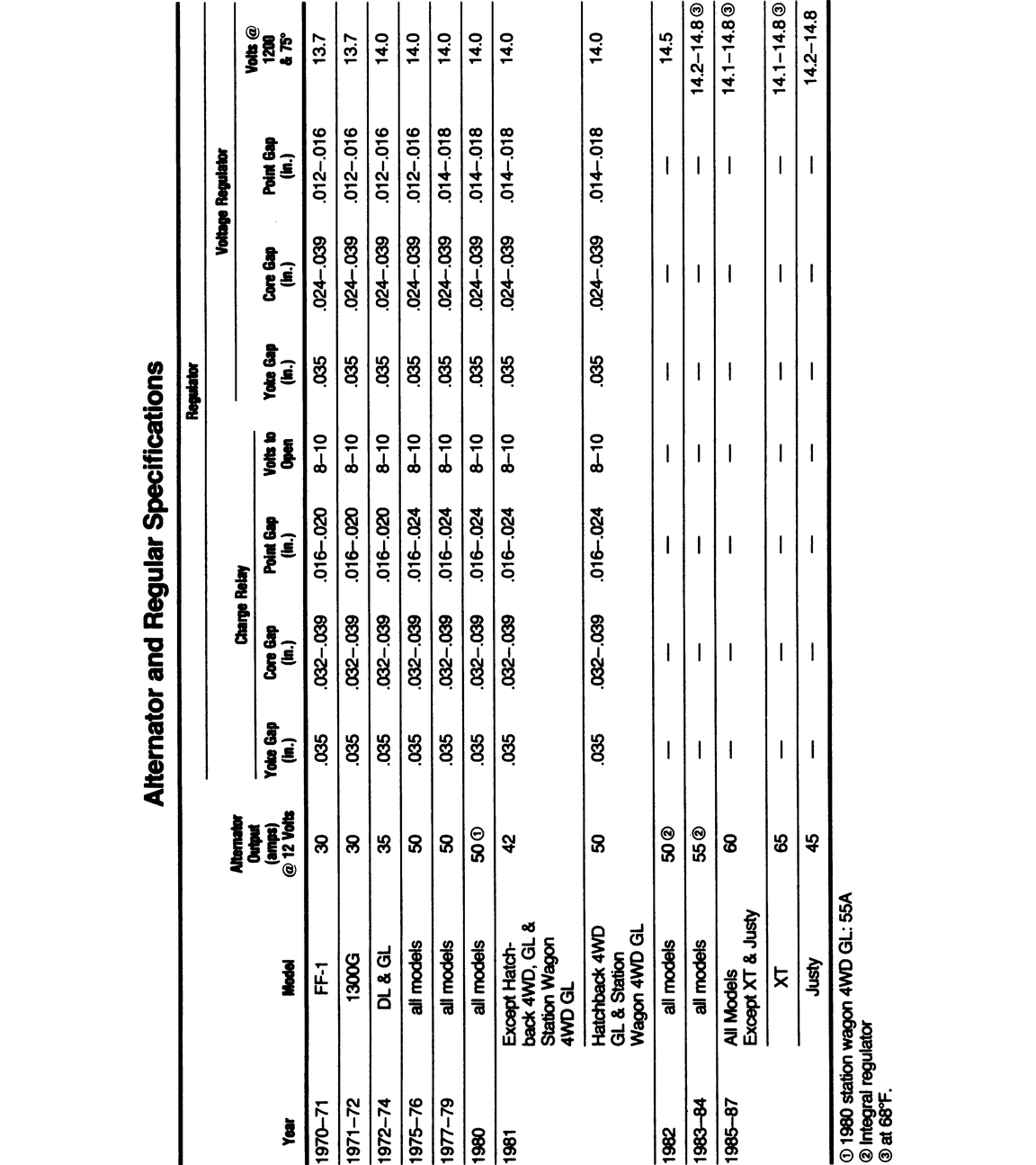
- The voltage reading shown should compare with that on the alternator and
regulator specifications chart, allowing for the temperature around the regulator.
NOTE: The ammeter reading should be below 5 amps. Recharge
or substitute the battery with a charged one if the reading is not below
5 amps.
If the voltage is not within the specified range, adjust as follows:
- Remove the screws and take off the regulator cover.
- On ff–1 and 1300G models, bend the adjuster tab on the regulator up
if the voltage is below specifications or down if the voltage is above specifications.
- On other models, loosen the locknut and turn the adjusting screw until the
voltage falls within specifications.
- If the voltage cannot be brought within specs, proceed with a mechanical
adjustment.
- If the voltage is now within the required specs: shut off the engine, remove
the test equipment, replace the regulator cover and reconnect any electrical
system components or accessories you disconnected at the beginning of the
test.
NOTE: The opening voltage of the charge relay is 8–10
volts at alternator terminal (A). However, the coil on the charge relay operates
at half of this voltage (i.e., 4–5 volts).
- Remove the regulator from the car.
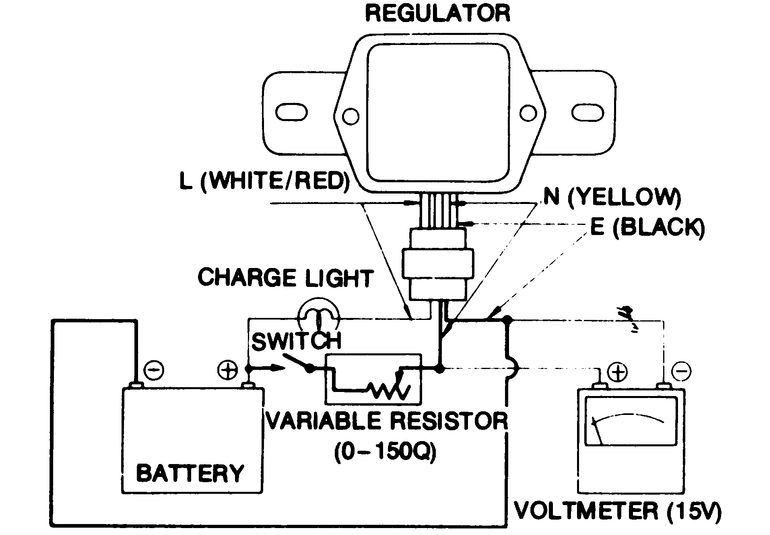
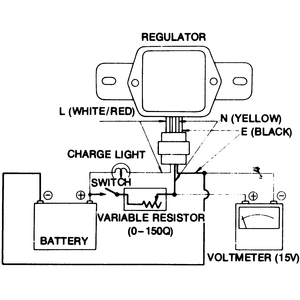
- Hook up the test circuit illustrated with a car battery, 0–150ω
rheostat, voltmeter, heavy duty switch, and a test light.
| Fig. 2: Charge relay test circuit
|
- Close the switch with the rheostat set at 150ω (maximum).
- Gradually decrease the resistance.
- When the test light goes out, the voltmeter should read 4–5 volts.
- If the light doesn't go out at the specified setting, remove the regulator
cover and make one of the following adjustments:
- On ff–1 and 1300G models, bend the charge relay, and turn the adjusting
screw until the voltage is within specifications. Tighten the locknut.
- If the charge relay voltage cannot be brought within specifications, perform
the Mechanical Adjustments outlined next.
- If the charge relay is working properly, put the cover on the regulator
and install it in the car.
WARNING
All mechanical adjustments must be performed with the regulator removed from
the car to prevent battery and charging system damage.
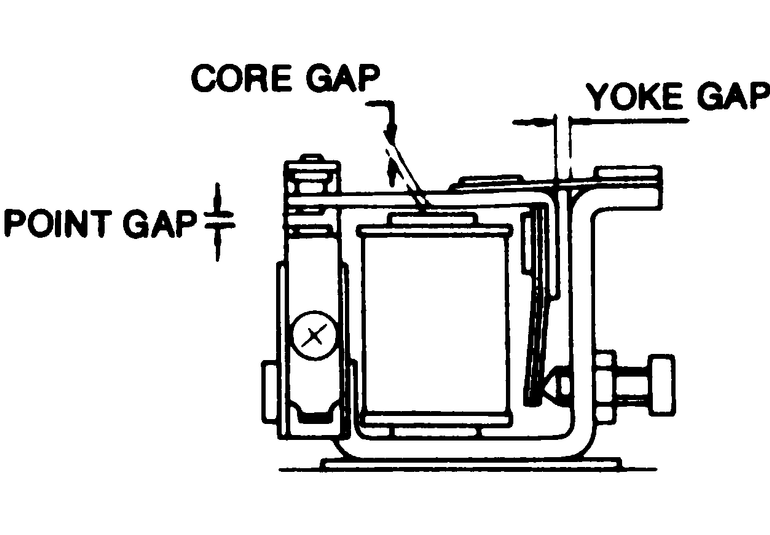
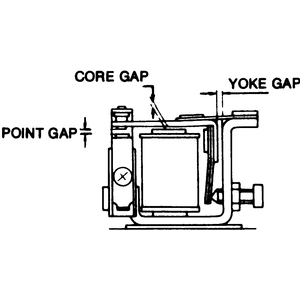
| Fig. 3: Voltage regulator mechanical adjustment points
|
- Remove the regulator from the car, unfasten the cover securing screws, and
remove the cover.
- Inspect both sets of points. If they are rough or dirty, polish them lightly
with #500 or #600 emery paper.
NOTE: If the points are so badly damaged that polishing
them doesn't help, replace the regulator.
- Measure the gaps of the voltage regulator, with a feeler gauge, in the following
sequence:
- Yoke gap: measure the clearance between the armature and the yoke. Adjust,
as necessary, by loosening its securing screws and moving the armature.
Tighten the screws.
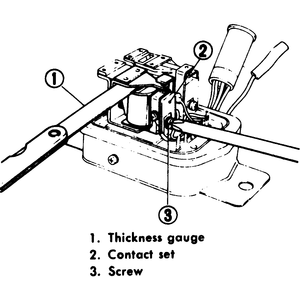
- Core gap: measure the clearance between the armature and the core of
the voltage coil. Adjust the gap by bending the lower contact, as necessary.
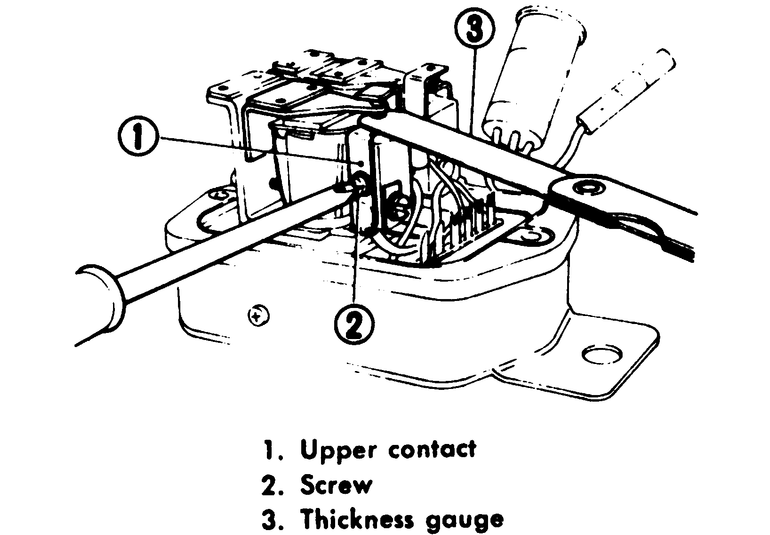
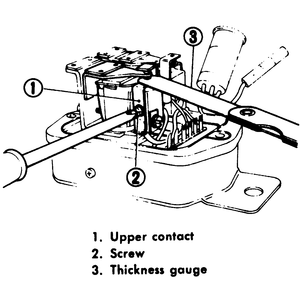
- Point gap: measure the distance between the points. Adjust by bending
the upper contact, as necessary.
- Measure the gaps of the charge relay, with a feeler gauge, in the following
sequence:
- Yoke gap: measure the clearance between the armature and the end of
the yoke. Adjust, as necessary, by loosening the armature securing screws
and moving the armature if necessary. Tighten the screws.
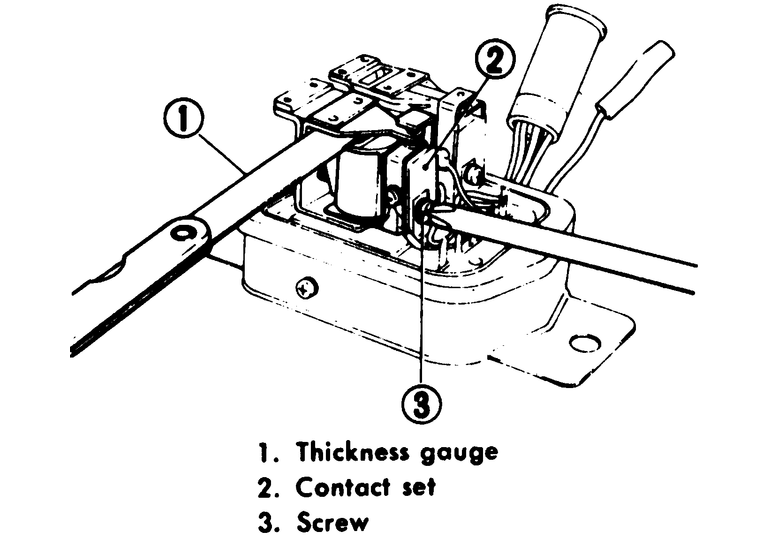
- Core gap: measure the clearance between the armature and the center
of the core. Adjust by loosening the contact set securing screw and moving
the set up or down, by inserting a screwdriver in the hole.
- Point gap: measure the distance between the points. Adjust by loosening
the point securing screw, inserting a screwdriver, and raising or lowering
the screwdriver.
NOTE: For proper gap specifications, consult the Alternator
and Regulator Specifications chart.
| Fig. 4: Adjusting core gap
|
| Fig. 5: Adjusting point gap
|
- After completing the adjustments, replace the cover on the regulator, and
install it in the car. Test its operation again, as outlined above. If the
voltage still cannot be brought within specifications, replace the regulator.
If the voltage is still incorrect, the fault probably lies in the alternator.
- Remove the voltage regulator from the car and remove the regulator cover.
- Inspect both sets of points. If they are rough or dirty, polish them with
#500 or #600 emery paper.
NOTE: If the points are so badly damaged that polishing
them doesn't help, replace the regulator.
- Measure and adjust the gaps of both the voltage regulator and the charge
relay in the same manner. Use the specifications given in the Alternator and
Regulator Specifications chart. Adjust both sets of gaps in the following
sequence:
- Core gap: measure the clearances for both the regulator and charge relay
between their armatures and coil cores. Adjust each, as necessary, by
loosening the 4mm screw which secures the contact set to the yoke and
moving the set up or down. Tighten the screw.
- Point gap: measure the distances between the points for both the voltage
regulator and charge relay. Adjust each, as necessary, by loosening the
3mm screw which secures the upper contact and moving the contact up or
down. Tighten the screw.
NOTE: It is not necessary to adjust the yoke gap.
- Reinstall the regulator in the car and test its operation as outlined above.
If the voltage still cannot be brought within specifications, replace the
regulator. If the voltage is still incorrect, the fault probably lies in the
alternator.