- Refer to the engine removal and Installation procedures in this section
and remove the engine from the vehicle. Separate the engine from the transaxle.
- Remove the intake manifold, the oil pan, the clutch assembly (MT), the flywheel
(MT) or drive plate (AT) and the flywheel housing.
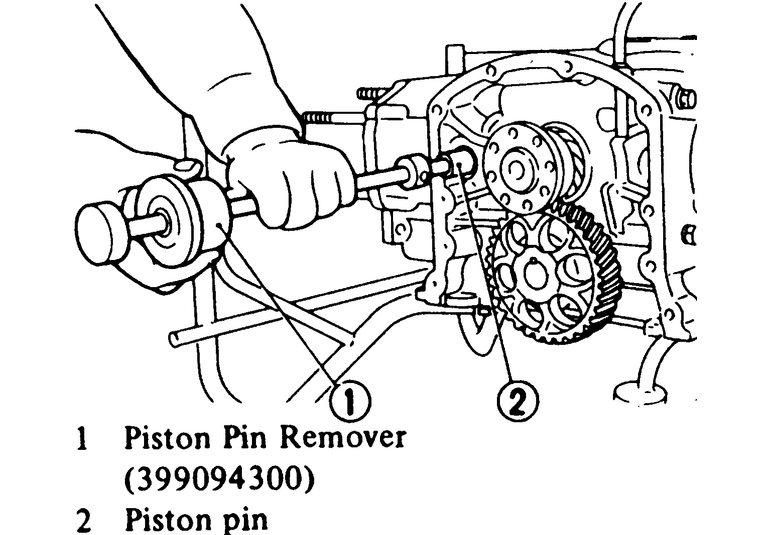
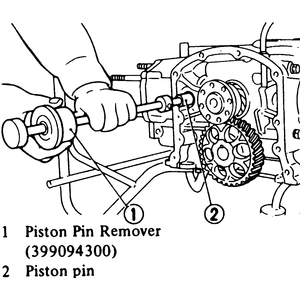
| Fig. 3: A special tool is used to remove the piston
pins
|
- Remove the rocker arm covers, the rocker arm–to–cylinder head
assemblies, the pushrods and the valve lifters.
NOTE: When removing the pushrods and the valve lifters,
be sure to keep them in order for reinstallation purposes. If equipped with
solid lifters, install valve lifter retaining clips (Subaru part # 899804100
or equivalent) to keep the lifters from dropping out of the upper crankcase.
If equipped with a hydraulic lifter engine, tilt the crankcase and remove
the lifters; it is not necessary to loosen the valve rocker adjusting screws.
- Remove the cylinder head–to–engine bolts, in the reverse order
of the tightening sequence and gaskets. Remove the oil strainer retainer nut/bolt;
use a chisel to remove the oil strainer.
- Using the holes in the camshaft gear, remove the camshaft thrust plate–to–engine
lockwashers and bolts.
- Using a 0.55 in. (13mm) Allen wrench, remove the crankcase plugs (of No.
3 and No. 4 piston side) from the rear of the crankcase.
- Using a wrench on the crankshaft pulley bolt, rotate the crankshaft so that
the No. 3 and No. 4 pistons are at the Bottom Dead Center (BDC) of the their
compression stroke.
- Using the piston circlip (needlenose) pliers, insert them through the crankcase
plug holes and remove the wrist pin–to–pistons circlips.
- Using a Wrist Pin Removal tool No. 399094310 or equivalent, through the
rear service holes, remove the wrist pins through the crankcase plug holes.
NOTE: Keep the circlips and the wrist pins together for
each cylinder so that they DO NOT become mixed.
- Using a 0.55 in. (13mm) Allen wrench, remove the crankcase plugs (of No.
1 and No. 2 piston side) from the front of the crankcase.
- Using a wrench on the crankshaft pulley bolt, rotate the crankshaft so that
the No. 1 and No. 2 pistons are at the Bottom Dead Center (BDC) of the their
compression stroke.
- Using the piston circlip (needlenose) pliers, insert them through the crankcase
plug holes and remove the wrist pin–to–pistons circlips.
- Using a Wrist Pin Removal tool No. 399094310 or equivalent, through the
front service holes, remove the wrist pins through the crankcase plug holes.
NOTE: Keep the circlips and the wrist pins together for
each cylinder so that they do not become mixed.
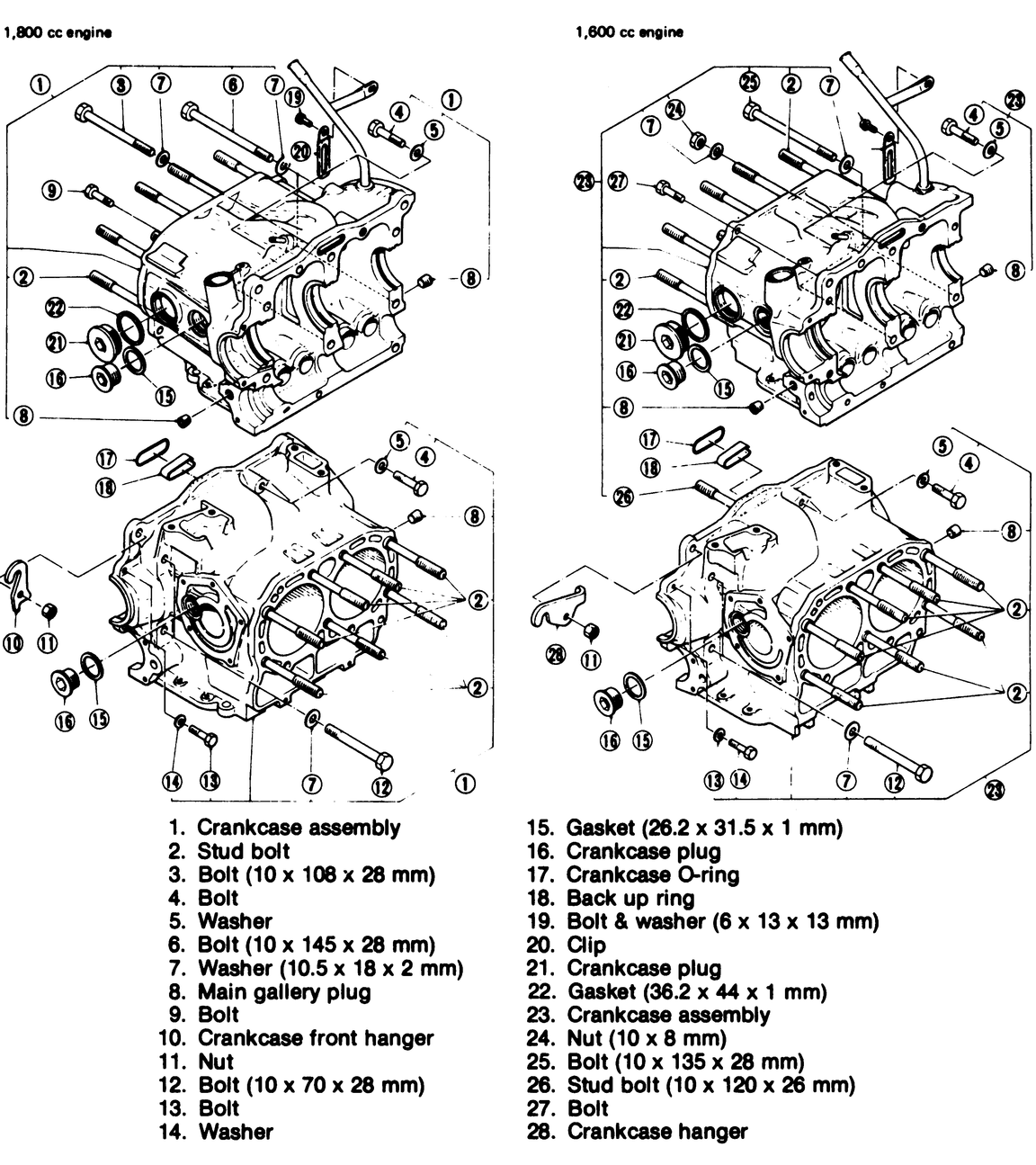
- Rotate the engine, so that the No. 1 and No. 3 piston side is facing upward,
then remove the crankcase halves nuts and bolts. If equipped with 4WD, be
sure to remove the crankcase hanger and the stiffener.
NOTE: Before separating the crankcase halves, be sure to
pull the camshaft rearward so that it doesn't interfere with the crankcase.
- Separate the crankcase halves. Remove the front oil seal, the O–ring
and the back–up ring; be sure to replace them with new ones when reassembling
the engine.
NOTE: Keep the pistons and the wrist pins together for
each cylinder so that they DO NOT become mixed. Mark the pistons and the
connecting rods so that the direction is not changed when they are installed.
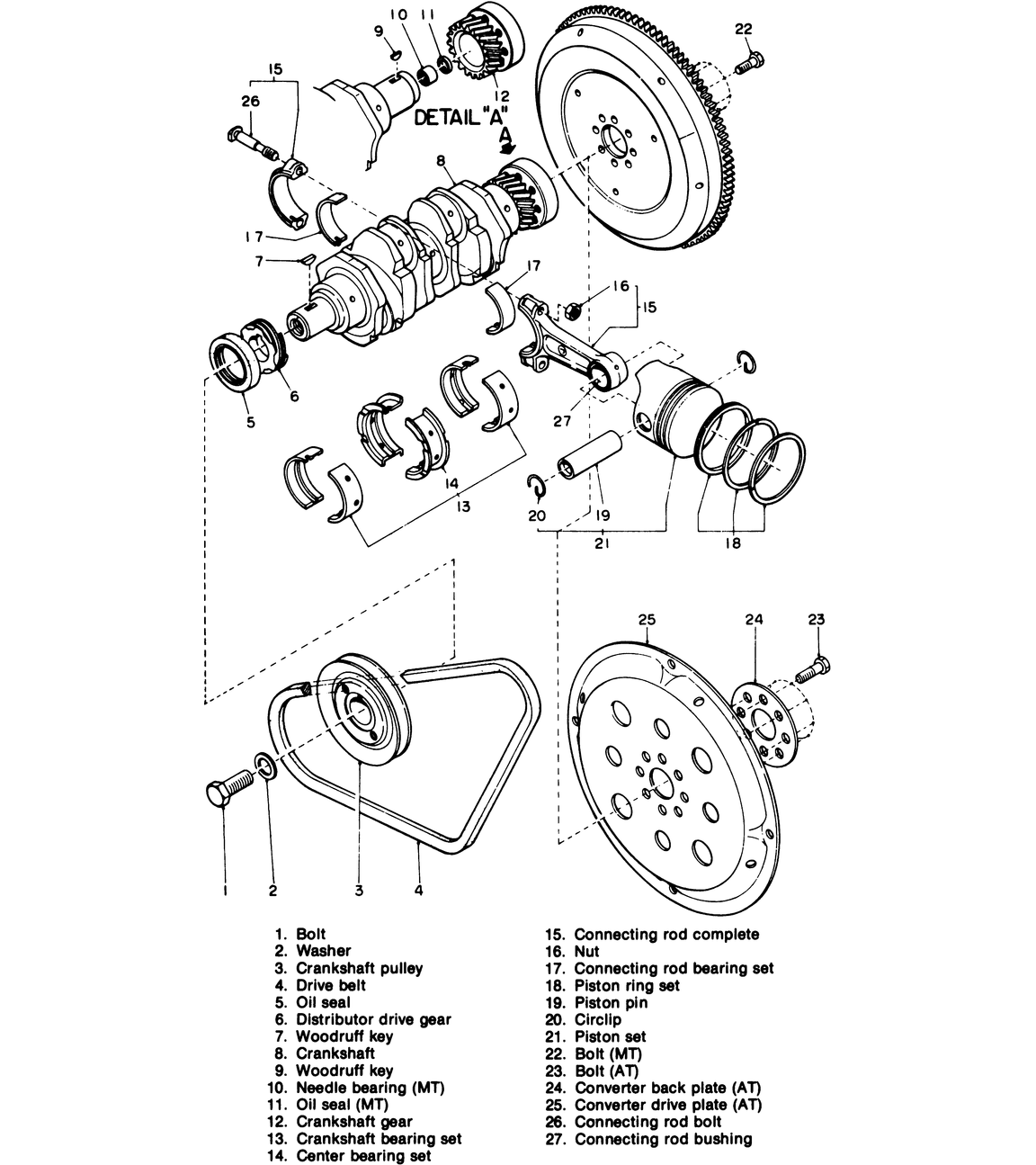
- Remove the crankshaft together with the connecting rods, the distributor
gear and the crankshaft gear as an assembly. Remove the camshaft, the camshaft
gear and the thrust plate as an assembly. On the 1970–75 models, remove
the cylinder liners, complete with individual gaskets, using a suitable cylinder
liner puller.
NOTE: Keep the gasket from each cylinder with its respective
cylinder liner. Mark each cylinder liner flange using a felt tipped pen,
with the cylinder number from which it was removed, as an aid to proper
installation.
- On the 1976–84 models, remove the ridge from the top of the cylinder
(unworn area), using a Ridge Reamer tool, to facilitate the removal of the
pistons by performing the following procedures:
- Place the piston at the bottom of its bore and cover it with a rag.
- Cut the ridge away using a ridge reamer, exercising extreme care to
avoid cutting too deeply.
- Remove the rag and remove the cuttings that remain on the piston.
WARNING
If the ridge is not removed and new rings are installed, damage to the
new rings may result!
- If the piston rings are to be replaced, remove them with a ring expander.
Keep the rings in removal sequence and with the piston from which they were
removed.
- Inspect the pistons, connecting rods and cylinder bores following the procedures
outlined in this section.
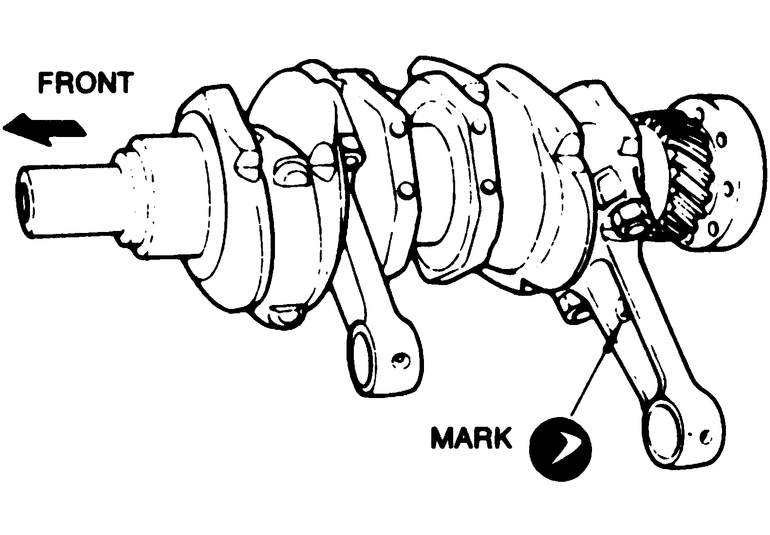
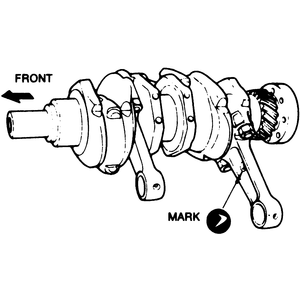
| Fig. 4: Be sure to install the connecting rods facing
the correct direction
|
To install:
- When assembling the engine, be sure to note the following:
- Rotating or sliding parts should be coated with engine oil prior to
installation.
- Coat all oil seal lips with grease prior to installation.
- Always use new gaskets. Apply liquid sealer to the gaskets, where necessary,
to prevent leakage.
- Replace any worn or defective parts, such as nuts, bolts, washers, etc.
- Fit the woodruff key(s) on the crankshaft and then install the following
components: distributor drive gear, timing gear (if removed), needle bearings,
and oil seals.
- Assemble each connecting rod to the crankshaft throw from which it was originally
removed. Tighten the cap bolts or nuts to the figure given in the Torque Specifications
chart.
NOTE: Place each connecting rod on the crankshaft so that
the circular Fuji trademark faces the front, and install the rod cap so
that the protruding ridge on it also faces front.
Determine the clearance between the sides of the connecting rods and the
crankshaft, using feeler gauges. If clearance is below the minimum tolerance,
the rod may be machined to provide adequate clearance. If clearance is excessive,
substitute an unworn rod, and recheck. If clearance is still outside specifications,
the crankshaft must be welded and re-ground, or replaced.
- Fit the rails of the piston oil control rings by hand, after first installing
a ring expander.
- Use the expander to install the lower and upper compression rings in
the same position from which they were removed.
NOTE: Be sure that the R marked on each of the rings
is facing upward.
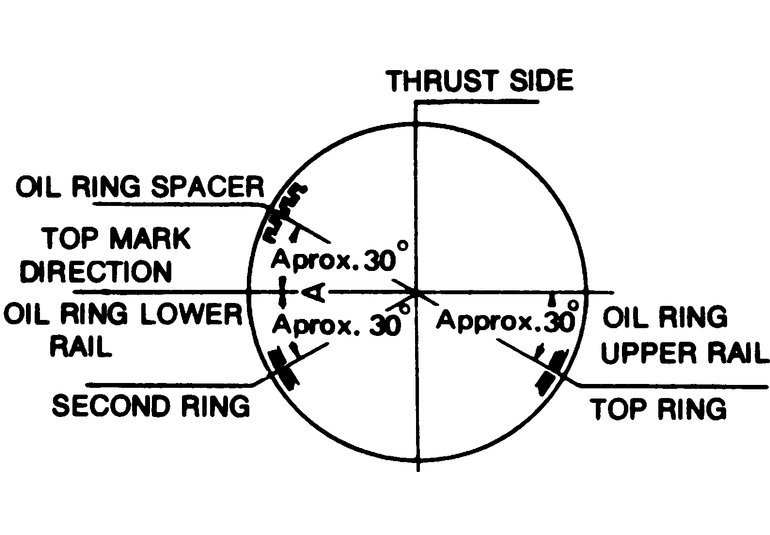
- Position the ring gaps, as illustrated.
- Coat the pistons and cylinder liners with SAE 10W–30 engine oil, compress
the rings with a ring compressor, and fit each piston into the liner from
which it was removed.
| Fig. 5: Correct piston ring gap spacing
|
NOTE: Align the pistons with the marks made during removal
so that they face the front of the liner. Be sure that each piston is mated
with its original liner. Make sure that the wrist pin hole in the piston
aligns with the installation hole in the liner.
- If they were removed, install the woodruff key and plate on the camshaft.
Use a press to install the timing gear on the camshaft.
NOTE: The camshaft plate should be installed with its protrusion
facing away from the cam journals, and the timing gear should be installed
with its 1 1⁄2 in.
boss facing toward the journals.
- Assemble the rocker shafts to the cylinder head.
- Install any parts which were removed from the intake manifold.
- Install the crankshaft bearings in the crankcase. Be sure that none of the
oil passages are clogged.
- Install the valve lifters in their respective positions in the crankcase.
- Install the camshaft and the crankshaft in the crankcase so that the marks
on each of their gears are properly aligned.
NOTE: The bolt hole with the large chamfer on the crankshaft
gear should be aligned with the camshaft gear so that the punchmark on the
camshaft gear is visible through the chamfered hole.
- Apply liquid sealer to the joining surfaces of the crankcase halves. Be
sure that the surfaces are clean and free of oil or grease.
- Install clips on the valve lifters to keep them from falling out.
- Fit the halves of the crankcase together. Install the front crankcase lifting
hook (hanger) at the same time.
- Secure the crankcase halves with the proper fasteners. See the Torque Specifications
chart, for the type, size, and torque figures for the different types of fasteners
used on each engine.
- Secure the camshaft mounting plate to the crankcase with the lockwashers
and bolts. Work through the holes in the cam gear. Be sure to bend the lockwasher
up around the bolt head. Recheck the camshaft gear backlash at this time.
With the crankshaft and camshaft installed, and the crankcase halves joined,
measure the crankshaft end–play. Mount a dial indicator stand on the
front of the block, with the dial indicator stem resting on the nose of the
crankshaft, parallel to the crankshaft axis. Pry the crankshaft the extent
of its travel rearward, and zero the indicator. Pry the crankshaft forward
and record crankshaft end–play.
NOTE: Crankshaft end–play also may be measured at
the thrust bearing, using feeler gauges. Piston and cylinder liner (if so
equipped) installation must be performed with the cylinders in a vertical
position.
- On EA61, EA62 and EA63 engines:
- Set crankcase so that #1 and #3 cylinders face upwards.
- Place the connecting rod of #3 piston at TDC.
- Install #3 piston and cylinder liner, with a cylinder liner gasket fitted
under the cylinder liner.
- Check the amount which the cylinder liner protrudes above the crankcase
surface. It should be within the following limits:
- EA61: 0.0024–0.0035 in. (0.06–0.088mm)
- EA62 and EA63: 0.0028–0.0035 in. (0.07–0.088mm)
- If the liner protrusion is not within limits, adjust it by means of
a selective fit cylinder liner gasket. Gaskets are available in varying
sizes for each type of engine.
WARNING
Cylinder liner gaskets are not interchangeable between different engine
models. Be sure to specify which engine you have when you order selective
fit gaskets.
- Align the wrist pin hole in the connecting rod with the hole in the
piston.
- Insert the wrist pin through the crankcase plug hole with a suitable
piston pin press. Using circlip pliers, fit the circlip on the wrist pin.
- Keep the cylinder liners which were just installed, in place with a holding
fixture mounted over the stud bolt which is located between the cylinders.
A piece of stock, large enough to retain the lips of both installed liners,
may be used. Secure the stock with a cylinder head nut.
- With the cylinder liners secure, invert the engine so that the cylinders
on the opposite side of the crankcase are now facing up.
- On EA71 and EA81 engines:
- Position crankcase so that No.2 and No.4 cylinders face downward.
- Place the connecting rod of the No.2 piston at bottom dead center and
insert the No.2 piston into the cylinder using a piston installation guide.
- Line up the hole in the connecting rod with the piston hole.
- Install the piston pin and circlip.
- Repeat steps b–d for the #4 cylinder.
- Turn the crankcase upside down so that #1 and #3 cylinders face downward.
Install the pistons as described above.
- Install the cylinder head assembly, on the side of the engine which is facing
up. Then invert the engine, remove the cylinder liner holding fixture (on
appropriate models) and install the cylinder head (with the cylinders vertical)
on the other side of the engine.
WARNING
When installing the cylinder heads, pay particular attention to the torque
specifications and tightening sequences.
- Apply liquid sealer to the crankcase plugs and install them, using new gaskets,
in the crankcase. Tighten them to 60–70 ft. lbs. (81–94 Nm)
- If it was removed, fit the oil screen complete with O–ring, by securing
it with its stays.
- Install the flywheel housing and oil seal. Install the rear engine lifting
hook at the same time.
- Install the flywheel, after coating its bolts with liquid sealer. Tighten
the bolts to the specifications given in the Torque Specifications chart.
- Install the clutch assembly, as detailed in Section 7, for manual transaxle
models.
- Attach the oil pan, complete with gasket, to the crankcase.
- Install the part of the transaxle housing which is retained on the engine.
- Install the water pump and hoses.
- Fit the water elbow, pipe, and hose.
- Attach the oil filler tube, water by–pass tube (if used), and gasket.
- If it was removed, apply liquid sealer to the threads of the oil pressure
light sending unit and screw it into the block.
- Install the oil pump.
- Install the front oil seal with a suitable drift.
- Insert a screwdriver through the hole in the flywheel housing and use it
as a brake to keep the crankshaft from turning, then secure the crankshaft
pulley. Tighten the pulley bolt to the figure given in the Torque Specifications
chart.
NOTE: Remember to remove the screwdriver.
- Adjust the valve clearance. See Section 2.
- Install the valve covers, with their gaskets.
- Install the distributor with the No. 1 piston set at TDC. Connect the distributor
vacuum line. Install the power steering pump on models so equipped.
- Attach the halves of the alternator bracket to the cylinder head and crankcase.
Be sure to install the water hose clamp along with the bracket.
- Install the intake manifold assembly, complete with carburetor or throttle
body, as detailed above.
- On models equipped, install the air suction manifold and EGR pipe.
- Connect the water by–pass hoses if fitted, to the intake manifold
connections.
- Install the alternator and adjust the drive belt tension.
- Install the spark plugs. Connect all of the spark plug and distributor cables.
- Install the engine in the car. Remember to replenish the oil and coolant.
Adjust the throttle, clutch, and manual choke 1970–73 cables.