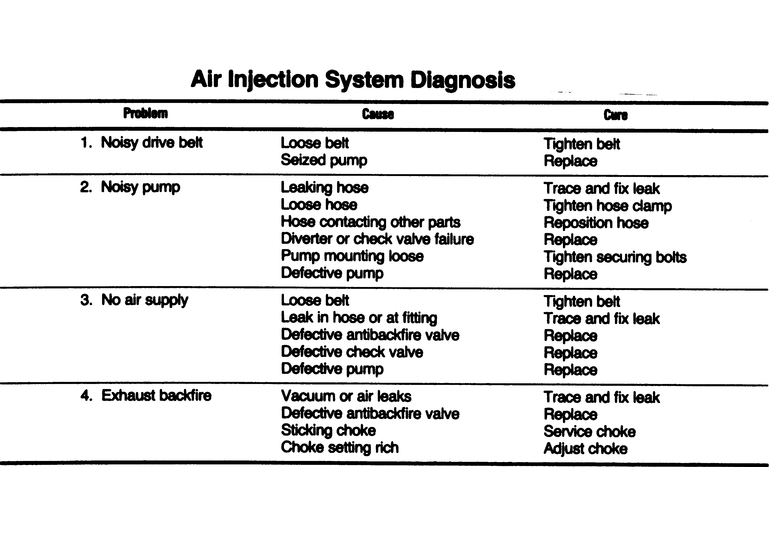
- Before proceeding with the tests, check the pump drive belt tension to see
if it is within specifications.
- Turn the pump by hand. If it has seized, the belt will slip, making a noise.
Disregard any chirping, squealing, or rolling sounds from inside the pump.
These are normal when it is turned by hand.
- Check the hoses and connections for leaks. Hissing or a blast of air is
indicative of a leak. Soapy water, applied lightly around the area in question,
is a good method for detecting leaks.
- Disconnect the air supply hose at the anti–backfire valve.
- Connect a vacuum gauge, using a suitable adaptor, to the air supply hose.
NOTE: If there are two hoses, plug the second one.
- With the engine at normal operating temperature, increase the idle speed
and watch the vacuum gauge.
- The air flow from the pump should be steady and fall between 1.5–6
psi (10–41 kPa). If it is unsteady or falls below this, the pump is
defective and must be replaced.
The air pump is normally noisy. As engine speed increases, the noise of the
pump will rise in pitch. The rolling sound the pump bearings make is normal.
But if this sound becomes objectionable at certain speeds, the pump is defective
and will have to be replaced.
A continual hissing sound from the air pump pressure relief valve at idle,
indicates a defective valve. Replace the relief valve.
If the pump rear bearing fails, a continual knocking sound will be heard.
- Detach the air supply hose which runs between the pump and the gulp valve.
- Connect a tachometer and run the engine to 1500–2000 rpm.
- Allow the throttle to snap closed. This should produce a loud sucking sound
from the gulp valve.
- Repeat this operation several times. If no sound is present, the valve is
not working, or the vacuum connections are loose.
- Before starting the test, check all of the hoses and connections for leaks.
- Detach the air supply hose from the check valve.
- Insert a suitable probe into the check valve and depress the plate. Release
it. The plate should return to its original position against the valve seat.
If binding is evident, replace the valve.
- With the engine running at normal operating temperature, gradually increase
its speed to 1500 rpm. Check for exhaust gas leakage. If any is present, replace
the valve assembly.
Check the air by–pass valve to be sure that it is open when the choke
is closed.
If the by–pass valve is not operating in this manner, adjust its operating
cable.