- Start the engine and allow it to reach normal operating temperature.
- Increase the engine speed to 3000–3500 rpm (no load). The valve shaft
should move upward. On 1983–84 California, 2 wheel drive cars, the EGR
system does not function until the engine has run for eight minutes.
- Decrease speed to idle, the shaft should go down.
- If the valve shaft fails to raise in Step 2, check the vacuum lines, connections,
and the carburetor throttle vacuum port. Replace any clogged or damaged hoses,
and clean the throttle port if it is clogged.
- On 1974 models, connect the EGR vacuum hose directly to the carburetor throttle
port. Speed the engine up and return it to idle as in Steps 2 and 3. If the
valve works, the fault is in the vacuum solenoid valve or temperature switch.
- If the EGR valve doesn't work:
- Remove the EGR valve from the intake manifold.
- Plug the vacuum inlet on the top of the valve diaphragm.
- Depress and release the diaphragm several times.
- The diaphragm should remain depressed while the vacuum inlet is plugged.
If not, the diaphragm is leaking and the valve must be replaced.
- If the valve stem seems stuck, clean the diaphragm with a wire brush
or spark plug cleaner (NOT solvents).
- Install the valve and test it again. If it still does not work, replace
it.
- Disconnect the vacuum solenoid leads.
- Connect the solenoid directly to a 12 volt power source. The solenoid should
click on. Disconnect the solenoid, it should go off. If not, it is defective.
Replace it and perform the system test again.
- If the solenoid is working properly and everything else in the system is
in proper operating order, replace the coolant temperature switch, then perform
the system tests again.
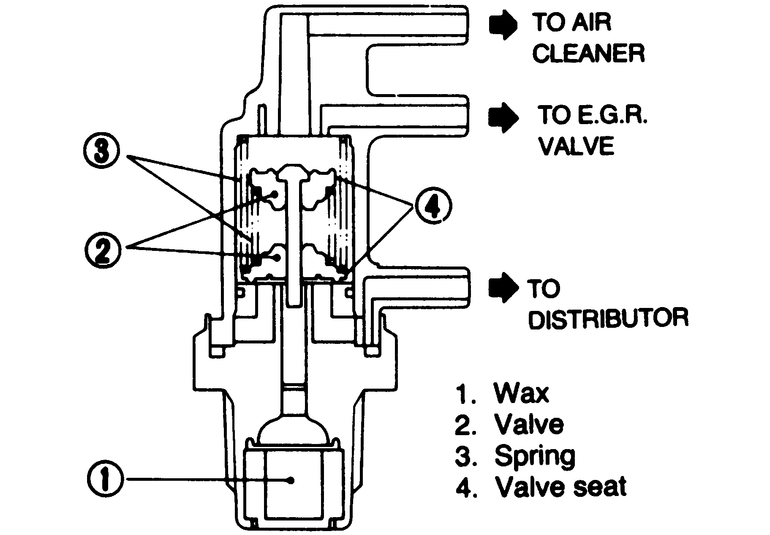
This valve actuates both vacuum spark advance and the EGR valve. It turns the
EGR valve off until the engine is warmed up to help ensure smooth cold engine
performance.
Drain some coolant out of the system, disconnect the vacuum hoses, and remove
the valve from the intake manifold.
CAUTION
When draining coolant, keep in mind that cats and dogs are attracted by ethylene
glycol antifreeze, and are quite likely to drink any that is left in an uncovered
container or in puddles on the ground. This will prove fatal in sufficient quantity.
Always drain coolant into a sealable container. Coolant should be reused unless
it is contaminated or several years old.
Cap off the top (air cleaner) port and install hoses on the other two ports
(to keep the top of the valve dry). Then, immerse the valve in cool water. Use
a thermometer to measure water temperature. Blow into either hose and warm the
water (for example, on a stove). The valve must open when water rises past 68°F
(20°C). Now, remove the water from heat and chill with ice cubes. The valve
must close as the temperature drops below 50°F (10°C). If not, replace
the valve.
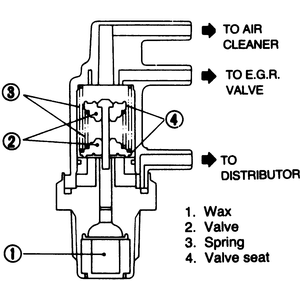
| Fig. 1: The thermal–vacuum valve as used with 1982–84
EGR systems
|