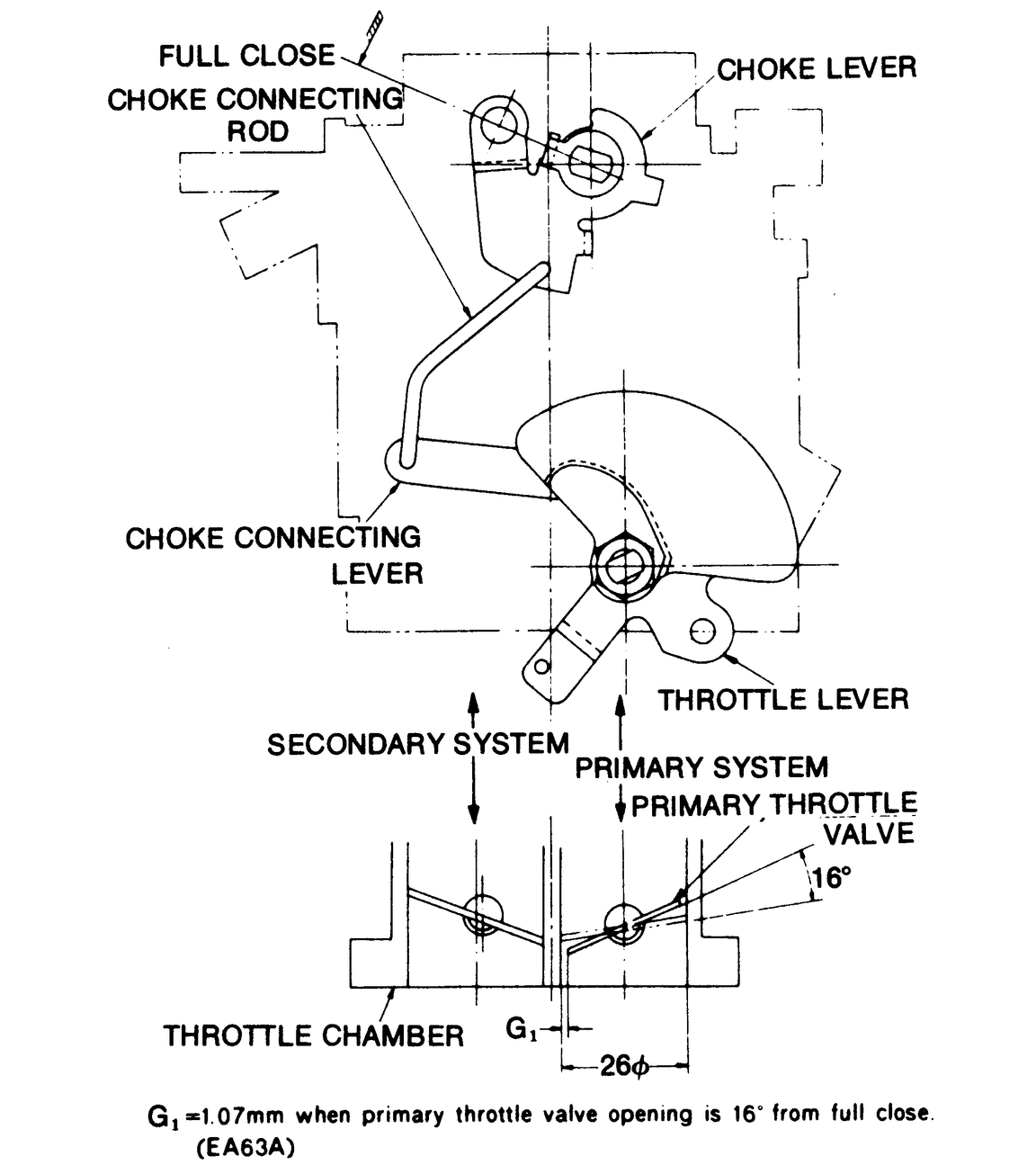
- With the carburetor removed from the engine, make sure that the choke valve
is fully closed.
- Measure the clearance between the upper edge of the primary throttle valve
and its bore with a wire gauge. It should be the appropriate figure given
in the chart at the end of this Section.
- If the clearance is incorrect, adjust it by bending the choke adjusting
rod.
- Check the operation of the linkage for smoothness after adjustment is completed.
| Fig. 1: Fast idle adjustment — 1970–73
models
|
| Fig. 2: Fast idle adjustment from 1974 — except
C-W
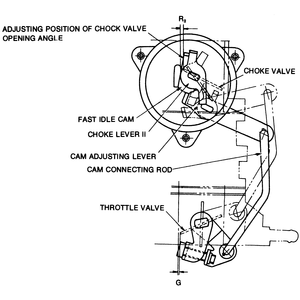
|
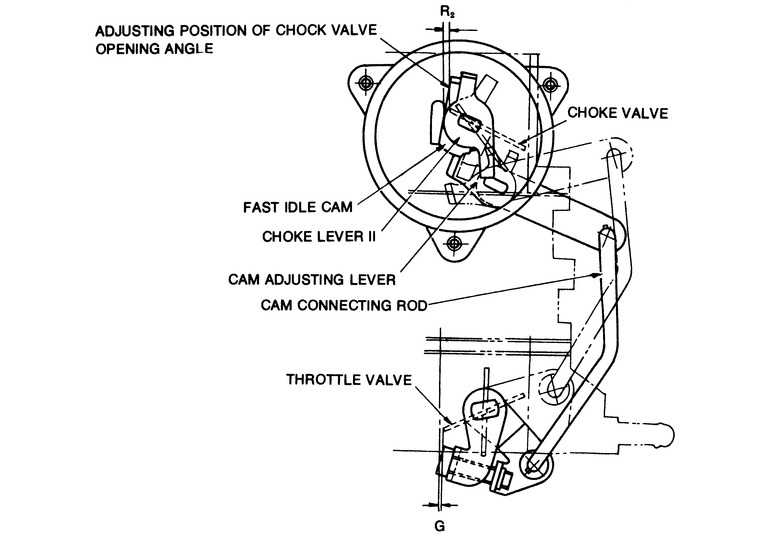
- With the carburetor removed from the engine, set the fast idle cam adjusting
lever on the fourth highest step of the fast idle cam.
- Check to be sure that the choke valve is fully closed.
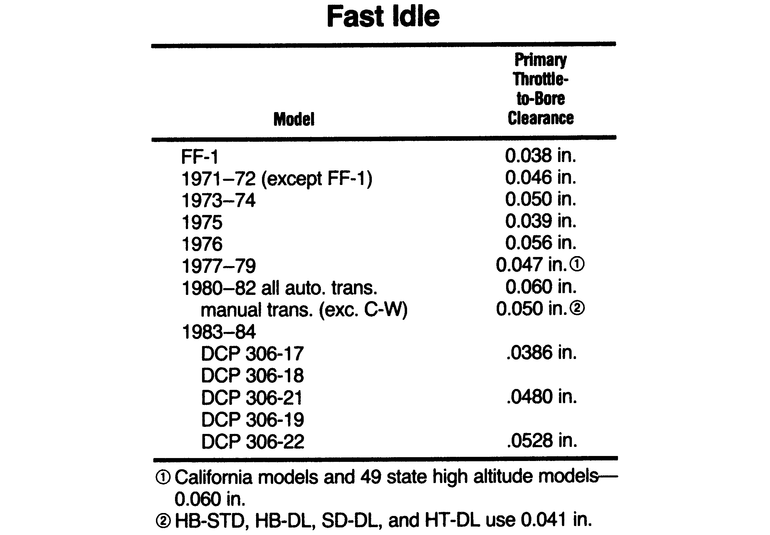
- Measure the clearance between the lower edge of the primary throttle valve
and its bore. The clearance should be the value specified in the Fast Idle
chart in this section.
- If the clearance is incorrect, turn the fast idle adjusting screw to bring
it within specifications. Turning the screw in increases the throttle clearance
and vice-versa.
Float level adjustments are unnecessary, on models equipped with a sight glass
on the carburetor float bowl, if the fuel is level within 0.05 in. (1.5mm) with
the dot on its center, when the engine is running.
The float level may be adjusted with the carburetor installed on the engine,
by removing the air horn as follows:
- Disconnect the accelerator pump actuating rod from the pump lever.
- Remove the throttle return spring.
- Disconnect the choke cable from the choke lever, and remove it from the
spring hanger.
- Remove the spring hanger, the choke bellcrank and the remaining air horn
retaining screws.
- Lift the air horn slightly, disconnect the choke connecting rod, and remove
the air horn.
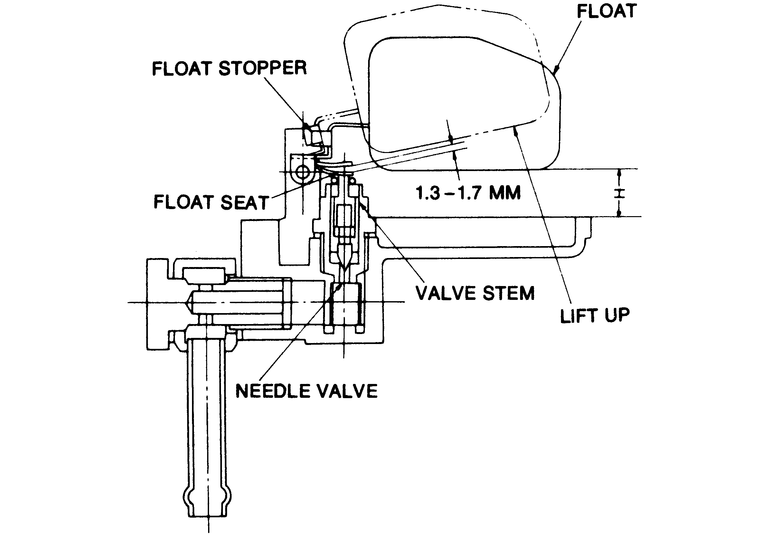
- Invert the air horn (float up), and measure the distance between the surface
of the air horn and the float.
- Bend the float arm until the clearance is approximately 10mm.
- Invert the air horn to its installed position, and measure the distance
between the float arm and the needle valve stem. This dimension should be
0.05–0.06 in. (1.3–1.7mm), and is adjusted by bending the float
stops.
| Fig. 4: Float level adjustment
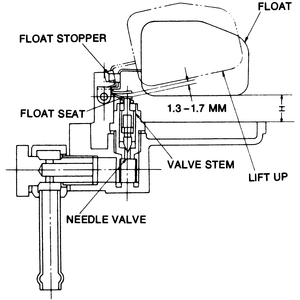
|
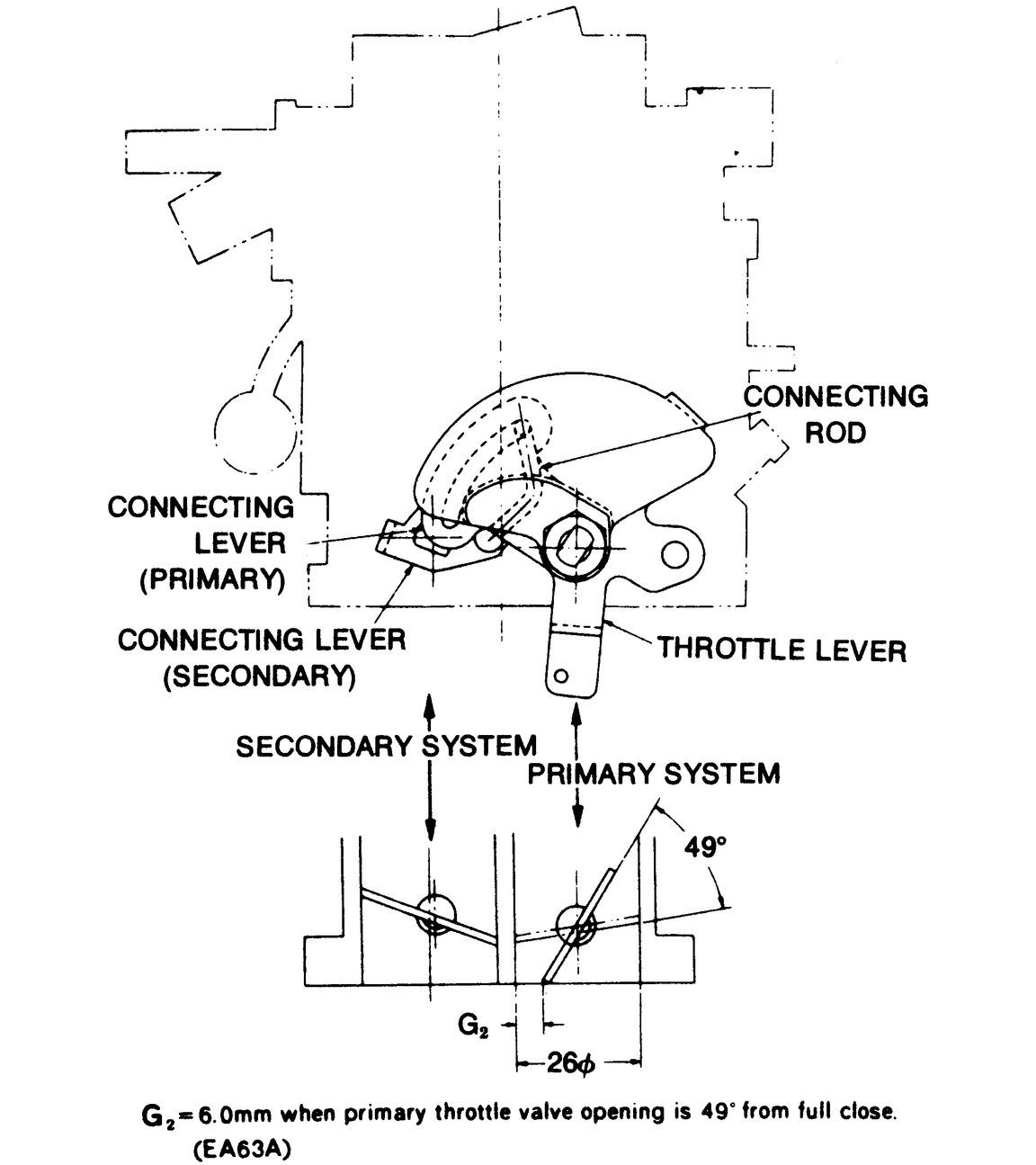
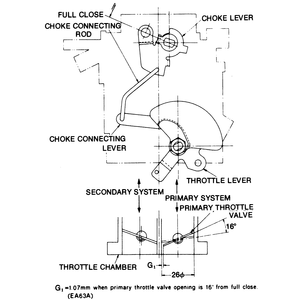
- With the carburetor removed from the engine, operate the linkage so that
the connecting rod contacts the groove on the end of the secondary actuating
lever.
- Measure the clearance between the lower end of the primary throttle valve
and its bore. It should be about 6mm (the size of the shank of a 1⁄4 in.
drill bit) for all models.
- Adjust the clearance by bending the connecting rod.
- Check to make sure that the linkage operates smoothly after performing the
adjustment.
| Fig. 5: Primary and secondary linkage adjustment
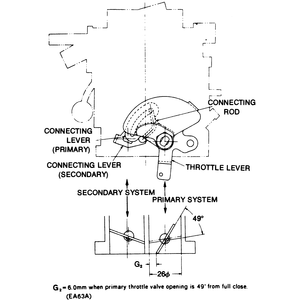
|
- Pull the choke knob on the instrument panel out all the way. Remove the
air cleaner and check the position of the choke valve. If the choke valve
is fully closed, the cable is adjusted properly.
- If the choke valve is not fully closed, adjust the cable by loosening its
retaining nut and pulling on the cable lightly to take up any slack.
- Tighten the retaining nut.
- Check to see that the choke valve is now fully opened when the choke knob
is pushed all the way in.
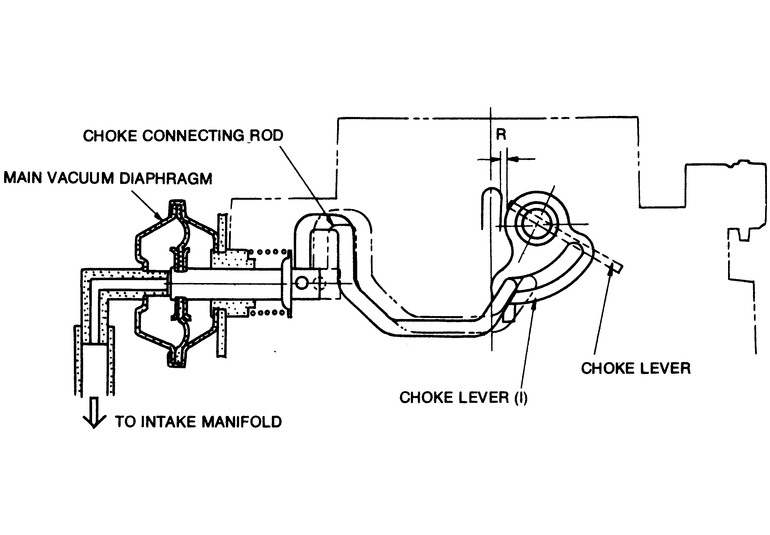
| Fig. 6: Main diaphragm and linkage adjustment
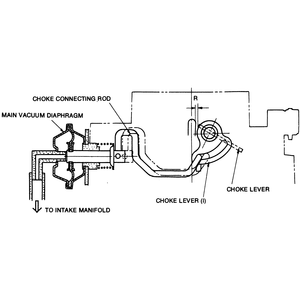
|
NOTE: The choke is not adjustable on 1982–84 models
- Adjust the fast idle as detailed in this section, and perform the adjustments
which follow, in the sequence given.
- Pull the main choke diaphragm lever as far as it will go to the left and
measure the clearance between the upper end of the choke valve and its bore
with a wire gauge. The clearance should be 0.04–0.05 in. (1.2–1.4mm).
Adjust, as necessary, by bending the diaphragm-to-choke connecting rod.
- Apply 8–9 in.Hg of vacuum to the main diaphragm, it should operate
the choke valve. If it does not, replace the diaphragm with a new one.
- Place the fast idle cam adjusting lever on the third step of the fast idle
cam. Measure the clearance between the upper end of the choke valve and its
bore. The clearance should be 0.06–0.07 in. (1.6–1.9mm) for 1974–76
cars; 0.025–0.037 in.(0.66–0.94mm) for cars from 1977. Carefully
bend (turn) the fast idle cam to obtain the correct clearance, as necessary.
To obtain the clearance, bend the cam clockwise. To decrease it, bend the
cam counter clockwise.
- Loosen the 3 choke cap securing screws, and match the line on it up with
the longest line on the choke coil housing. Tighten the retaining screws.
CAUTION
Do not loosen the screw which secures the choke lever.
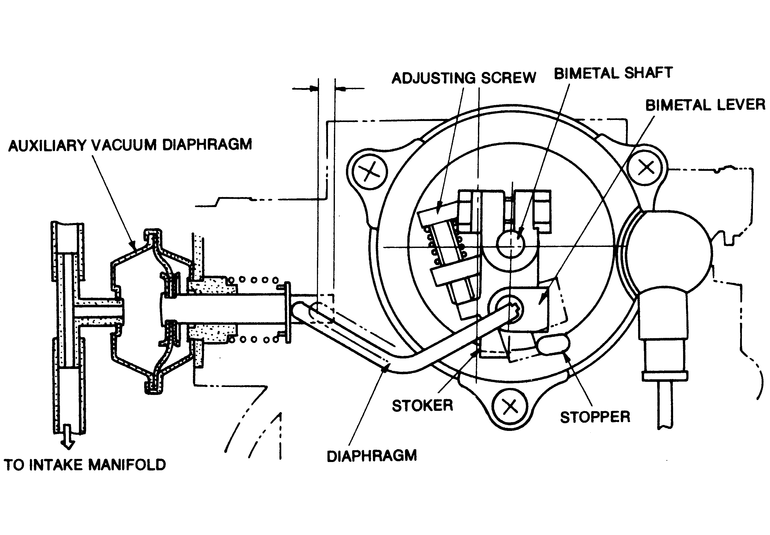
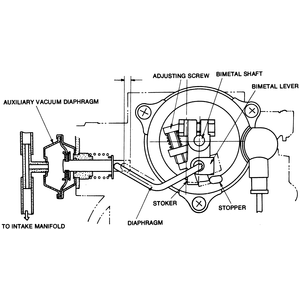
- Fit the tank on the bi-metal lever, which is connected to the auxiliary
diaphragm, against the stop in the choke coil housing. Pull the setting piston
of the auxiliary diaphragm back and, with the piston in this position, tighten
the compensator adjusting screw so that it contacts the tang on the bi-metal
lever. The gap should be 0.1 in. (5mm), on 1974–76 cars and 0.03 in.(0.86mm)
on 1977 and later models.
| Fig. 7: Auxiliary diaphragm must be adjusted during
the auto choke adjustment
|
- Apply vacuum from an outside source to the auxiliary diaphragm. It should
take 9.5–11.8 in.Hg of vacuum to operate the diaphragm on 1974–76
cars and 6.9–9.2 in.Hg of vacuum in 1977 and later models. To adjust
the vacuum setting, bend the diaphragm rod. Vacuum is reduced when the rod
is bent to shorten it and increased when the rod is bent to lengthen it.
NOTE: When the setting piston is released, there should
be no clearance between the tan on the bi–metal lever and the stop
on the coil housing. If they don't contact, the bi–metal lever has
been bent too much.