Previous Next

REMOVAL & INSTALLATION

1970–73 Models
  1. Remove the spare tire from the engine compartment.
  2. Disconnect the emission control system hoses from the air cleaner case, unfasten the bracket bolts, unscrew the wing nut, and remove the air cleaner assembly from the carburetor.
  3. Disconnect the fuel lines from the carburetor. Unfasten the vacuum hoses from the distributor port (ff–1 and 1300G) or the servo diaphragm (DL and GL).
  4. On DL and GL models, disconnect the anti-dieseling solenoid wiring.
  5. Detach the choke cable from the choke lever and spring hanger, then remove the throttle cable from the throttle lever.
  6. Remove the 4 carburetor mounting bolts and lift the carburetor, with gasket, off the intake manifold. Be sure to cover the manifold opening, to prevent anything from being dropped down it.
  7. Install the new or rebuilt carburetor and gasket onto the intake manifold.
  8. Install the 4 carburetor mounting bolts and tighten them securely.

    NOTE: Do not over-tighten the carburetor bolts. Carburetors are made of soft metal and can be easily cracked.

  9. Install the throttle cable, choke cable and anti-dieseling solenoid wiring onto the carburetor.
  10. Connect the vacuum hoses to either the distributor port or servo diaphragm, depending on the model.
  11. Connect the fuel lines, install the air cleaner, connect the emission control hoses and replace the spare tire.
  12. Be sure to adjust the choke cable, idle speed (see Section 2), and make any other necessary adjustments.
1974–81 Models
  1. Remove the air cleaner emission control system hoses, mounting bracket screws, wing nut or nuts, and lift the air cleaner assembly off the carburetor.
  2. Disconnect the fuel lines from the carburetor.
  3. Unfasten the vacuum hoses from the servo diaphragm, automatic choke diaphragms, distributor, and the EGR port (if so equipped).
  4. Disconnect the anti-dieseling switch and automatic choke heater electrical leads. On California vehicles and some other models disconnect switch vent solenoid valve wire and hose to canister.
  5. Remove the accelerator cable from the throttle lever.
  6. Unfasten the 4 nuts which secure the carburetor and take it off the intake manifold. Cover the hole in the intake manifold, to prevent anything from falling in.
  7. Install the new or rebuilt carburetor and gasket onto the intake manifold.
  8. Install the 4 carburetor mounting bolts and tighten them securely.

    NOTE: Do not over-tighten the carburetor bolts. Carburetors are made of soft metal and can be easily cracked.

  9. Install the vacuum hoses from the servo diaphragm, automatic choke diaphragms, distributor, and the EGR port (if so equipped).
  10. Connect the anti-dieseling switch and automatic choke heater electrical leads. On California and some other models, connect switch vent solenoid valve wire and hose to the canister.
  11. Connect the fuel lines, install the air cleaner, connect the emission control hoses and replace the spare tire.
  12. Be sure to adjust the choke cable, idle speed (see Section 2), and make any other necessary adjustments.
1982–84 Models
  1. Remove the air cleaner.
  2. Disconnect fuel supply and return lines at the carburetor.
  3. Disconnect the carburetor vent hose for the ECC system.
  4. Disconnect remaining vacuum hoses to distributor, etc.
  5. Disconnect the EGR tube.
  6. On the Hitachi carburetor:
    1. Disconnect the ignition retard, if applicable.
    2. Disconnect vacuum hoses for solenoid valves, the main diaphragm, and, on high altitude carburetors, the secondary main air bleed.
    3. Disconnect the duty solenoid valve connector on those models so equipped.

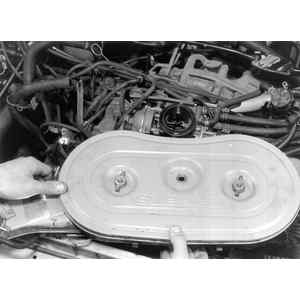
      Fig. 1: Remove the air cleaner

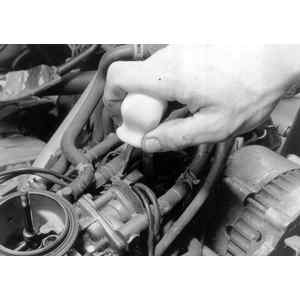
      Fig. 2: Disconnect the hoses from the carburetor

  7. On both types of carburetor, disconnect the harness connectors and then disengage the accelerator cable from the throttle lever.
  8. Drain some coolant out of the radiator so as to drain water out of the water heated throttle bore.

    CAUTION
    When draining the coolant, keep in mind that cats and dogs are attracted by ethylene glycol antifreeze, and are quite likely to drink any that is left in an uncovered container or in puddles on the ground. This will prove fatal in sufficient quantity. Always drain the coolant into a sealable container. Coolant should be reused unless it is contaminated or several years old.

  9. Remove the four mounting nuts on the Hitachi or two nuts on the C–W, and remove the carburetor. On the C–W, disconnect the vent hose and remove its connector with the spacer and gasket. Cover the intake manifold opening.

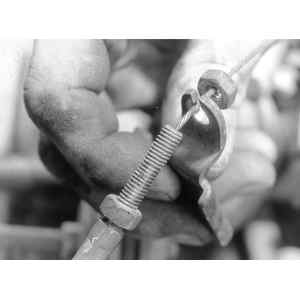
    Fig. 3: Disengage the accelerator cable from the throttle lever

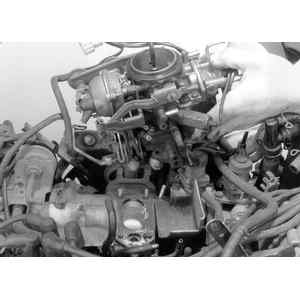
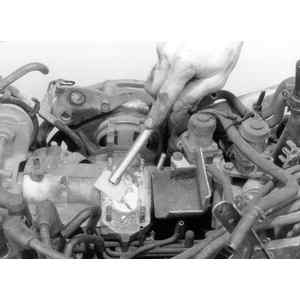
    Fig. 4: Remove the carburetor from the intake manifold

    Fig. 5: Clean the carburetor mounting surface

    To install:

  10. Clean the carburetor mounting surface.
  11. Install the carburetor onto the intake manifold and tighten the mounting bolts.
  12. On the C–W, connect the vent hose, spacer and gasket.
  13. Engage the accelerator cable to the throttle lever and the harness connector to the carburetor.
  14. On the Hitachi carburetor:
    1. Connect the duty solenoid valve connector on those models so equipped.
    2. Connect vacuum hoses for solenoid valves, the main diaphragm, and, on high altitude carburetors, the secondary main air bleed.
    3. Connect the ignition retard, if applicable.
  15. Connect the EGR tube.
  16. Connect the vacuum hoses to the distributor.
  17. Connect the carburetor vent hose for the ECC system.
  18. Connect the fuel lines to the carburetor and install the air cleaner.
  19. Make any necessary adjustments to the carburetor, check fuel lines for leaks and refill the radiator with coolant.

Previous Next