Frequent checks and adjustment of the rear independent suspension should not be necessary. However, under the following conditions the rear suspension alignment should be checked and adjusted:
Be sure to check the following prior to checking rear suspension alignment.
Adjust rear ride height by turning a socket head bolt (8mm), clockwise to raise, and counterclockwise to lower the vehicle. The bolt is accessible through a port in the trunk.
No routine ride height adjustment is provided. Should it be necessary to adjust ride height, the torsion bar(s) must be removed as described in this section. To increase ride height, turn the outer end of the torsion bar in the direction of the arrow (on the end of the bar). Decrease ride height by reversing the above.
Shifting the torsion bar one tooth will alter ride height approximately (0.19 in. (5mm).All 4 wheel drive vehicles have a unique adjusting device that will alter the ride height. (In addition to adjust the torsion bars) refer to rear road clearence for instructions.
Although the ride height is adjustable on all torsion bar equipped vehicles — 1980–84 4WD vehicles incorporated a built-in adjuster to make this easier.
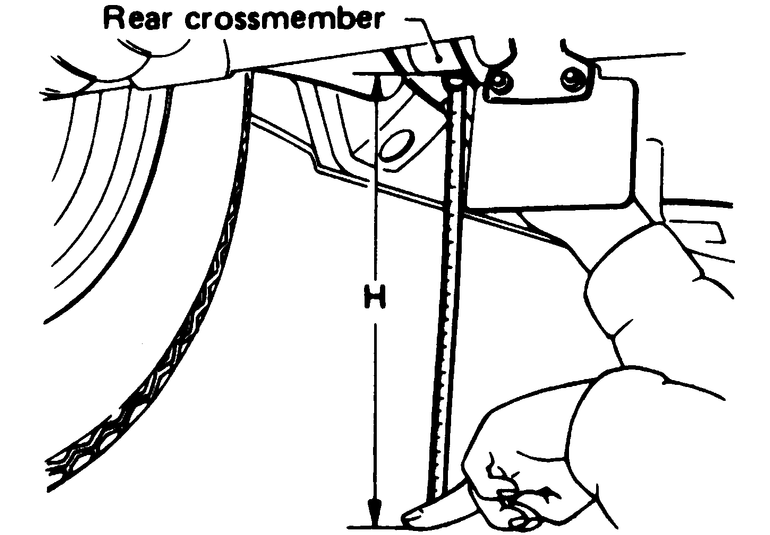
| Fig. 1: Measuring rear road clearance height
|
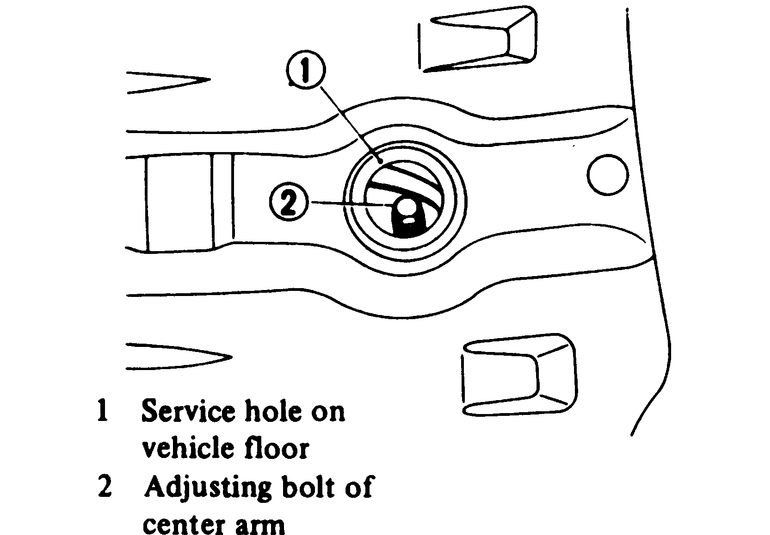
| Fig. 2: Remove the access cover from the service
hole located in the vehicle floor above the rear axle. Turn the adjusting
bolt, clockwise to increase the height; counterclockwise to lower
it
|
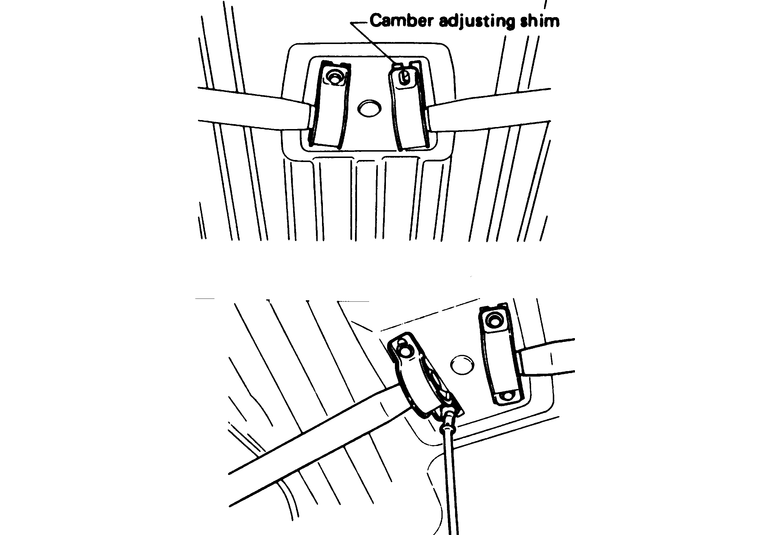
Camber is adjusted by changing the number of shims mounted between the inner torsion bar bushing assembly and the body. Each shim corresponds to 1⁄4 °of change. Adding shims decreases the camber. Removing shims increases it.
NOTE: Camber on 1980–84 models is not adjustable. If any of the rear suspension components become worn or damaged, they must be replaced in order to bring the rear alignment back within specification.
| Fig. 3: Adjusting rear suspension camber
|