NOTE: All brake rotors (discs) have a minimum thickness dimension cast into them, on the hub between the lugs. This is the minimum wear dimension and not a refinish dimension. Do not reuse a brake rotor that will not meet specifications. Replace with a new rotor.
Refinishing of brake rotors can be handled at machine shops equipped for brake work.
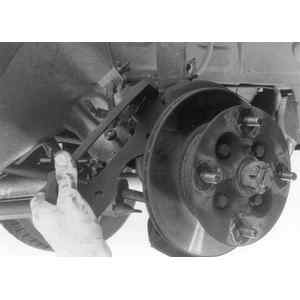
| Fig. 1: Loosen the two bolts which hold the caliper
bracket to the housing, then remove the bracket
|
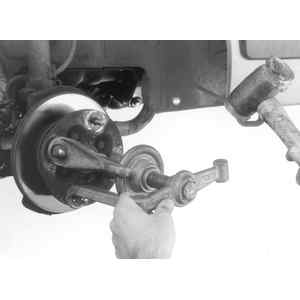
| Fig. 2: Remove the axle shaft nut and pull the disc
off the axle shaft with a puller
|
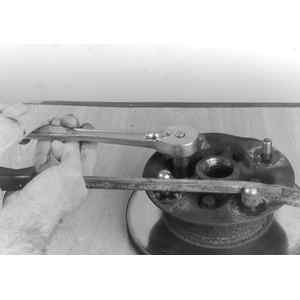
| Fig. 3: Remove the 4 bolts which hold the disc to
the hub
|
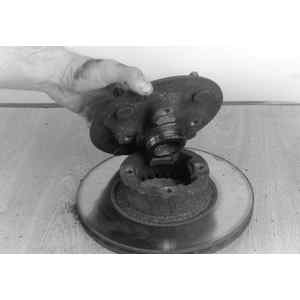
| Fig. 4: Separate the disc from the hub
|