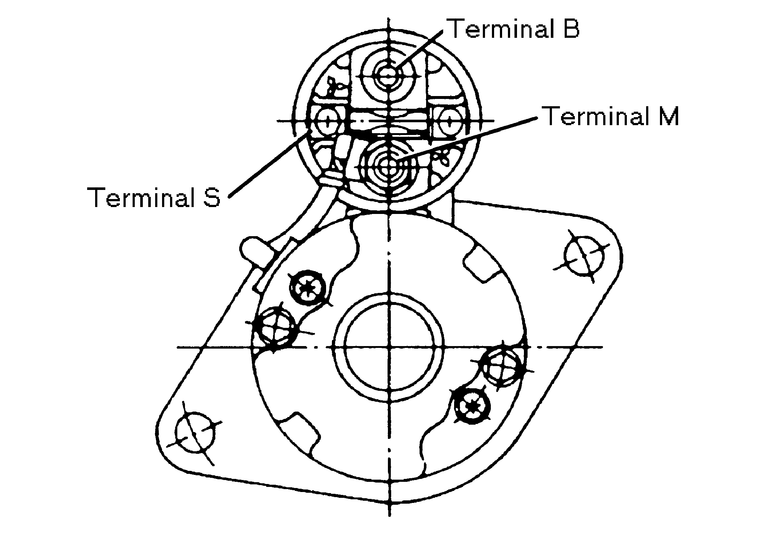
Connect terminal S of starter switch to the positive terminal
of the battery using a lead wire or equivalent.
Connect the starter body to the negative terminal of the battery.
If the switch assembly is working correctly, the pinion should be forced
out. If the starter motor rotates, this is OK. Sometimes current will flow
through the pull in coil to the motor and cause this.
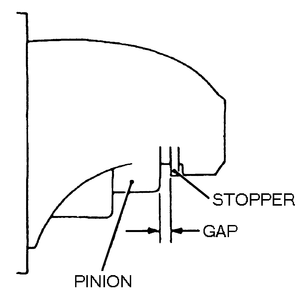
With the pinion forced outward, measure the pinion gap. It should be between
0.02–0.08 inch (0.5–2.0mm).
Unfasten all connections.
Disconnect the wire at terminal M, and attach a lead wire or
equivalent between terminal M and the battery positive terminal.
Connect a ground lead between the stator body and the negative terminal
of the battery.
If the switch assembly is functioning correctly, the pinion should return
it its original position.
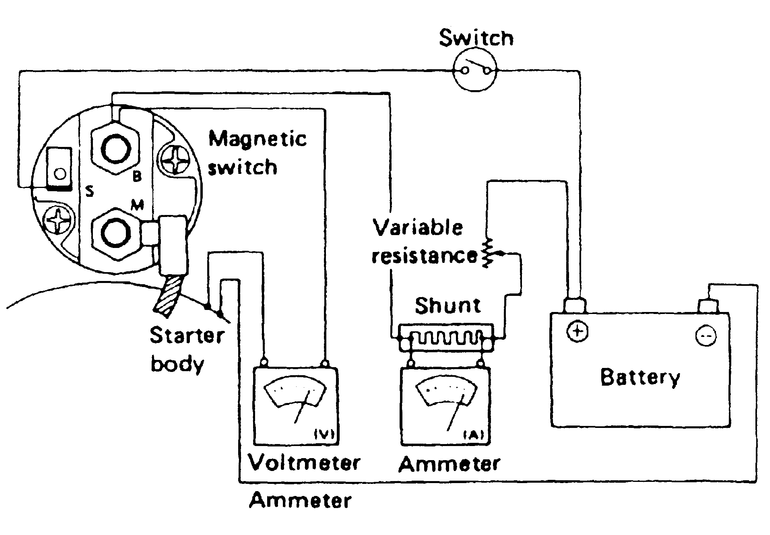
Refer to the illustration and connection ammeter, voltmeter and switch.
Apply braking torque to the starter.
Measure the current draw and starter speed at 7.7 volts.
If the starter is functioning correctly, at a load of 7.7 volts and 7 ft.
lbs. (10 Nm) of torque, the should be a maximum current draw of 300 amps at
1000 rpm.