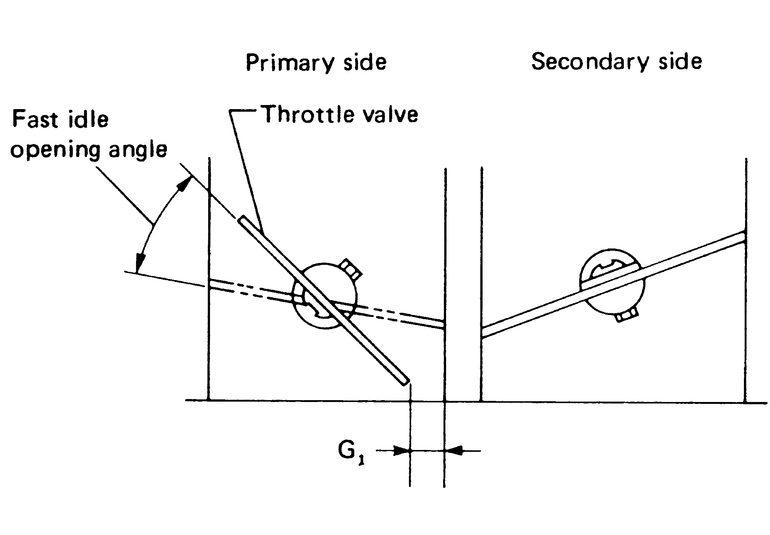
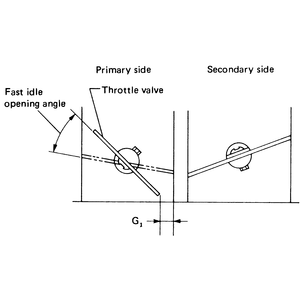
| Fig. 1: Throttle valve measurement — 1.2L
carbureted engine
|
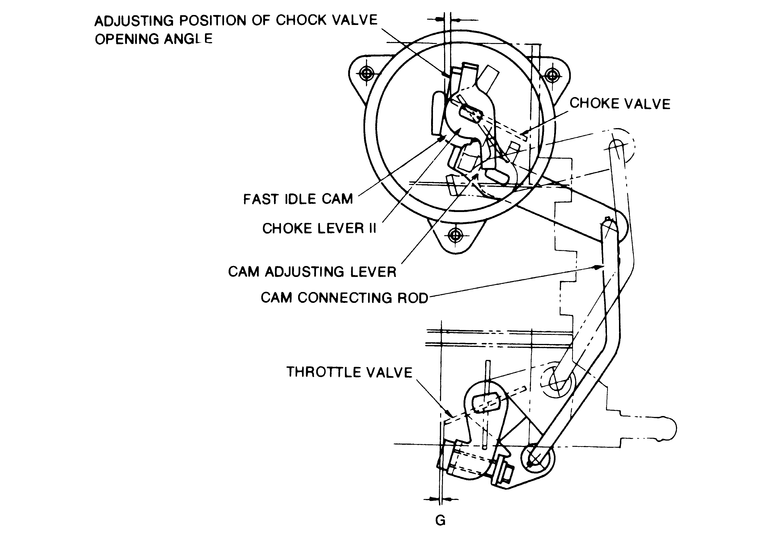
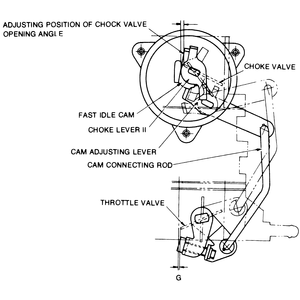
| Fig. 2: Throttle valve measurement — 1.6L
and 1.8L carbureted engines
|
- With the carburetor removed from the engine, set the fast idle cam adjusting
lever on the fourth highest step of the fast idle cam.
- Check to be sure that the choke valve is fully closed.
- Measure the clearance between the lower edge of the primary throttle valve
and the bore.
- Measurement should be as follows:
- DFC-328: 0.0303 in. (0.77mm)
- DCZ-328: 0.0472–0.0587 in. (1.20–1.49mm)
- DCP-306: 0.0386–0.0528 in. (0.98–1.34mm)
- If not within specification, turn the fast idle adjusting screw.
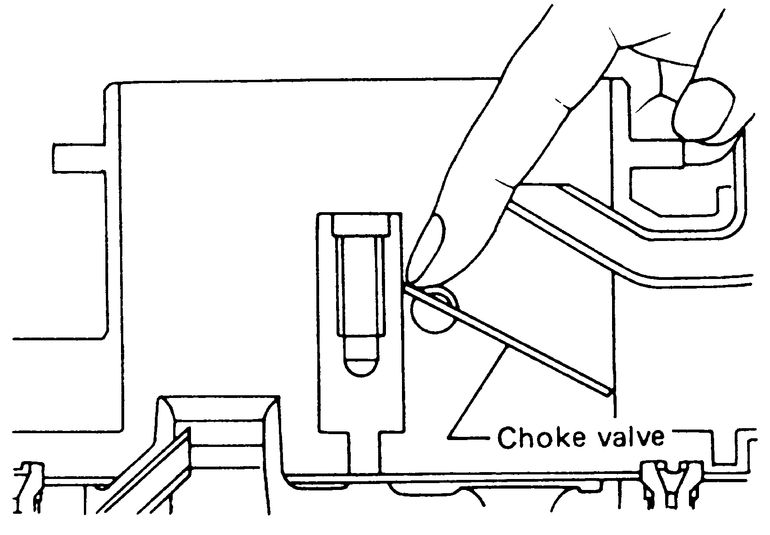
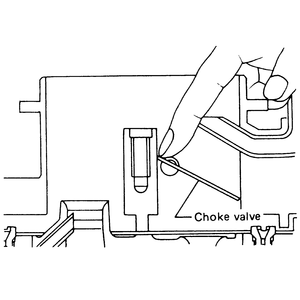
| Fig. 3: Using a finger to hold the choke valve closed — 1.2L
carbureted engine
|
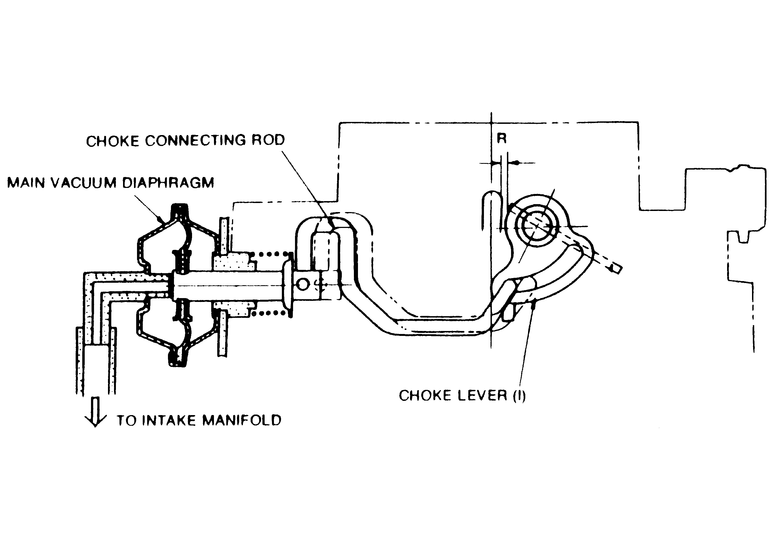
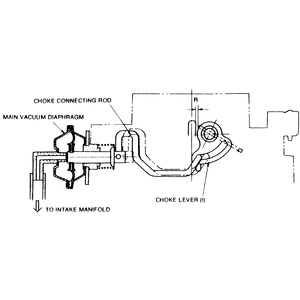
| Fig. 4: Vacuum break opening angle adjustment — 1.6L
and 1.8L carbureted engines
|
- Move the throttle lever while lightly holding the choke valve with your
hand, to keep it fully closed. Release your hand to make sure the choke valve
is fully closed.
- With the choke valve closed, connect a portable vacuum pump to the vacuum
break diaphragm and continue to apply vacuum pressure until the diaphragm
shaft moves a complete stroke toward the diaphragm.
- Measure the clearance (R) while lightly holding the choke valve with your
hand. Clearance should be as follows:
- DFC-328: 0.063 in. (1.6mm)
- DCZ-328: 0.059–0.075 in. (1.5–1.9mm)
- DCP-306: 0.059–0.075 in. (1.5–1.9mm)
- If not within specification, adjust by bending the pawl at the tip of the
lever.
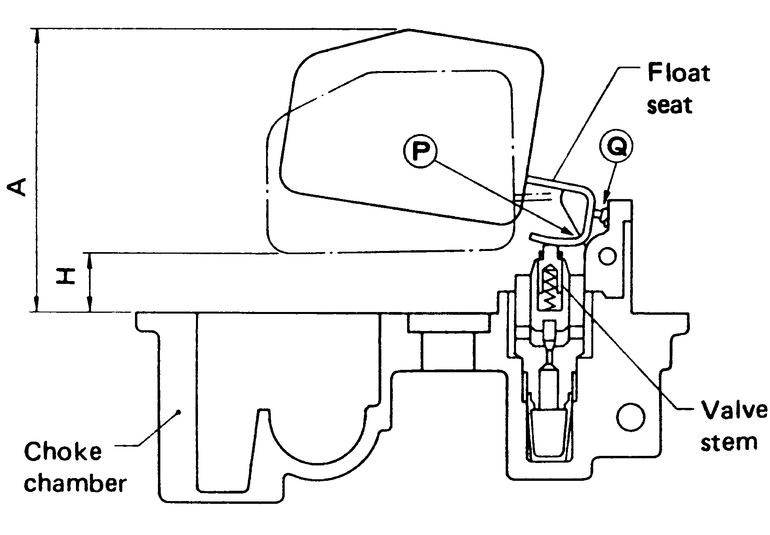
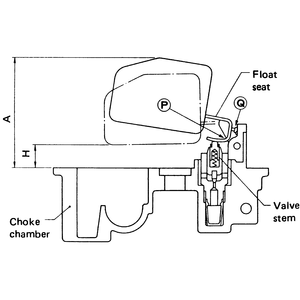
| Fig. 5: Float and fuel level adjustment — 1.2L
carbureted engine
|
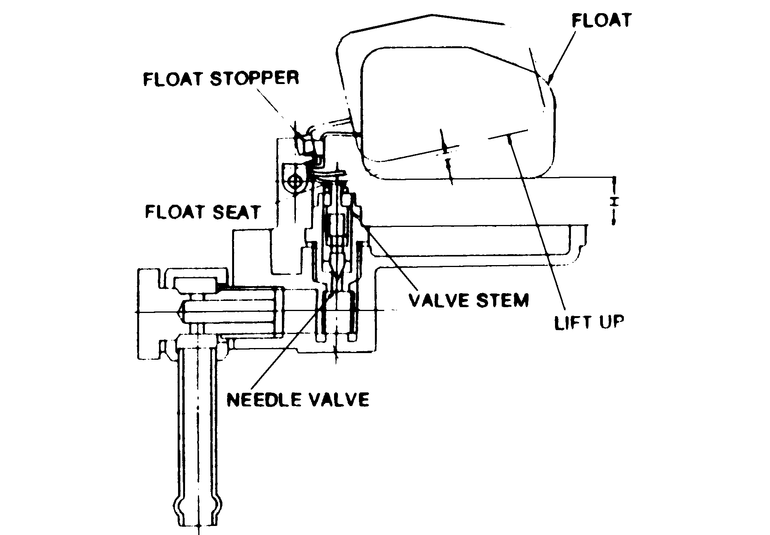
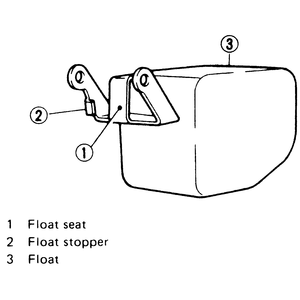
| Fig. 6: Float components
|
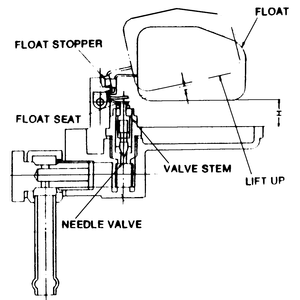
| Fig. 7: Float and fuel level adjustment — 1.6L
carbureted engine
|
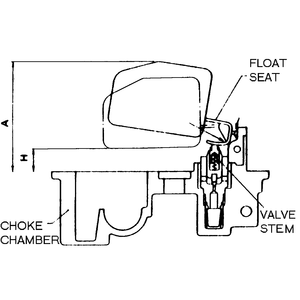
| Fig. 8: Float and fuel level adjustment — 1.8L
carbureted engine
|
The float level may be adjusted with the carburetor installed on the engine,
by removing the air horn as follows:
- Disconnect the accelerator pump actuating rod from the pump lever.
- Remove the throttle return spring.
- Disconnect the choke cable from the choke lever, and remove it from the
spring hanger.
- Remove the spring hanger, the choke bellcrank and the remaining air horn
retaining screws.
- Lift the air horn slightly, disconnect the choke connecting rod, and remove
the air horn.
- Invert the air horn (float up), and measure the distance between the surface
of the air horn and the float.
- Clearance should be as follows:
- DFC-328: 0.437 in. (11.1mm)
- DCZ-328: 0.435–0.492 in. (11.5–12.5mm)
- DCP-306: 0.393 in. (10mm)
- If not within specification, bend the float arm until the clearance is correct.
- Invert the air horn to its installed position.
- On the DCZ-328 and DCP-306 carburetors, measure the distance between the
float arm and the needle valve seat. On the DFC-328 carburetor, measure the
distance between the choke chamber and the bottom of the float.
- Clearance should be as follows:
- DCF-328: 1.835 in. (46.6mm)
- DCZ-328: 0.059–0.075 in. (1.5–1.9mm)
- DCP-306: 0.051–0.067 in. (1.3–1.7mm)
- If not within specification, adjust by bending the float stops.
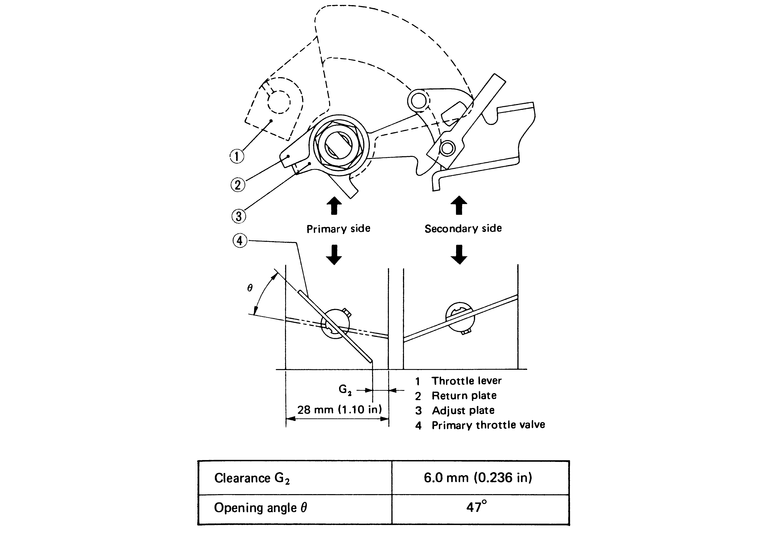
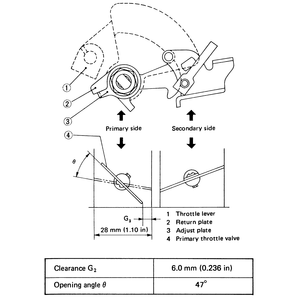
| Fig. 9: Measuring throttle valve opening — 1.2L
carbureted engine
|
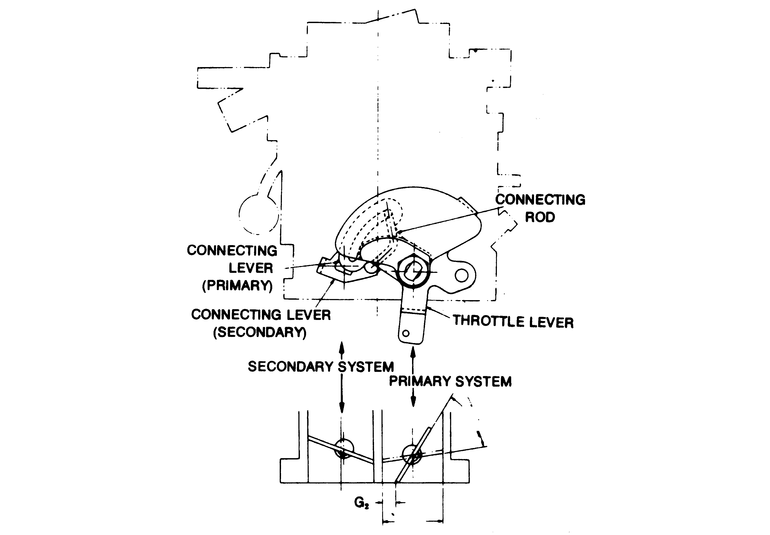
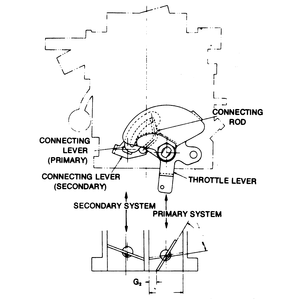
| Fig. 10: Measuring throttle valve opening — 1.6L
and 1.8L carbureted engines
|
- With the carburetor removed from the engine, operate the linkage so that
the connecting rod contacts the groove on the end of the secondary actuating
lever.
- Measure the clearance between the lower end of the primary throttle valve
and its bore.
- Clearance should be as follows:
- DFC-328: 0.236 in. (6.0mm)
- DCZ-328: 0.271–0.275 in. (6.89–6.99mm)
- DCP-306: 0.236 in. (6.0mm)
- If not within specification, adjust the clearance by bending the connecting
rod.
- Check to make sure that the linkage operates smoothly after performing the
adjustment.