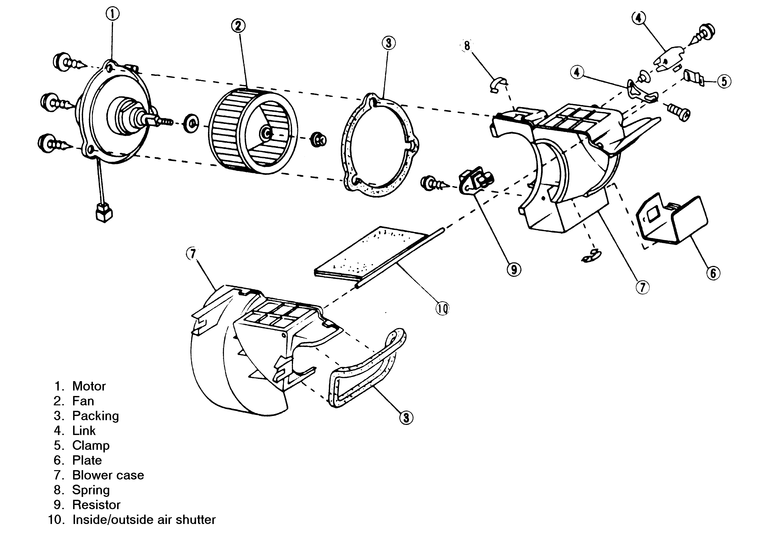
| Fig. 1: Blower motor and heater case assembly — Justy
|
- Disconnect the negative battery cable.
- Remove the coupler that connects the resistor to the instrument panel
harness.
- Disconnect the blower harness assembly.
- Remove the screws attaching the blower motor to the assembly.
- Remove the blower motor assembly.
- Installation is the reverse of removal. Secure all components to specifications.
- Test for proper blower motor operation.
- Disconnect the negative battery cable.
- Remove the trim panel from under the passenger dash panel, by removing
the retainer screws.
- Remove the glove box assembly.
- Remove the glove box frame.
- Remove the heater duct on vehicles equipped without A/C, or separate the
evaporator from the blower motor assembly on A/C equipped vehicles.
- Disconnect the blower motor vacuum hose from the instrument panel hose
assembly.
- Disconnect the blower motor electrical harness at the motor.
- Disconnect the blower motor resistor harness.
- Remove the blower motor mounting screws.
- Remove the ventilation duct bracket.
- Remove the blower motor from the heater case assembly.
- Installation is the reverse of removal. Secure all components accordingly.
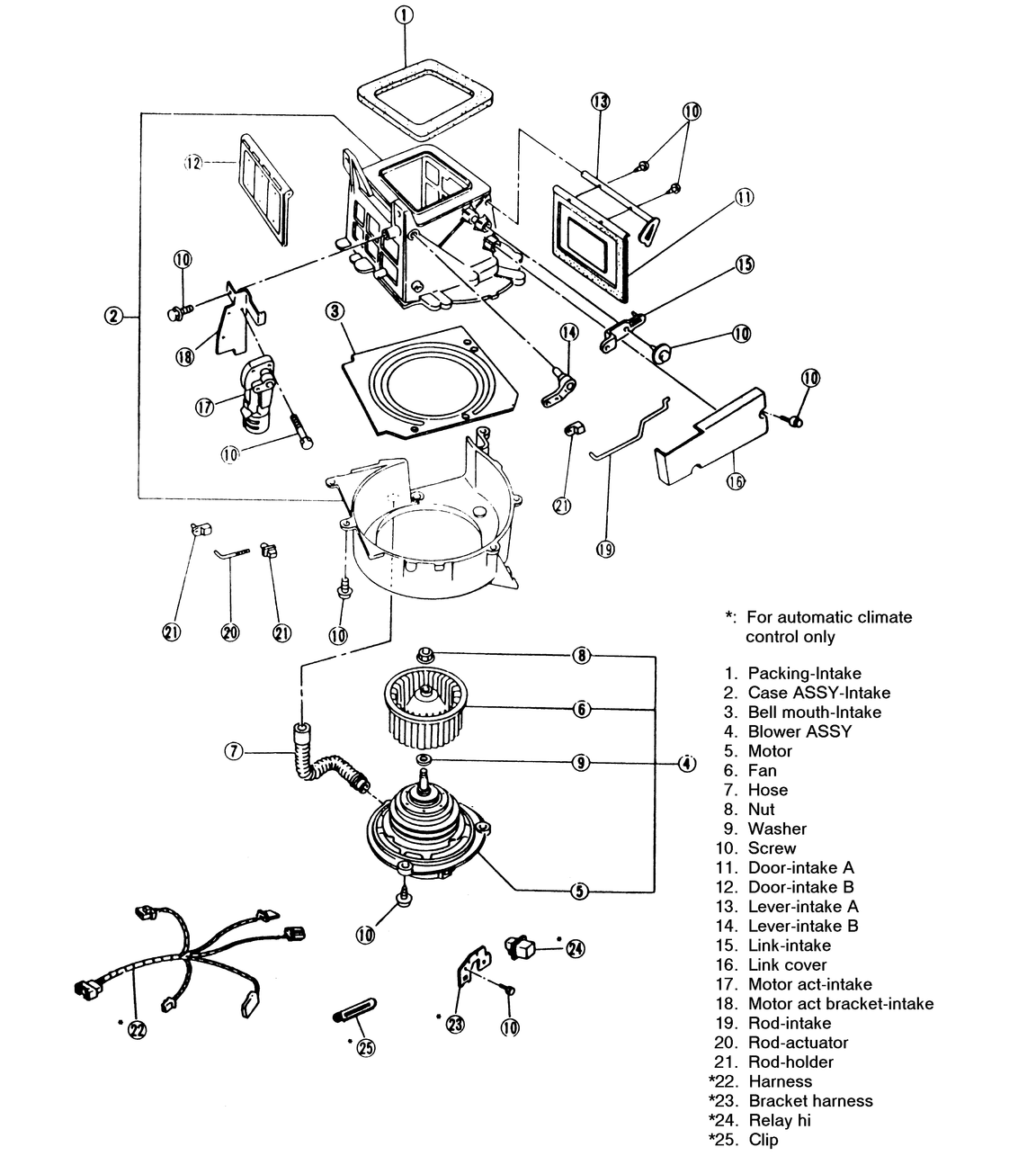
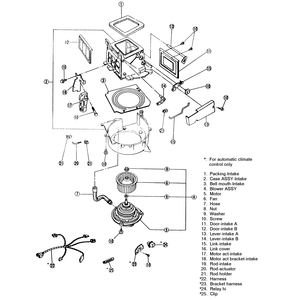
| Fig. 2: Blower motor and case assembly — XT,
Legacy and Impreza
|
- Disconnect the negative battery cable.
- Remove the lower instrument panel cover on the passenger side.
- Remove the glove box assembly.
- Remove the heater duct on non-A/C vehicles or separate the evaporator
from the blower assembly on A/C vehicles.
- Disconnect the blower motor harness and resistor harness.
- Remove the blower motor mounting bolts and remove the blower motor.
- Installation all the components in the reverse order of removal. Tighten
each component to specifications.
- Test for proper blower motor operation.
NOTE: Depending upon working clearance, the air conditioning
system may have to be discharged in order to service the blower motor. If
this is the case, be sure to observe all the required safety precautions when
discharging and recharging the air conditioning system, and use an approved
recovery/recycling machine.
- Disconnect the negative battery cable.
- Remove the lower instrument panel cover on the passenger side of the vehicle.
Remove the glove box assembly, as required for working clearance.
- If equipped with a vacuum actuator, set the control lever to the CIRC position
and disconnect the vacuum hose from the assembly. Remove the actuator from
its mounting.
- Remove the heater duct, if not equipped with air conditioning.
- If equipped with air conditioning, separate the evaporator from the blower
assembly.
- Disconnect the blower motor harness and the resistor electrical harness.
- Remove the blower motor retaining bolts. Remove the blower motor assembly
from its mounting. As required, separate the fan from the blower motor.
- Installation is the reverse of removal. Secure all components accordingly.
- Disconnect the negative battery cable.
- Remove the glove box and lower metal bracket.
- Disconnect the blower motor electrical harness.
- Disconnect the flexible aspirator pipe from the blower motor base.
- Remove the retainer screws, then lower the blower motor out.
- Installation is the reverse of removal. Be sure to secure all components.
- Test for proper blower motor operation.
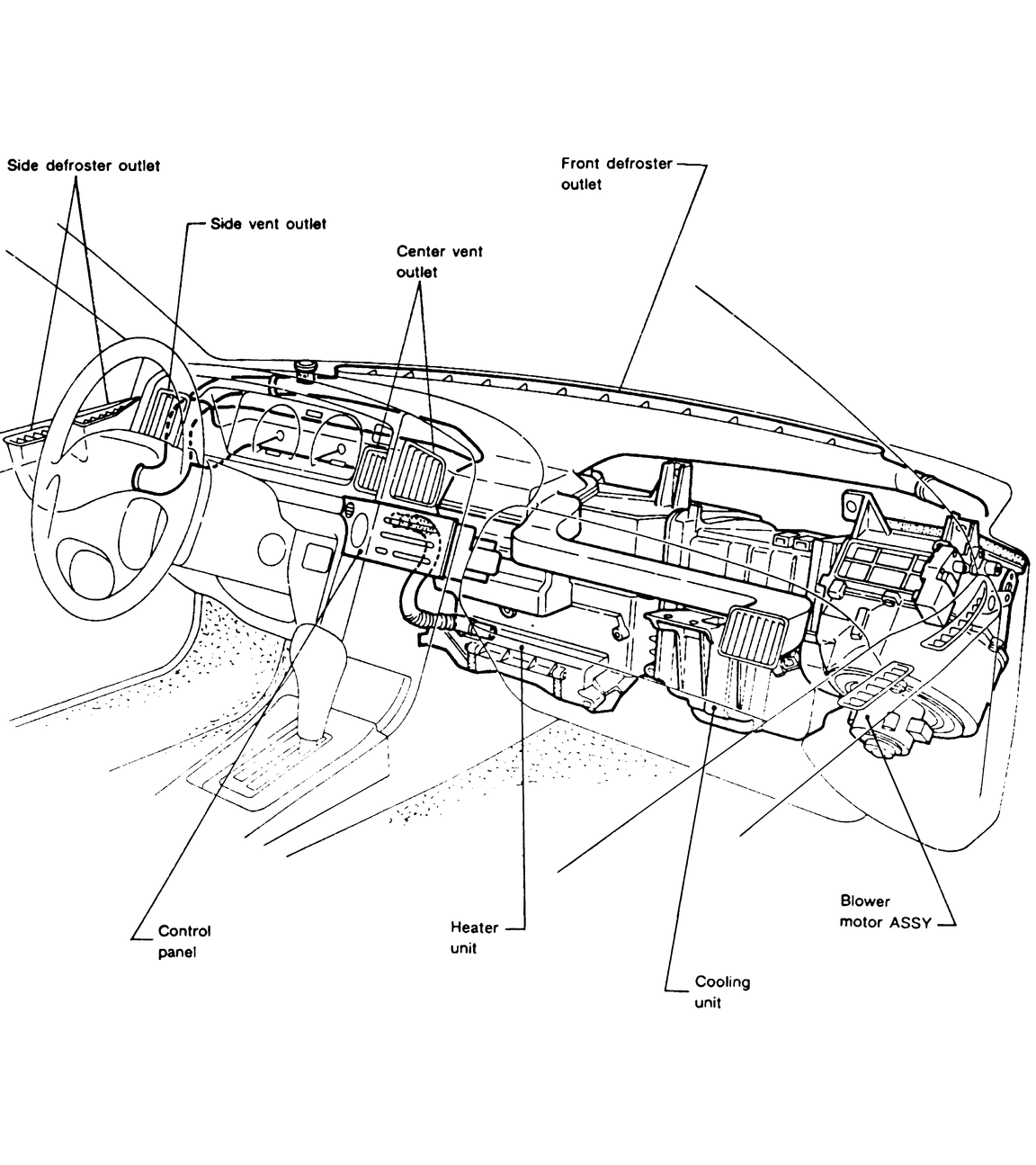
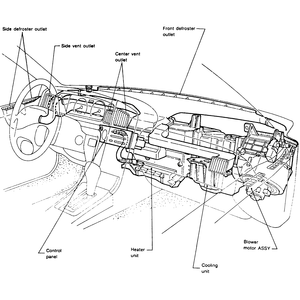
| Fig. 3: Climate control components — SVX
|
CAUTION
Some models covered by this manual may be equipped with a Supplemental Restraint
System (SRS), which uses an air bag. Whenever working near any of the SRS
components, such as the impact sensors, the air bag module, steering column
and instrument panel, disable the SRS, as described in this section.
- Disconnect the negative battery cable. If equipped with a passenger side
air bag, wait at least 10 minutes before doing any work on the vehicle to
allow the air bag time to disarm.
- Remove the glove box.
- Remove the glove box lower support bracket.
- Disconnect the blower motor electrical harness.
- Remove the blower motor flexible vent tube.
- Remove the blower motor mounting screws.
- Remove the blower motor.
- Installation is the reverse of removal. Tighten all components to specifications.