Previous Next

Axle Bearings

REMOVAL & INSTALLATION

2WD

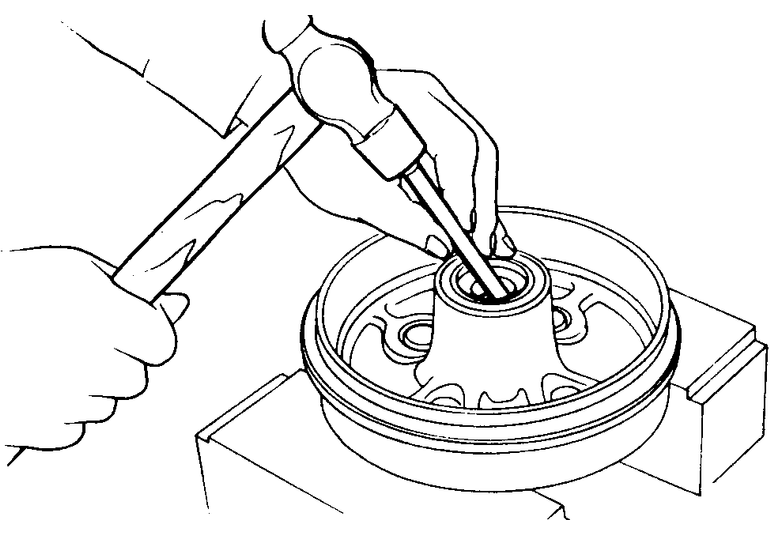
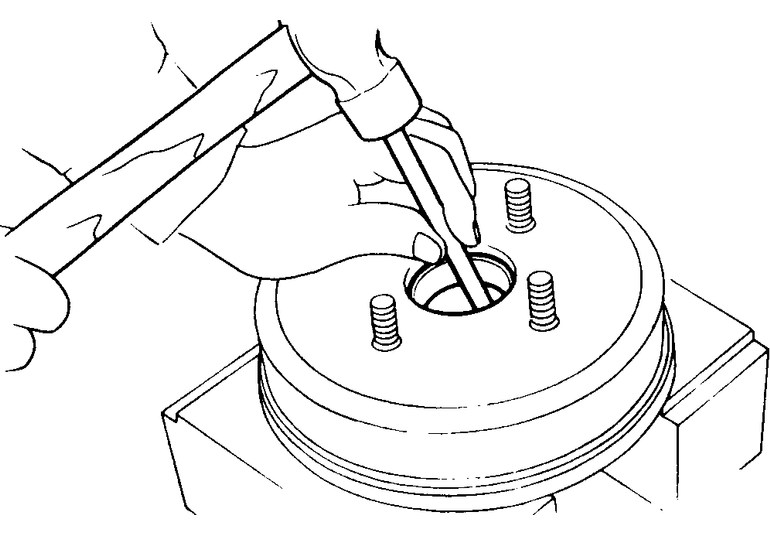
Fig. 1: Driving the inner bearing race from the brake drum — 2WD Justy shown

Fig. 2: Driving the outer bearing race from the brake drum — 2WD Justy shown

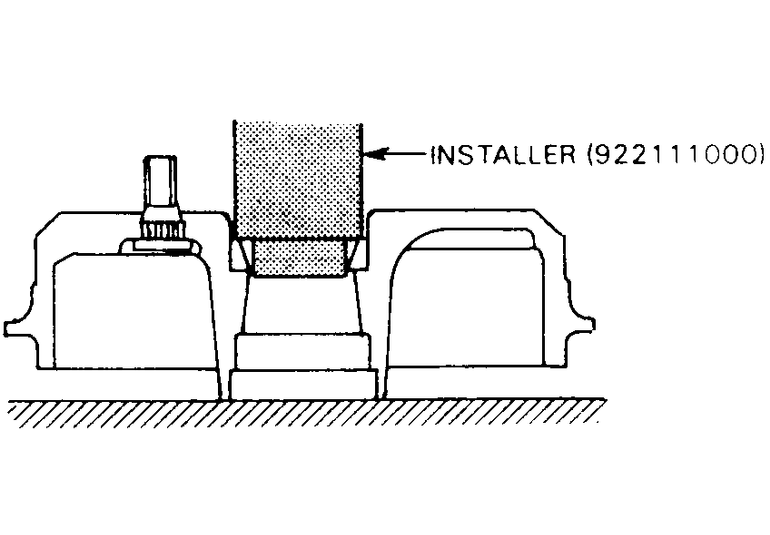
Fig. 3: Pressing the outer bearing race into the drum — 2WD Justy shown

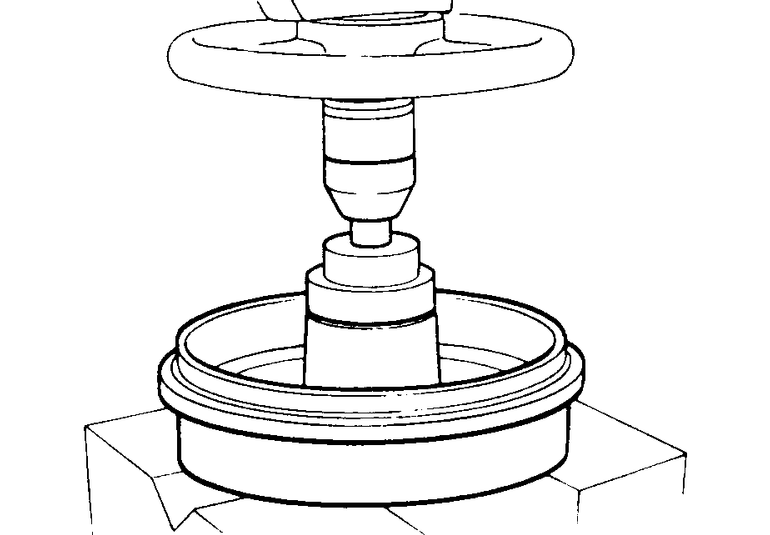
Fig. 4: Pressing the seal into the drum — 2WD Justy shown

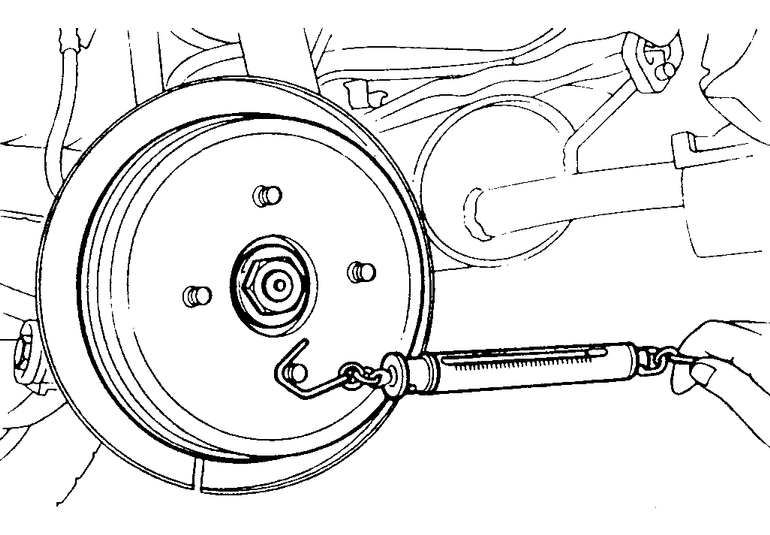
Fig. 5: Checking the brake drum starting tighten — 2WD Justy shown

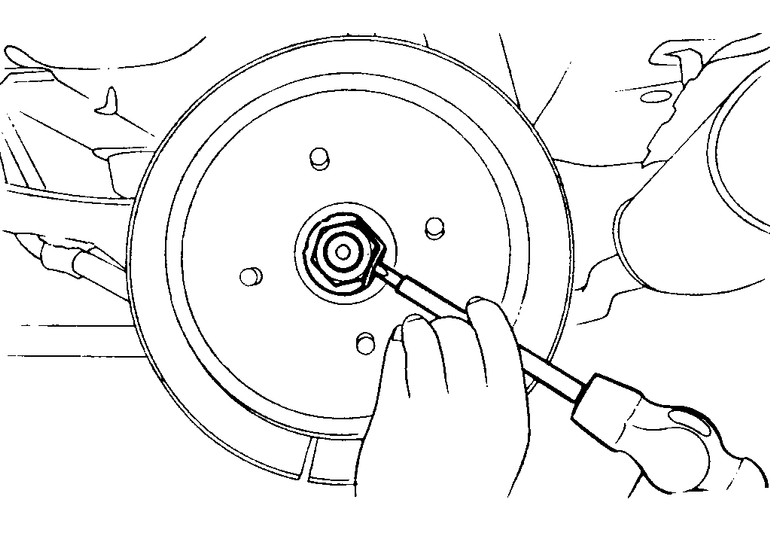
Fig. 6: Bending the locking washer on the spindle nut — 2WD Justy shown

  1. Raise and support the vehicle safely and remove the wheels.
  2. Remove the dust cover, lockwasher, nut and remove the brake drum. Take care not to allow the outer bearing to drop on the ground.
  3. Remove the inner bearing from the drum.
  4. Place the brake drum on 2 block of wood. Using a brass drift and hammer, drive the outer race of the inner bearing from the drum. The seal will come out at the same time.
  5. Reverse the brake drum and drive the outer race of the outer bearing from the drum.
  6. Clean all parts and inspect the bearings and races for pitting and other obvious signs of failure.

    To install:

  7. Place the brake drum on a support and press the outer bearing race into place using installer tool 92211000 or equivalent.
  8. Reverse the drum and press the outer race into place using installer tool 92211000 or equivalent.
  9. Pack the inner bearing with wheel bearing grease and install it to the drum.
  10. Coat the lip and inner surface of the oil seal with grease and press the oil seal into the drum using installer tool 92211000 or equivalent.
  11. Install the spacer on the spindle and the brake drum.
  12. Pack the outer bearing with wheel bearing grease and install it to the drum.
  13. Install the washers and axle nut on the spindle. Adjust the wheel bearing as follows:
    1. Tighten the spindle nut to 29 ft. lbs. (39 Nm).
    2. Rotate the drum clockwise and then counterclockwise several times. Then back the nut off until 0 ft. lbs. (0 Nm) is obtained.
    3. Tighten the spindle nut until a drum starting tighten to 0.5–0.7 ft. lbs. (0.7–1.0 Nm) or 3.1–4.4 lbs. (13.7–19.6 N) is obtained. Using a spring gauge tool to check the starting tighten.
  14. Bend the lockwasher over the spindle nut.
  15. Install the O-ring on the dust cap. If damaged replace it with a new O-ring. Install the dust cover.
  16. Install the wheels and lower the vehicle. Install the negative battery cable.
4WD

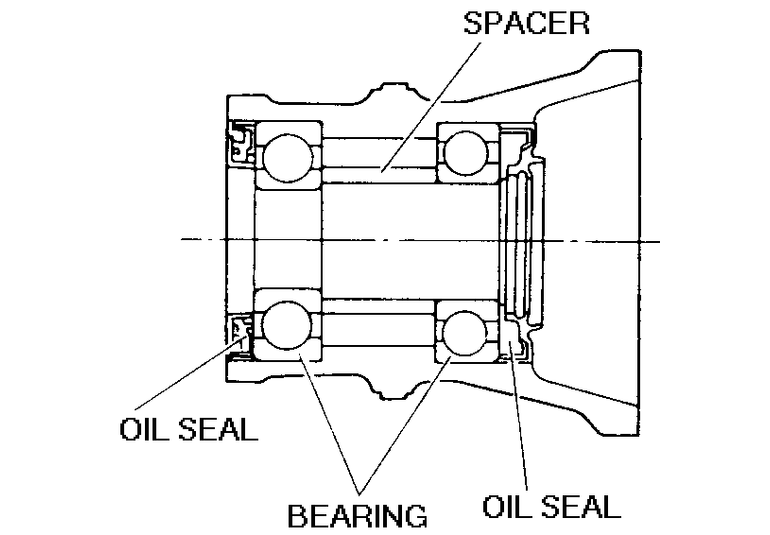
Fig. 7: Position the spacer in a radial position — 4WD Justy shown

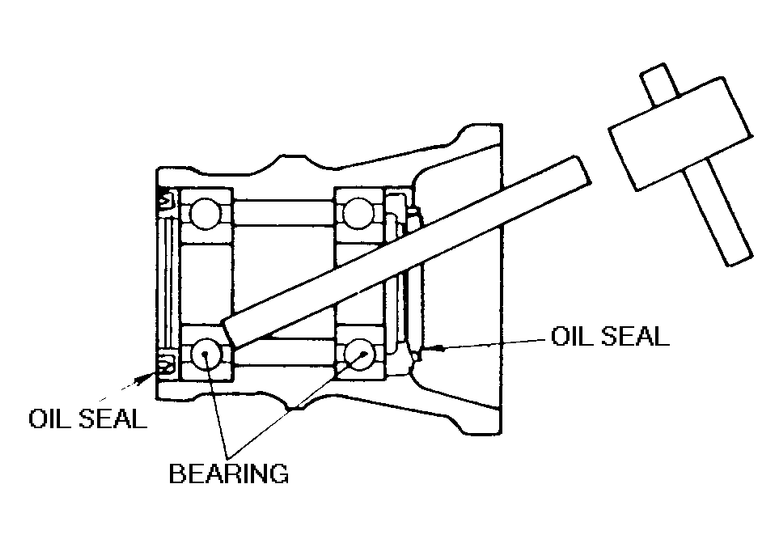
Fig. 8: Driving the bearing and seal out of the housing — 4WD Justy shown

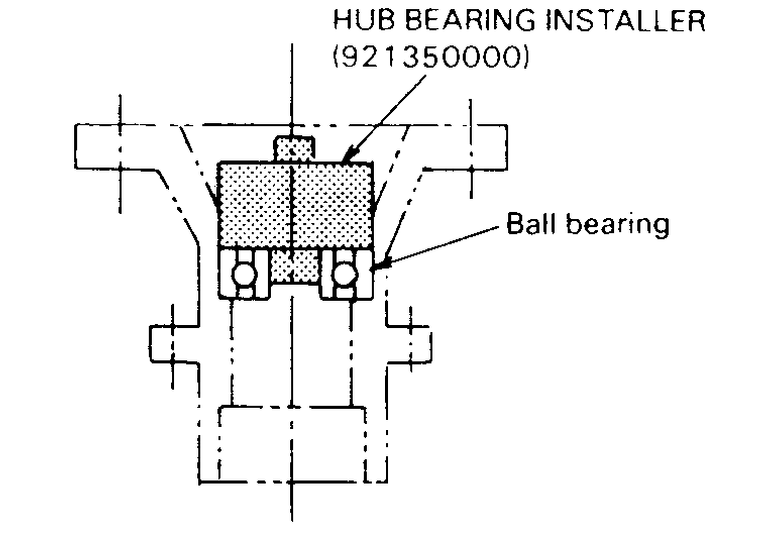
Fig. 9: Pressing the inner bearing into the housing — 4WD Justy shown

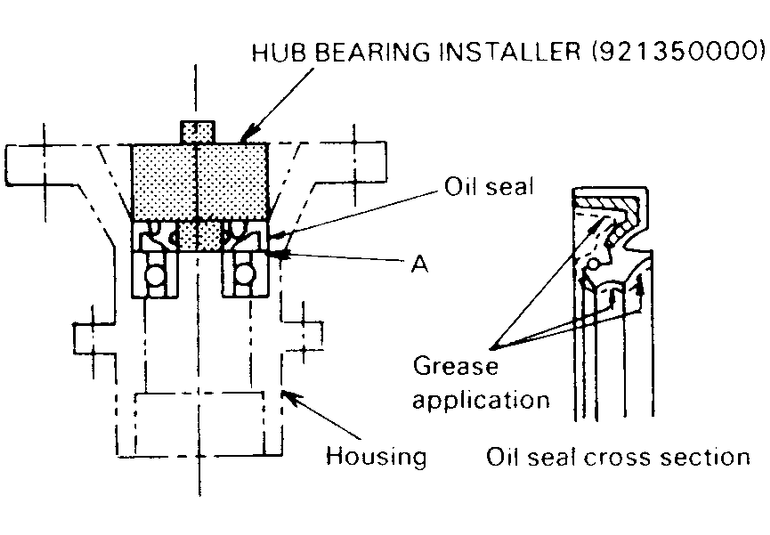
Fig. 10: Pressing the inner seal into the housing — 4WD Justy shown

  1. Raise and support the vehicle safely. Remove the tire and wheel assembly.
  2. Remove the dust cap. Remove the cotter pin and castle nut, conical spring and center piece.
  3. Remove the center piece by wedging flat tool between the separation while using a hammer to tap the center piece free.
  4. Pull the brake drum off by hand.
  5. Remove the rear axle and bearing housing as an assembly. Press the halfshaft from the housing.
  6. Position the spacer inside the housing in a radial direction to gain access to the outer bearing.
  7. Place a brass drift to the outer bearing inner race. Then drive out the bearing, together with the oil by lightly tapping with a hammer.

    NOTE: Do not reuse the old bearing, the old bearing may develop abnormal noise if reinstalled.

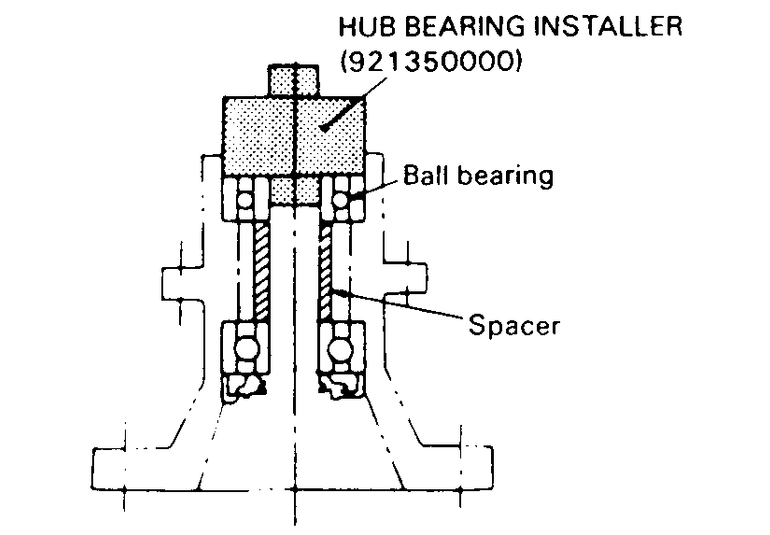
    Fig. 11: Pressing the outer bearing into the housing — 4WD Justy shown

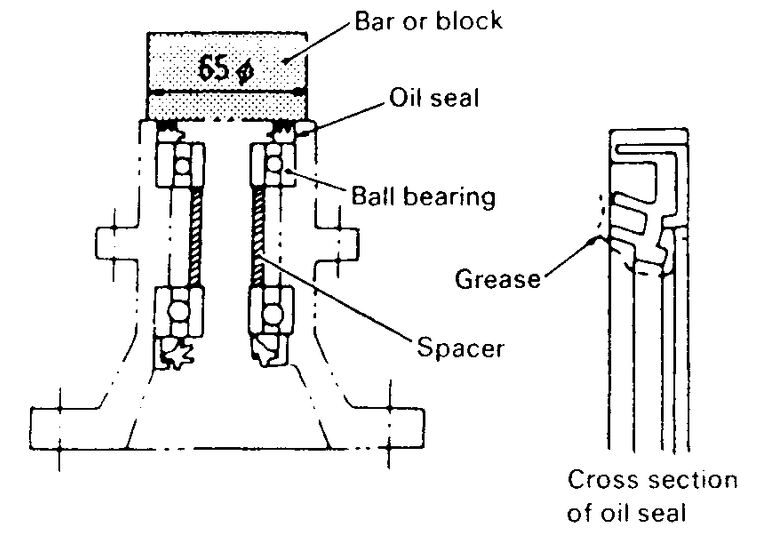
    Fig. 12: Pressing the outer seal into the housing — 4WD Justy shown

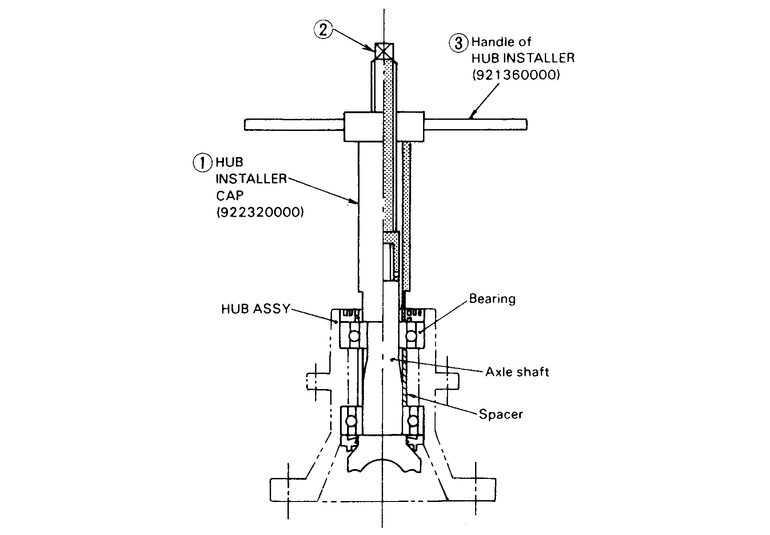
    Fig. 13: Press fitting the halfshaft to the bearing housing — 4WD Justy shown

  8. Remove the spacer from the housing.
  9. Reverse the bearing housing and drive out the inner bearing and seal.

    NOTE: Always tap around the periphery of the bearing outer race.

  10. Clean and inspect the bearing inner and outer race for cracks or damage. Check for noise and binding when the outer race is turned slowly and while the inner race is held in position.
  11. Clean and inspect the spacer. Check for damage and deformation. Replace as necessary.
  12. For the bearing housing, wipe the inner surface with a clean cloth and check for cracks or damage. Replace as necessary.

    To install:

  13. Pack the inner bearing with wheel bearing grease.
  14. Install the bearing into the housing. Press the bearing using bearing hub installer tool 92135000 or equivalent.
  15. Coat the oil seal with grease and press the seal in using installer tool 92135000 or equivalent.

    NOTE: A gap between the seal lip and bearing changes oil seal lip interference, resulting in excessive wear on the lip.

  16. Pack the housing with approximately 0.6 oz. (17 g) of wheel bearing grease.

    WARNING
    Do not pack excessively, otherwise it may leak from the outer bearing in the inside of the brake drum which may cause brake failure.
  17. Install the spacer in the housing. Pack the outer bearing with wheel bearing grease and place into the housing.
  18. Press the bearing using bearing hub installer tool 92135000 or equivalent.
  19. Coat the oil seal with grease and press the seal in using installer tool 92135000 or equivalent.
  20. Join the halfshaft to the bearing housing and press in place using installer tool 92232000.
  21. Install the halfshaft and housing assembly into the vehicle.
  22. Attach the trailing arm to the bearing housing and install the bolt nut loosely at this time.
  23. Attach the strut to the bearing housing and install the bolts and nuts loosely at this time.
  24. Tighten the strut-to-bearing housing bolts and nuts to 72–87 ft. lbs. (98–118 Nm), the trailing link-to-bearing housing bolt and nut to 43–58 ft. lbs. (59–78 Nm) and the spindle-to-lower arm bolt and nut to 54–69 ft. lbs. (74–93 Nm).
  25. Install the brake backing plate assembly to bearing housing, tighten the retaining bolts to 13–23 ft. lbs. (18–31 Nm)
  26. Install the brake line bracket and brake drum. Install the center piece, conical spring and castle nut.
  27. Install the wheels and lug nuts. Lower the vehicle and apply the brake.
  28. Tighten the axle nut to 108 ft. lbs. (147 Nm). After tightening to specifications, tighten the axle shaft nut 30 degrees further. Install and new cotter pin.
  29. Test drive the vehicle.

Previous Next