Previous Next

REMOVAL & INSTALLATION

Pinion Seal

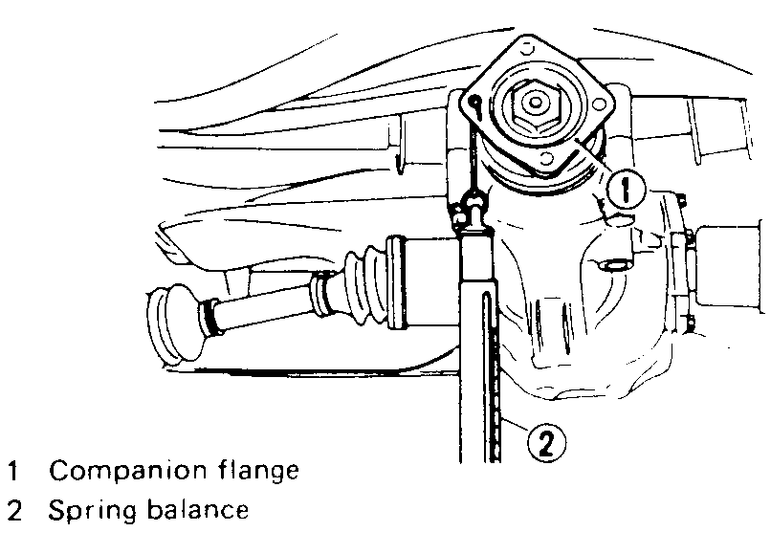
Fig. 1: Measuring the companion flange turning resistance

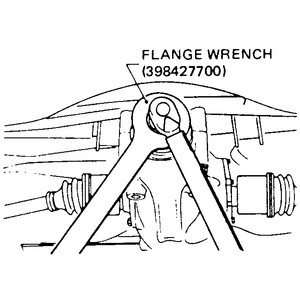
Fig. 2: Removing the companion flange nut

  1. Drain the differential gear oil (see Section 1).
  2. Raise the rear wheels and support the car on jackstands.
  3. Remove the driveshaft as outlined earlier in this section.

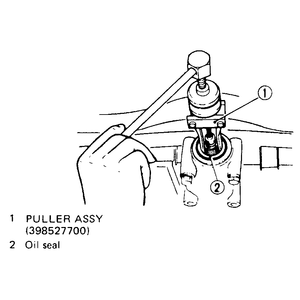
    Fig. 3: Removing the differential pinion seal

  4. Measure the turning resistance of the differential companion flange. To do this, attach either a spring scale or an inch pound tighten wrench to one of the mounting holes. Make sure that the flange turns smoothly, and then turn the flange through one complete revolution using the scale or tighten wrench. Mark down the reading registered. It will be used during installation.
  5. Remove the drive pinion nut while holding the companion flange with a flange or pipe wrench.
  6. Remove the companion flange and oil seal with a puller.

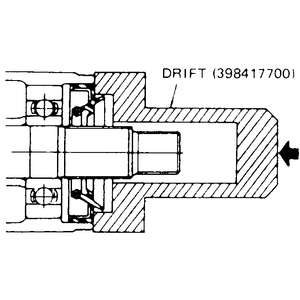
    Fig. 4: Installing the pinion seal

  7. Using a drift, tap in a new oil seal.

    NOTE: Apply axle grease between the oil seal lips.
  8. Install the companion flange.
  9. Tighten the pinion nut to 123–145 ft. lbs. (167–196 Nm). The proper torque been reached when the turning resistance of the companion flange is the same as it was when measured in Step 4 above.
  10. Stake the pinion nut with a punch.
Side Oil Seal

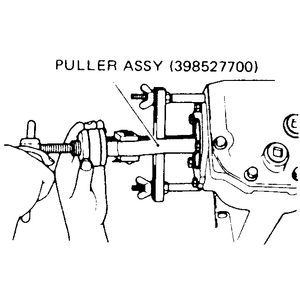
Fig. 5: Removing the differential side seal — Legacy shown

  1. Drain the differential oil (see Section 1).
  2. Raise the rear wheels and support the car on jackstands.
  3. Remove the side yolk retaining bolt and pull the side yolk out of the differential carrier.
  4. Extract the oil seal with a puller.
  5. Using a drift, tap in a new oil seal.

    NOTE: Apply axle grease between the oil seal lips.
  6. Install the side yoke and tighten the retaining bolt.

Previous Next