| Camshaft lobe lift is measured in two places
|
Camshaft lobe lift is the amount (measured in inches or millimeters) that the camshaft is capable of moving the valve train components in order to open the valves. The lobe lift is a measure of how much taller the "egg shaped'' portion of the camshaft lobe is above the base or circular portion of the shaft lobe. Lift is directly proportional to how far the valves can open. A worn camshaft (with poor lobe lift) cannot fully open the valves. The lobe lift therefore can be directly responsible for proper or poor engine performance.
Lobe lift can be measured in 2 ways, depending on what tools are available and whether or not the camshaft has been removed from the engine. A dial gauge can be used to measure the lift with the camshaft installed, while a micrometer is normally only used once the shaft has been removed from the engine.
Dial Gauge Method
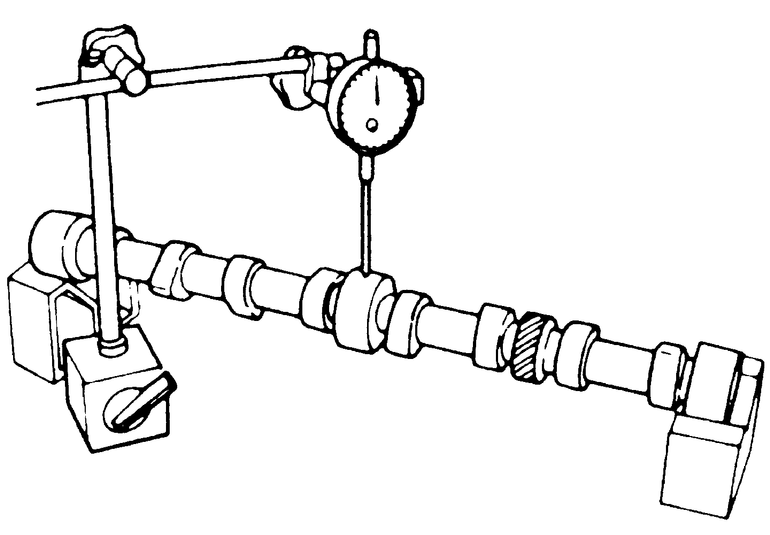
| Measuring camshaft run-out
|
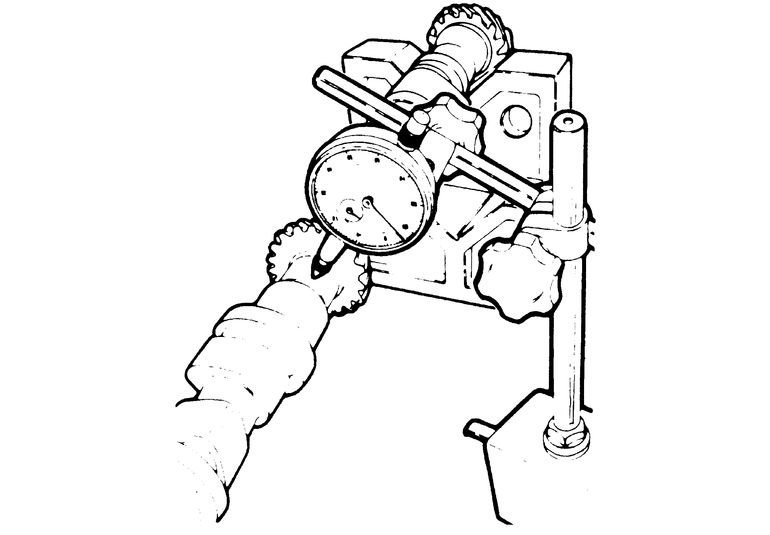
| Measuring camshaft straightness
|
Lobe lift may be checked with the camshaft installed. In all cases, a dial gauge is positioned somewhere on the valve train (pushrod, lifter, or camshaft itself) and the camshaft is then turned to measure the lift.
Note: A remote starter may be used to turn the engine over during the next steps. If a remote starter is not available, remove the spark plugs to relieve engine compression. Then rotate the crankshaft using a large wrench or socket on the crankshaft damper bolt. be sure to only turn the engine in the normal direction of rotation.
To check the accuracy of the original indicator reading, continue to rotate the crankshaft until the indicator reads zero. If the lift on any lobe is below specified wear limits listed the camshaft and the valve tappets must be replaced.
Micrometer
A micrometer may used to measure camshaft lobe lift, but only after it has been removed from the engine. Once the valve cover is removed from the engine, access may be possible (though a little awkward) to measure the camshaft lobes using a micrometer.
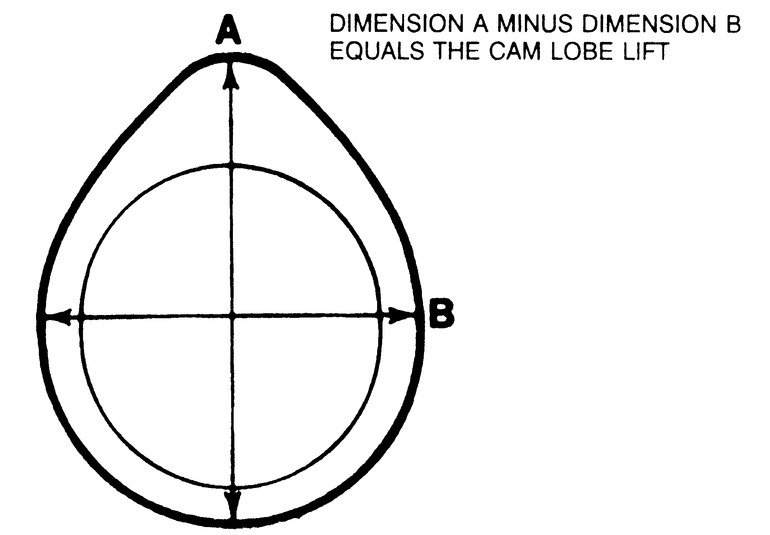
Two measurements are necessary for each lobe; Measurement "Y" or the total LOBE HEIGHT, and measurement "X" or the total LOBE WIDTH. To find the lobe lift, you simply subtract "X" from "Y" (subtract the width from the height).
Note each measurement, and then make your calculation to determine the lift. Note the final results and repeat the process on the remaining camshaft lobes. Finally, you should compare your results to the specification charts and decide if a new camshaft is in your future.