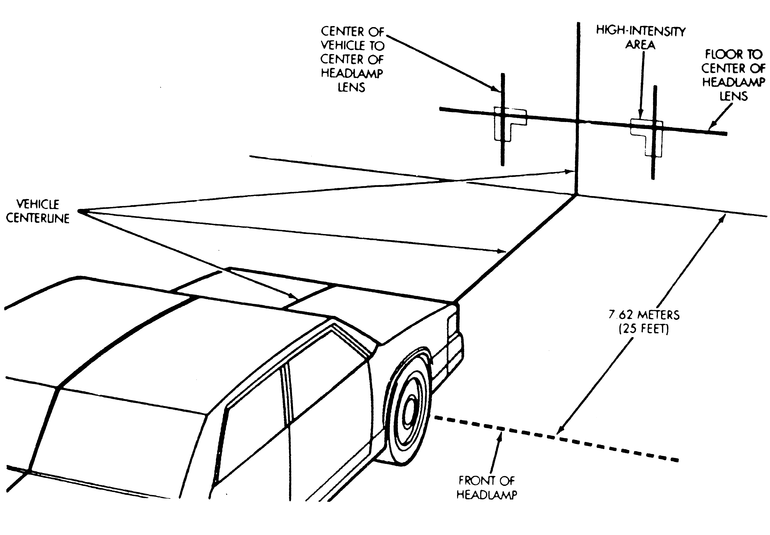
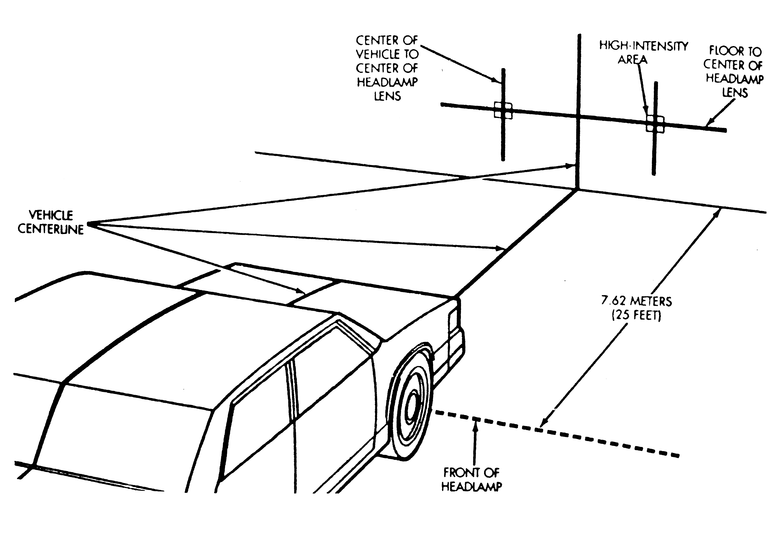
Headlights must be properly aimed to provide the best road illumination. The lights should be checked for proper aim and adjusted as necessary. Certain state and local authorities have requirements for headlight aim; these should be checked before adjustment is made.
When adjusted properly, the lights should not glare in oncoming traffic's windshields, nor should they illuminate the passenger compartment of vehicles driving in front of you. These adjustments are rough and should always be fine-tuned by a repair shop that is equipped with approved, headlight aiming tools. Improper adjustments may be both dangerous and illegal. Temporary headlight adjustment may be made using a wall, using the following procedure, or on the rear of another vehicle.
CAUTION
When headlights are replaced or any time front-end work is performed on your vehicle, the headlights should be accurately aimed by a qualified repair shop using the proper equipment. Headlights not properly aimed can make it virtually impossible to see and may blind other drivers on the road, causing injury or death. The following procedure is a temporary fix, until you can take your vehicle to a repair shop for a proper adjustment.
NOTE: Because the composite headlight assembly is bolted into position, no adjustment should be necessary or possible. Some applications, however, may be bolted to an adjuster plate or may be retained by adjusting screws. If so, follow this procedure when adjusting the lights, but always have the adjustment checked by a qualified shop.
For most of the vehicles covered by this manual, horizontal and vertical aiming of each sealed beam unit is provided by two adjusting screws that move the retaining ring and adjusting plate against the tension of a spring. There are no adjustments for focus; this is done during headlight manufacturing.
Before removing a headlight bulb or disturbing the headlamp in any way, note the current settings in order to ease headlight adjustment upon reassembly. If the high or low beam setting of the old lamp still works, this can be done using the wall of a garage or a building:
NOTE: Although marking all four positions is advisable, marking one position from each light should be sufficient.
| Low-beam headlight pattern alignment
|
| High-beam headlight pattern alignment
|