1BZ-FPE ENGINE MECHANICAL COMPRESSION INSPECTION
CAUTION / NOTICE / HINT
- HINT:
-
If there is lack of power, excessive oil consumption or poor fuel economy, measure the compression pressure.
PROCEDURE

 1.WARM UP AND STOP ENGINE
Allow the engine to warm up to normal operating temperature.
2.DISCONNECT DISTRIBUTOR CONNECTOR
19901
3.DISCONNECT HIGH-TENSIONCORDS FROM SPARK PLUGS
19100P
4.REMOVE SPARK PLUGS
5.CHECK CYLINDER COMPRESSION PRESSURE
- NOTICE:
- ·
Turn the LPG switch OFF
·Disconnect the connector for slow lock solenoid valve
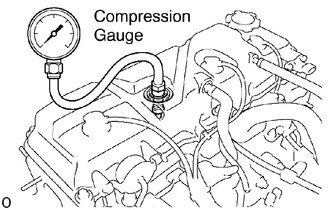
Insert a compression gauge into the spark plug hole.
Fully open the throttle.
While cranking the engine, measure the compression pressure.
- HINT:
-
Always use a fully charged battery to obtain engine speed of 250 rpm or more
Repeat steps (a) through (c) for each cylinder.
- NOTICE:
-
This measurement must be done in as short a time as possible.
- Compression pressure:
1,270 kPa (13 kgf/cm2, 185 psi)
- Minimum pressure:
980 kPa (10 kgf/cm2, 142 psi)
- Difference between each cylinder:
190 kPa (1.9 kgf/cm2, 28 psi) or less
If the cylinder compression in 1 or more cylinders is low, pour a small amount of engine oil into the cylinders through the spark plug hole and repeat steps (a) through (c) for the cylinders with low compression.
If adding oil helps the compression, chances are that the piston rings and/or cylinder bore are worn or damaged.
If the pressure stays low, a valve may be sticking or seating is improper, or there may be leakage through the gasket
19100P
6.REINSTALL SPARK PLUGS
- Torque:
20 N*m (204 kgf*cm, 15 ft*lbf)
19901
7.RECONNECT HIGH-TENSION CORDS TO SPARK PLUGS
8.RECONNECT DISTRIBUTOR CONNECTOR