2TR-FE FUEL FUEL SYSTEM PRECAUTION
CAUTIONS
Before working on the fuel system, disconnect the cable from the negative (-) battery terminal.
Do not work on the fuel system near any naked flames. Never smoke while working on the fuel system.
Keep rubber and leather parts away from gasoline.
DISCHARGE FUEL SYSTEM PRESSURE
- CAUTION:
- ·
Before removing any fuel system parts, take precautions to prevent gasoline spillage.
·As some pressure remains in the fuel line even after taking precautions to prevent gasoline spillage, use a piece of cloth to prevent gasoline splashes when disconnecting the fuel line.
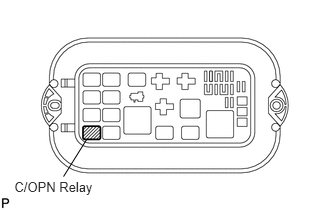
Remove the C/OPN relay from the No. 2 relay block.
Start the engine. After the engine has stopped on its own, turn the ignition switch off.
- HINT:
-
There is a case that DTC P0171/25 (system to lean) is output.
Check that the engine does not start.
Remove the fuel tank cap, and let the air out of the fuel tank.
Reinstall the C/OPN relay.
Disconnect the cable from the negative (-) battery terminal.
FUEL SYSTEM
When disconnecting the high fuel pressure line, a large amount of gasoline will spill out, so observe the following procedures:
Discharge fuel system pressure.
Disconnect the fuel pump tube.
Drain the remaining fuel from the fuel pump tube.
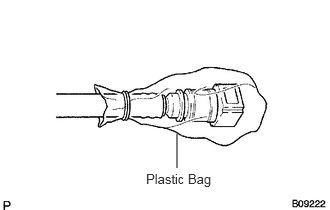
Cover the disconnected fuel pump tubes with a plastic bag to prevent damage and foreign objects from entering.
Place a tray under the vehicle or connecting part to catch any fuel that may spill.
Observe the following precautions when removing and installing fuel injectors.
Never reuse the O-ring.
When placing a new O-ring onto the injector, do not damage the O-ring.
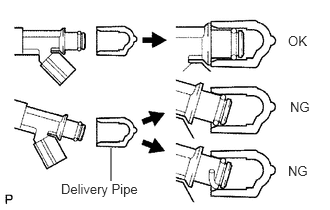
Coat new O-rings with grease or gasoline before installing. Do not use engine oil, gear oil or brake fluid.
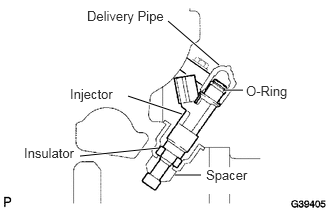
Install the injector into the delivery pipe and lower intake manifold as shown in the illustration.
Observe the following precautions when disconnecting the fuel tube connector (Quick type A):
Check for dirt in the pipe around the connector before disconnecting. Clean away the dirt as necessary.
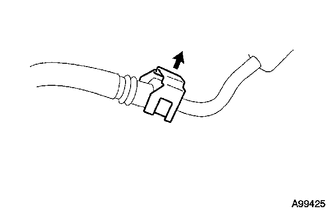
Be sure to disconnect the connectors by hand.
When the connector and the pipe are stuck, pinch the fuel pipe with the fingers, and push and pull the connector. Disconnect and pull the connector out of the pipe. Do not use any tools.
Check for dirt or other foreign objects on the surface of the seal on the disconnected pipe and clean as necessary.
Do not damage the disconnected pipe and connector. Cover the disconnected pipe and connector to prevent intrusion of foreign objects.
Observe the following precautions when connecting the fuel tube connector. (Quick Type A):
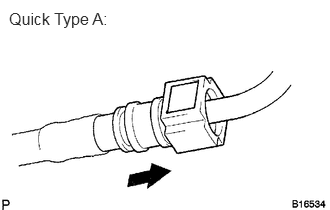
Check for damage or foreign objects in the connected part of the pipe.
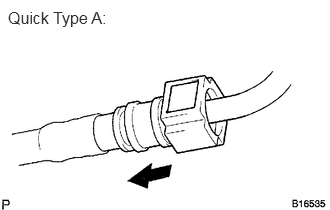
Match the axis of the connector with the axis of the pipe, and push into the connector until the connector makes a 'click' sound. If the connection is tight, apply a small amount of fresh engine oil to the tip of the pipe.
After finishing the connection, check that the pipe and the connector are securely connected by pulling on them.
Inspect for fuel leak.
Observe the following precautions when disconnecting the fuel tube connectors (Quick type B):
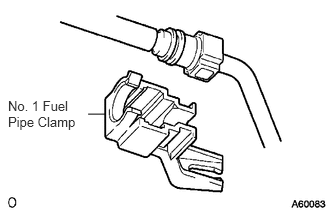
Remove the No. 1 fuel pipe clamp.
Check that there is no dirt or other foreign objects on the pipe or around the connector before disconnecting them. Clean them if necessary.
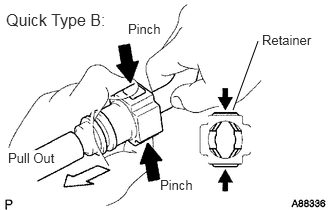
Disconnect the connector from the pipe by hand.
If the connector and the pipe are stuck, push in and pull on the connector to release it. Pull the connector off the pipe carefully.
Check that there is no dirt or other foreign objects on the sealing surface of the disconnected pipe. Clean the surfaces if necessary.
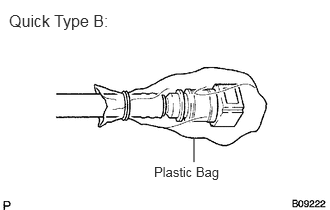
Do not damage the disconnected pipe or connector. Prevent entry of foreign objects by covering the connectors with plastic bags.
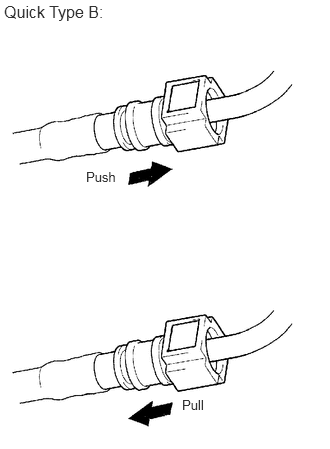
Observe the following precautions when connecting the fuel tube connectors (Quick Type B):
Check if there is any damage or foreign objects on the connecting parts of the pipes.
Line up the two parts of the pipes to be connected, and push them together until the connector makes a "click" sound. If the pipe is difficult to push into the connector, apply a small amount of clean engine oil to the tip of the pipe and reinsert it.
After connecting the pipes, check that the pipe and connector are securely connected by pulling on them.
Inspect for fuel leak.
CHECK FUEL LEAKS
Check that there is no fuel leakage anywhere in the fuel system after doing maintenance.
(Click hereEngine / Hybrid System>2TR-FE FUEL>FUEL SYSTEM>ON-VEHICLE INSPECTION)