Brake Fluid
Brake
ON-VEHICLE INSPECTION
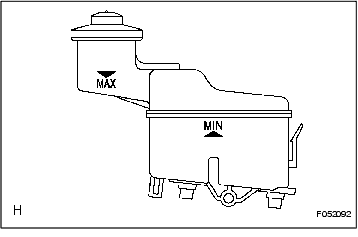
1. CHECK BRAKE FLUID LEVEL IN RESERVOIR
(a) Check the fluid level and add fluid if necessary.
Fluid:
SAE J1703 or FMVSS No. 116 DOT3
HINT:
Add fluid to a level between the reservoir's MIN and MAX lines.
-
BLEEDING
HINT:
If any work is performed on the brake system or if air in the brake lines is suspected, bleed air from the brake system.
NOTICE:
Wash off brake fluid immediately if it comes in contact with any painted surface.
1. FILL RESERVOIR WITH BRAKE FLUID
2. BLEED AIR FROM BRAKE MASTER CYLINDER
HINT:
If the master cylinder has been disassembled or if the reservoir becomes empty, bleed air from the master cylinder.
(a) Using SST, disconnect the 2 brake lines from the master cylinder.
SST
09023-00101
-
(b) Slowly depress and hold the brake pedal.
-
(c) Cover the outer holes with your finger, and release the pedal.
-
(d) Repeat the 2 previous steps 3 or 4 times.
-
(e) Using SST, connect the 2 brake lines to the master cylinder.
SST
09023-00101
Torque:
15.2 N*m
(155 kgf*cm,
11 ft.*lbf)
without SST
14 N*m
(143 kgf*cm,
10 ft.*lbf)
with SST
HINT:
Use a torque wrench with a fulcrum length of 30 cm (11.81 in.).
-
3. BLEED AIR FROM BRAKE LINE
(a) Remove the bleeder plug cap.
-
(b) Connect the vinyl tube to the bleeder plugs.
-
(c) Depress the pedal several times, and then loosen the bleeder plug with the pedal depressed.
-
(d) When fluid stops coming out, immediately tighten the bleeder plug. Then release the pedal.
-
(e) Repeat the 2 previous steps until all the air in the brake fluid is gone.
-
(f) Tighten the bleeder plug.
Torque:
10.8 N*m
(110 kgf*cm,
8.0 ft.*lbf)
for front brake
10 N*m
(102 kgf*cm,
7.0 ft.*lbf)
for rear brake
-
(g) Install the cap.
-
(h) Bleed air from the brake line for each wheel by repeating the above procedures.
-
4. CHECK BRAKE FLUID LEVEL IN RESERVOIR (
Click Here
)