RM1840EF
_53
Suspension
_009622
TIRE / WHEEL
_0052591
TIRE AND WHEEL SYSTEM
G
TIRE / WHEEL TIRE AND WHEEL SYSTEM INSPECTION
PROCEDURE

 1.INSPECT TIRES
a.
Check the tires for wear and proper inflation pressure.
- Cold Tire Inflation Pressure:
Model Tire Size Front
kPa (kgf/cm2, psi)Rear
kPa (kgf/cm2, psi)Double Cab 205R16C 110/108S 240 (2.4, 35) 240 (2.4, 35) 255/70R15C 112/110S 200 (2.0, 29) 200 (2.0, 29) 265/70R16 112S 200 (2.0, 29) 200 (2.0, 29) 265/65R17 112S 200 (2.0, 29) 200 (2.0, 29) Single Cab 205R16C 110/108S 240 (2.4, 35) 240 (2.4, 35) 255/70R15C 112/110S 200 (2.0, 29) 200 (2.0, 29)
b.
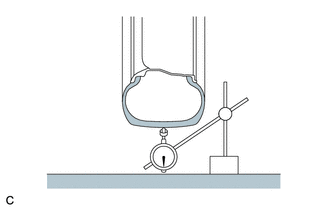
Using a dial indicator, check the runout of the tires.
- Maximum tire runout:
3.0 mm (0.118 in.)
2.ROTATE TIRES
a.
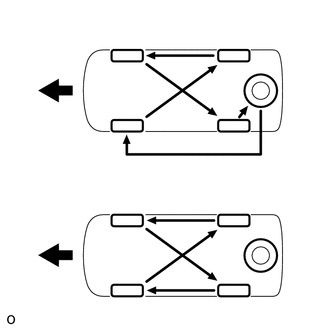
0.52,0.449 0.692,0.608
0.172,0.159
10
*a
0.52,2.168 0.692,2.326
0.172,0.159
10
*a
1.816,1.923 1.987,2.082
0.172,0.159
10
*c
1.807,0.185 1.979,0.343
0.172,0.159
10
*b
| *a | Front of the Vehicle |
| *b | Vehicle Wheels and Spare Tire Wheel are Same Type |
| *c | Vehicle Wheels are Aluminum but Spare Tire Wheel is Steel |
Rotate the tires as shown in the illustration.
3.INSPECT WHEEL BALANCE
a.
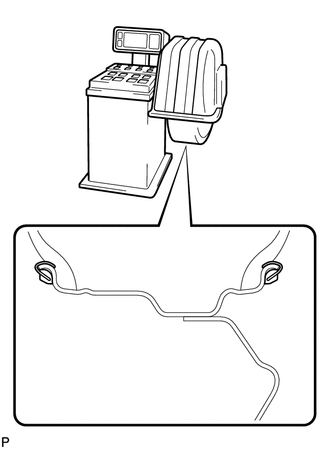
Check and adjust the off-the-car balance.
- Standard Imbalance after Adjustment:
Tire Size Balance Weight 205R16C 110/108S
255/70R15C 112/110S
265/70R16 112S14 g (0.030 lb) or less 265/65R17 112S 13 g (0.028 lb) or less
- HINT:
- ·
The inner side balance weight should be installed by clipping it to the rim.
·If necessary, check and adjust the on-the-car balance.
4.INSPECT FRONT AXLE HUB BEARING LOOSENESS
5.INSPECT FRONT AXLE HUB RUNOUT
6.INSPECT REAR AXLE SHAFT