 |
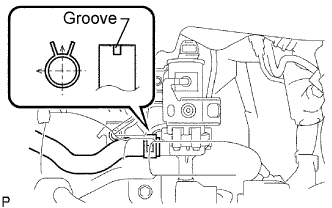
Install the heater water hose A with the hose clip.
- NOTICE:
- Ensure that the hose groove faces upwards.
- Install the hose clip in the direction shown in the illustration.
HEATER WATER PUMP > INSTALLATION |
| 1. INSTALL HEATER WATER PUMP ASSEMBLY |
|
Install the heater water hose A with the hose clip.
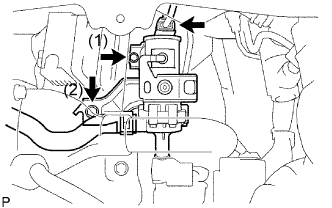 |
Install the heater water pump with the 2 bolts.
Connect the connector.
| 2. INSTALL HEATER WATER HOSE C |
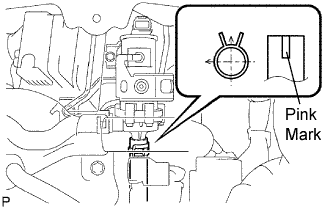 |
Install the heater water hose C with the hose clip.
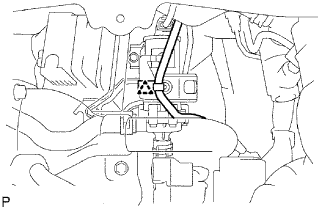 |
Connect the wire harness and attach the clamp.
| 3. ADD ENGINE COOLANT |
Tighten the drain cock plug of the coolant heat storage tank, then disconnect the vinyl hose.
Tighten the drain cock plug of the engine, then disconnect the vinyl hose.
Tighten the drain cock plug of the radiator, then disconnect the vinyl hose.
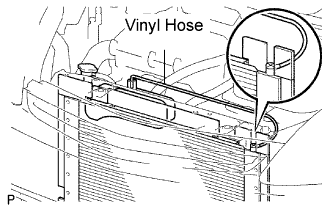 |
Connect a vinyl hose to the bleeder plug of the radiator assembly and the radiator reservoir.
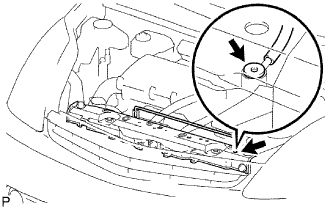 |
Using a 6 mm socket hexagon wrench, loosen the radiator bleeder plug from the radiator support service hole.
Fill the radiator with coolant up to the fill port.
Using a 6 mm socket hexagon wrench, tighten the radiator bleeder plug.
Install the radiator cop.
Fill the radiator reservoir tank with coolant to the full level.
Connect the coolant heat storage water pump connector.
Connect the Techstream to the DLC3.
Turn the power switch ON (IG).
Select the item:
Powertrain / Engine and ECT / Data List/Activate the Water Pump
|
Using a 6 mm socket hexagon wrench, loosen the radiator bleeder plug from the radiator support service hole.
Remove the radiator cap, then fill the radiator with coolant up to the fill port.
Using a 6 mm socket hexagon wrench, tighten the radiator bleeder plug.
Install the radiator cap.
Slowly pour coolant into the radiator reservoir until it reaches the full line.
Disconnect the vinyl hose between the bleeder plug of the radiator assembly and the radiator reservoir tank.
Set the vehicle to inspection mode (Click here).
Warm up the engine until the thermostat is open.
Stop the engine, then wait until the coolant becomes cold. Remove the radiator cap and check the coolant level.
When the coolant level stops going down, add coolant to the radiator reservoir tank up to the full level.
| 4. CHECK FOR ENGINE COOLANT LEAKS |
Fill the radiator with engine coolant and attach a radiator cap tester.
Pump the tester to 137 kPa (1.4 kgf/cm2, 19.9 psi) and check for leakage.