BODY BODY STRUCTURE GENERAL/CONTROL/DETAILS SAFETY FEATURES
General
The impact absorbing structure provides a construction that can effectively absorb the energy ofimpact in the event of a front or side collision. Also, it realizes an excellent occupant protectionperformance through the use of reinforcements and members that help minimize cabin deformation.
Impact Absorbing Structure for Frontal Collision
Frame
The front end of the side rail is separated and the thickness and material of the plate used in the axial compression area are optimized. In addition, the front end of the side rail is designed to disperse input force balanced with the bending portion to allow the front end to axially compress effectively, absorbing energy from impact in the event of a frontal or offset collision (*1 in illustration).
High-tension strength steel panels are used on all side rails and reinforcements to ensure the amount of EA (Energy Absorbance) at a stable level in the event of a collision (*2 in illustration).
Reinforcements are used to the bent section of the side rail to ensure a stable amount of energy absorption in the event of a collision (*3 in illustration).
The No. 2 cab mounting brackets are enlarged to allow the tires to make contact and disperse energy from impact in a stable manner in the event of a collision (*4 in illustration).
Reinforcements and flanges are used to the top and the bottom of the cross-section surface of the side rail to limit deformation on the center of the frame, minimizing deformation of the cabin in the event of a frontal collision (*5 in illustration).
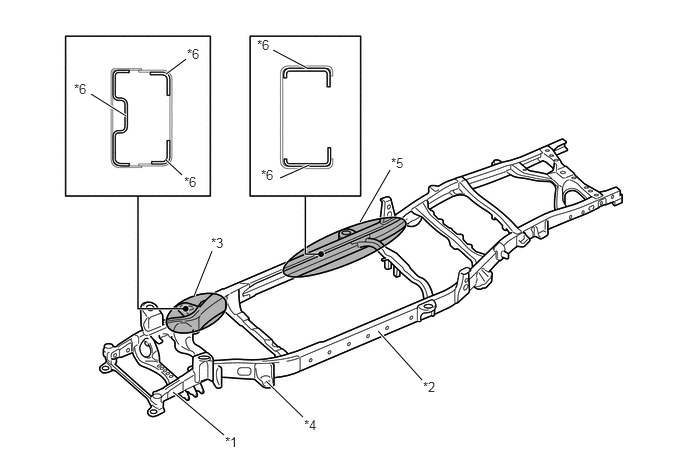
| *1 | Front End of Side Rail | *2 | Side Rail |
| *3 | Bent Section of the Side Rail | *4 | No. 2 Cab Mounting Bracket |
| *5 | Top and the Bottom of the Cross-section Surface of the Side Rail | *6 | Reinforcement |
Bumper Reinforcement
The bumper reinforcement (high strength aluminum alloy) extends beyond the side frame on both sides to ensure its performance in the event on an offset collision.
High tensile strength steel sheet crush boxes are located between the side frame and the bumper reinforcement, controlling energy absorption in the event of a front collision.
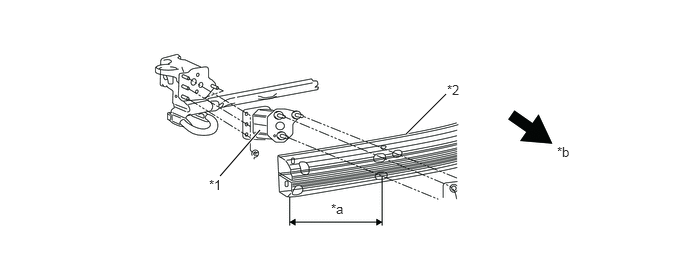
| *1 | Crush Box | *2 | Bumper Reinforcement |
| *a | Extends beyond frame rail | *b | Front |
Under Body
The optimal arrangement of the basic frame and reinforcements helps to minimize cabin deformation in the event of a collision.
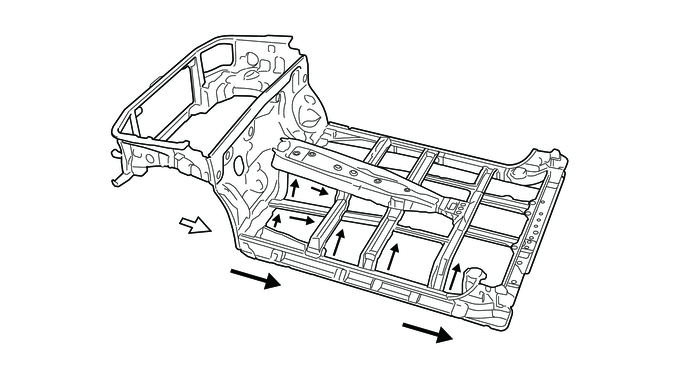

|
Front Impact Energy | 
|
Dissipate |
Impact Absorbing Structure for Side/Rear Collisions
Frame
The cross section of the rear side rail is appropriately designed and the thickness and material of the plate used in the rear side rail are optimized to limit deformation of the rear bent section, minimizing deformation of the cabin in the event of a rear or side collision.
The rear reinforcement (high strength steel) helps to absorb energy in the event of a rear collision.
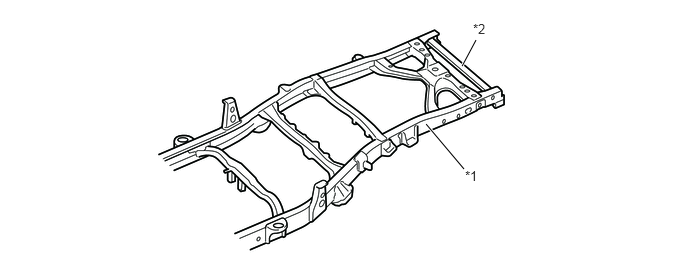
| *1 | Rear Side Rail | *2 | Rear Reinforcement |
Under Body
Gussets are used on the rockers to transfer and effectively disperse energy from a side impact.
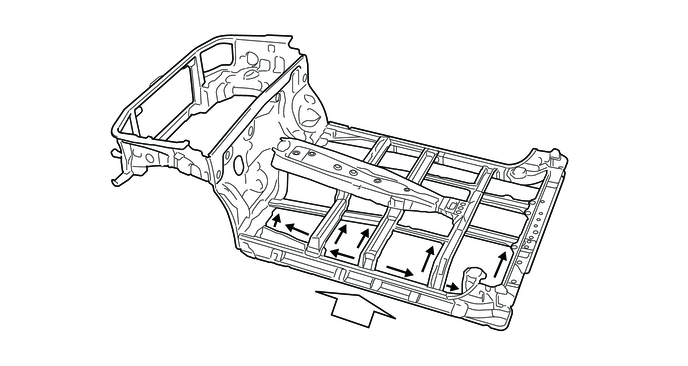
|
|
Side Impact Energy |
|
Dissipate |
Energy Absorbing Pad
An energy absorbing pad is provided inside the door trim to help reduce impact and injury to the passenger's lumber.
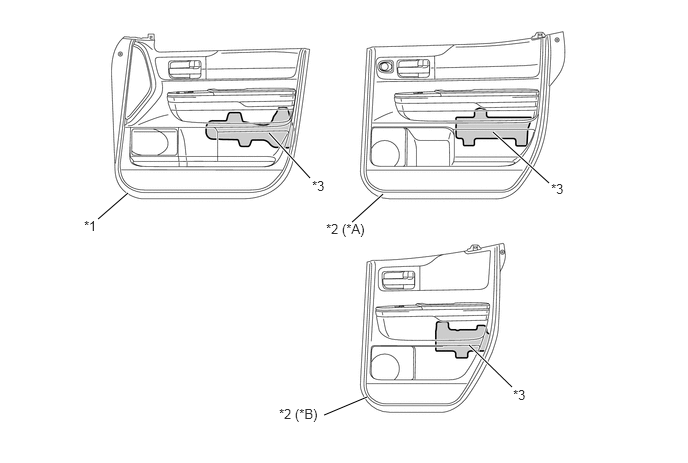
| *A | CrewMax | *B | Double Cab Model |
| *1 | Front Door Trim | *2 | Rear Door Trim |
| *3 | Energy Absorbing Pad | - | - |