STANDARD PROCEDURE
FUEL CONTAMINATION
If an engine's fuel supply has been contaminated, the following procedure must be followed:
1. Remove all fuel from fuel tank. Use an appropriate fuel container. Dispose of contaminated fuel through the proper procedure of disposal. Clean fuel tank. This will require removal of the fuel tank to make sure all contaminated fuel is removed. (Refer to 14 - FUEL SYSTEM/FUEL DELIVERY/FUEL TANK - REMOVAL).
2. Install fuel tank to vehicle, (Refer to 14 - FUEL SYSTEM/FUEL DELIVERY/FUEL TANK - INSTALLATION).
3. Fill fuel tank with fuel.
4. Check for DTC's and clear DTC's.
5. Start vehicle and run engine for 15 minutes and turn off vehicle.
6. Check for DTC's and clear DTC's.
7. Road test vehicle.
8. Check for DTC's.
NOTE: Dispose of Petroleum based products in a manner consistent with State, Federal, and Provincial Regulations.
The engine should then be evaluated to determine if the contaminated fuel has caused any damage to the fuel system and or engine. Indicators that the fuel system and or engine has been damaged are the following:
- Unstable fuel rail pressure. This can manifest itself as instability at idle speeds, excessive undershoot/overshoot at engine start, or excessive undershoot/overshoot when the engine operating conditions change. A typical engine response to a large rail pressure undershoot would be a decrease in engine speed or engine stall.
- Excessive noise from the engine. This could indicate poor rail pressure control or the inability of the injection system to inject the proper amount of fuel.
- Excessive smoke (black or white). This could indicate inability of the fuel system to inject the proper amount of fuel.
NOTE: If any of these conditions are exhibited after cleaning the fuel system, proceed to the appropriate fuel system information. Repair fuel system and or engine as necessary.
STANDARD PROCEDURE - FUEL SYSTEM PRESSURE RELEASE PROCEDURE
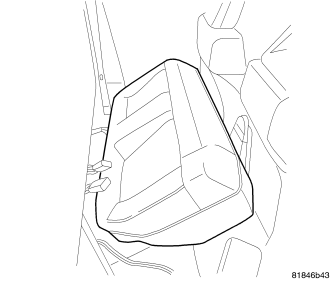
1. Remove lower rear seat cushion.
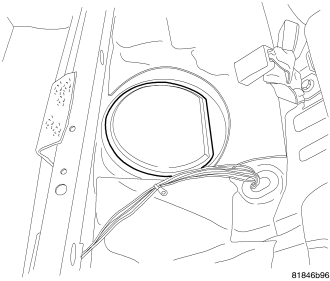
2. Remove the fuel pump module cover.
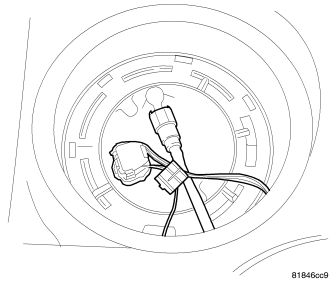
3. Disconnect the electrical connector for fuel pump module.
4. Start and run engine until it stalls.
5. Attempt restarting engine until it will no longer run.
6. Turn ignition key to OFF position.
7. Disconnect negative battery cable.
8. One or more Diagnostic Trouble Codes (DTC's) may have been stored in PCM memory. The scan tool must be used to erase a DTC.