SPRINGS-VALVE
DESCRIPTION
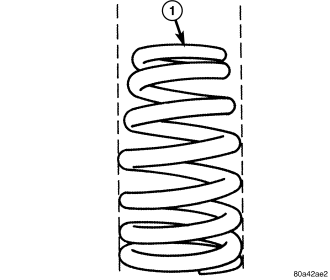
There are two interchangeable, floating (spring rotates during operation), valve spring designs. Type A may be identified by the counterclockwise (spring spirals down and to the left) appearance, And Type B may be identified by the clockwise (spring spirals down and to the right) appearance. Both of the valve springs are a bee-hive shaped design but have different specifications.
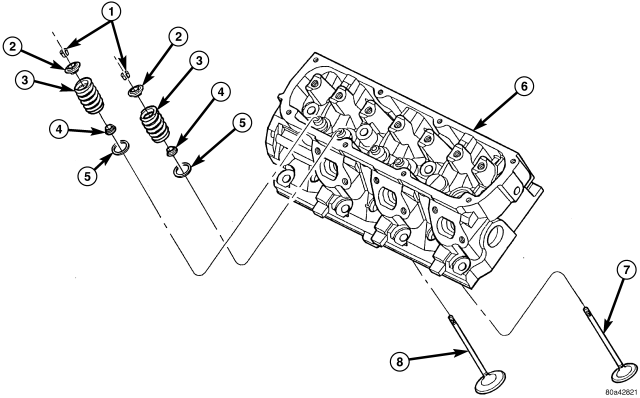
The springs are seated on a steel washer on the cylinder head with retainers and locks retaining the springs . The springs are installed with the smaller diameter against spring retainer .
OPERATION
The valve spring returns the valve against its seat for a positive seal of the combustion chamber.
INSPECTION
NOTE: The are two different types of valve springs used that are interchangable, but have different specifications (Refer to 9 - ENGINE/CYLINDER HEAD/VALVE SPRINGS - DESCRIPTION).
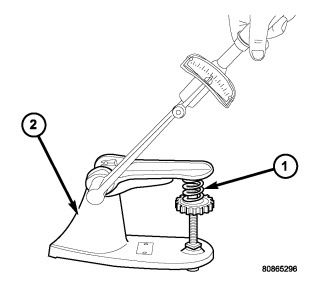
Whenever valves have been removed for inspection, reconditioning or replacement, valve springs should be tested . As an example; the compression length of a spring to be tested is 38.00 mm (1.496 in.). Turn the table of Tool C-647 until surface is in line with the 38.00 mm (1.496 in.) mark on the threaded stud and the zero mark on the front. Place spring over stud on the table and lift compressing lever to set tone device. Pull on torque wrench until ping is heard. Take reading on torque wrench at this instant. Multiply this reading by two. This will give the spring load at test length. Fractional measurements are indicated on the table for finer adjustments. Refer to Engine Specifications to obtain specified height and allowable tensions (Refer to 9 - ENGINE - SPECIFICATIONS). Replace any springs that do not meet specifications.