TAPPETS-HYDRAULIC-(CAM IN BLOCK)
DESCRIPTION
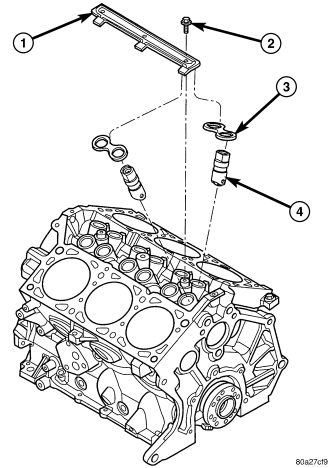
The hydraulic lifters are a roller type design and are positioned in the cylinder block with the lubrication whole facing upward. The lifters are aligned and retained by a yoke and a retainer .
Lifter alignment is maintained by machined flats on lifter body. Lifters are fitted in pairs into six aligning yokes. The aligning yokes are secured by a yoke retainer .
DIAGNOSIS AND TESTING - HYDRAULIC LIFTERS
HYDRAULIC LIFTERS DIAGNOSIS - PRELIMINARY STEP
Before disassembling any part of the engine to correct lifter noise, check the engine oil pressure. (Refer to 9 - ENGINE/LUBRICATION - DIAGNOSIS AND TESTING)
Check engine oil level. The oil level in the pan should never be above the MAX mark on dipstick, or below the MIN mark. Either of these two conditions could cause noisy lifters.
OIL LEVEL TOO HIGH
If oil level is above the MAX mark on dipstick, it is possible for the connecting rods to dip into the oil while engine is running and create foaming. Foam in oil pan would be fed to the hydraulic lifters by the oil pump causing them to become soft and allow valves to seat noisily.
OIL LEVEL TOO LOW
Low oil level may allow pump to take in air which when fed to the lifters it causes them to become soft and allows valves to seat noisily. Any leaks on intake side of pump, through which air can be drawn, will create the same lifter noise. Check the lubrication system from the intake strainer to the oil pump cover, including the relief valve retainer cap. When lifter noise is due to aeration, it may be intermittent or constant, and usually more than one lifter will be noisy. When oil level and leaks have been corrected, the engine should be operated at fast idle to allow all of the air inside of the lifters to be bled out.
VALVE TRAIN NOISE
To determine source of valve train noise, operate engine at idle with cylinder head covers removed and listen for source of the noise.
NOTE: Worn valve guides or cocked springs are sometimes mistaken for noisy lifters. If such is the case, noise may be dampened by applying side thrust on the valve spring. If noise is not appreciably reduced, it can be assumed the noise is in the tappet. Inspect the rocker arm push rod sockets and push rod ends for wear.
Valve lifter noise ranges from light noise to a heavy click. A light noise is usually caused by excessive leak-down around the unit plunger which will necessitate replacing the lifter, or by the plunger partially sticking in the lifter body cylinder. A heavy click is caused either by a lifter check valve not seating, or by foreign particles becoming wedged between the plunger and the lifter body causing the plunger to stick in the down position. This heavy click will be accompanied by excessive clearance between the valve stem and rocker arm as valve closes. In either case, lifter assembly should be removed for inspection.
REMOVAL
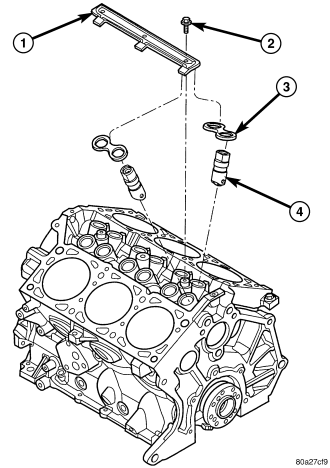
1. Remove the cylinder head(s). (Refer to 9 - ENGINE/CYLINDER HEAD - REMOVAL)
2. Remove the yoke retainer and aligning yokes .
3. Remove the hydraulic lifters. If necessary use Special Tool C-4129, or equivalent to remove lifters from bores. If lifters are to be reused, identify each lifter to ensure installation in original location.
INSTALLATION
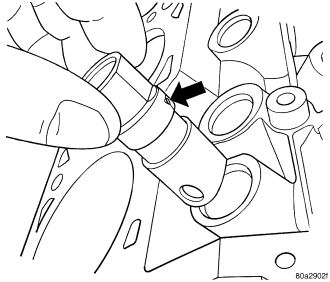
1. Lubricate the lifters with engine oil.
NOTE: Position the lifter in bore with the lubrication hole facing upward .
2. Install the hydraulic lifters with the lubrication hole facing upward towards middle of block . Install lifters in original positions, if reused.
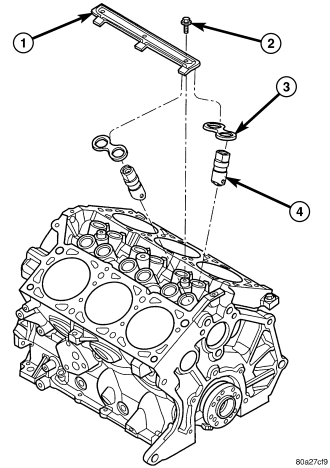
3. Install lifter aligning yokes .
4. Install yoke retainer and torque screws to 12 N·m (105 in. lbs.) .
5. Install the cylinder heads. (Refer to 9 - ENGINE/CYLINDER HEAD - INSTALLATION)
6. Start and operate engine. Warm up to normal operating temperature.
CAUTION: To prevent damage to valve mechanism, engine must not be run above fast idle until all hydraulic lifters have filled with oil and have become quiet.