DESCRIPTION
FRONT
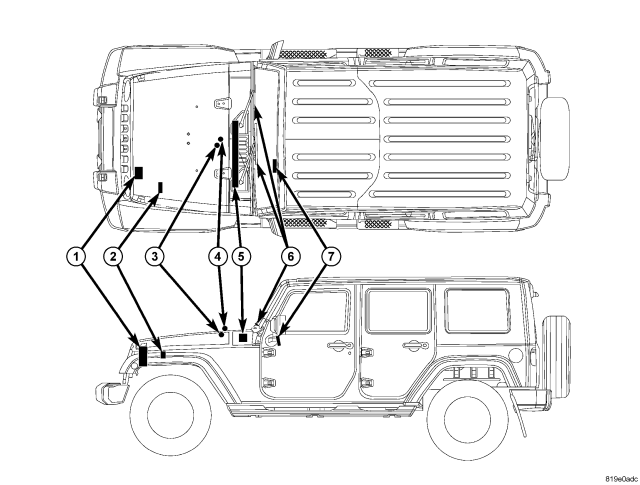
An electrically operated intermittent front wiper and washer system is standard factory-installed safety equipment on this vehicle. The wiper and washer system includes the following major components, which are described in further detail elsewhere in this service information:
- ElectroMechanical Instrument Cluster - The ElectroMechanical Instrument Cluster (EMIC) (also known as the Cab Compartment Node/CCN) is located on the instrument panel directly in front of the driver. (Refer to 8 - ELECTRICAL/INSTRUMENT CLUSTER - DESCRIPTION).
- Front Washer Check Valve (3) - A check valve is located in the front washer plumbing on the underside of the hood panel near the front washer nozzle.
- Front Washer Nozzle (4) - A single fluidic front washer nozzle is secured by an integral latch feature to a dedicated opening in the center of the hood panel near the base of the windshield.
- Front Washer Plumbing - The plumbing for the washer system consists of rubber hoses and molded rubber or plastic fittings. The plumbing is routed from the washer reservoir along the left side of the engine compartment to the dash panel, then across the underside of the inner hood panel reinforcement to the washer nozzle.
- Front Wiper Arms And Blades (6) - The two front wiper arms are secured with nuts to the threaded ends of the two wiper pivot shafts, which extend through the cowl plenum cover/grille panel located near the base of the windshield. The two equal length front wiper blades are each secured to their wiper arm with an integral latch, and are parked on the glass near the bottom of the windshield when the front wiper system is not in operation.
- Front Wiper Module (5) - The wiper pivot shafts are the only visible components of the front wiper module. The remainder of the module is concealed within the cowl plenum beneath the cowl plenum cover/grille panel. The wiper module includes the wiper module bracket, three rubber-isolated wiper module mounts, the wiper motor, the wiper motor crank arm, the two wiper drive links, the two wiper pivots and the two pivot water shields.
- Right Multi-Function Switch (7) - The right (wiper) multi-function switch and the left (lighting) multi-function switch are secured to brackets integral to the clockspring housing on the top of the steering column just below the steering wheel. The right multi-function switch is connected by a short jumper harness to the Steering Control Module (SCM), which is internal to the left multi-function switch housing. Only the switch control stalk extending from the right side of the steering column is visible, while the remainder of the switch is concealed beneath the steering column shrouds. The right multi-function switch is dedicated to providing all of the driver controls for both the front and rear wiper and washer systems.
- Steering Control Module - The Steering Control Module (SCM) is internal to the left multi-function switch housing, which is secured to a bracket integral to the left side of the clockspring housing on the top of the steering column just below the steering wheel. Only the left switch control stalk extending from the left side of the steering column is visible, while the remainder of the switch housing containing the SCM is concealed beneath the steering column shrouds. (Refer to 8 - ELECTRICAL/ELECTRONIC CONTROL MODULES/STEERING COLUMN CONTROL MODULE - DESCRIPTION).
- Totally Integrated Power Module (2) - The Totally Integrated Power Module (TIPM) is located in the engine compartment, near the battery. (Refer to 8 - ELECTRICAL/POWER DISTRIBUTION/TOTALLY INTEGRATED POWER MODULE - DESCRIPTION).
- Washer Pump/Motor - The single or reversible dual electric washer pump/motor unit is located in a dedicated hole in a sump area on the lower washer reservoir. The reversible dual washer pump/motor provides washer fluid to either the front or rear washer system plumbing, depending upon the direction of the pump motor rotation.
- Washer Reservoir (1) - The washer reservoir is located in the left front corner of the engine compartment. The reservoir filler cap is also accessed from the left front corner of the engine compartment.
Hard wired circuitry connects the front wiper and washer system components to the electrical system of the vehicle. These hard wired circuits are integral to several wire harnesses, which are routed throughout the vehicle and retained by many different methods. These circuits may be connected to each other, to the vehicle electrical system and to the front wiper and washer system components through the use of a combination of soldered splices, splice block connectors, and many different types of wire harness terminal connectors and insulators. Refer to the appropriate wiring information. The wiring information includes wiring diagrams, proper wire and connector repair procedures, further details on wire harness routing and retention, as well as pin-out and location views for the various wire harness connectors, splices and grounds.
REAR
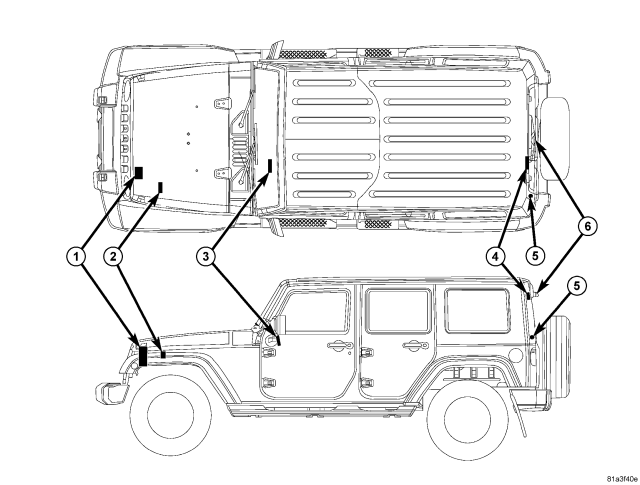
An electrically operated fixed interval intermittent rear wiper and washer system is standard factory-installed equipment on this vehicle when it is equipped with an optional hard top. The rear wiper and washer system includes the following major components, which are described in further detail elsewhere in this service information:
- ElectroMechanical Instrument Cluster - The ElectroMechanical Instrument Cluster (EMIC) (also known as the Cab Compartment Node/CCN) is located on the instrument panel directly in front of the driver. (Refer to 8 - ELECTRICAL/INSTRUMENT CLUSTER - DESCRIPTION).
- Rear Washer Check Valve (5) - A check valve is located in the hard top disconnect plate between the hard top washer supply hose and the body washer supply hose on the left inner D-pillar of the hard top.
- Rear Washer Nozzle - The fluidic rear washer nozzle is integral to the output shaft of the rear wiper motor on the left upper corner of the rear lift glass.
- Rear Washer Plumbing - The plumbing for the rear washer system consists of rubber hoses and molded plastic or rubber fittings. The plumbing is routed along the left side of the engine compartment from the washer reservoir, through the dash into the passenger compartment, down the left cowl side and sill to the body wire harness. The hose exits the body wire harness at the belt line of the left D-pillar where it connects through the rear check valve to a hard top hose that is routed up the D-pillar of the hard top to the upper lift glass opening header and then to the rear wiper motor.
- Rear Wiper Arm And Blade (6) - The single molded plastic rear wiper arm is secured by a nut directly to the rear wiper motor output shaft, which extends through a clearance hole near the upper left corner of the lift glass. The molded plastic rear wiper blade is secured by an integral pin to latches integral to the rear wiper arm, and is parked near the top of the lift glass when the rear wiper system is not in operation.
- Rear Wiper Motor (4) - The rear wiper motor includes the motor bracket and two rubber-isolated mounting tabs. The wiper motor output shaft is the only visible component of the rear wiper motor. The remainder of the motor is concealed by a molded plastic trim cover on the inner lift glass just below the lift glass opening header.
- Right Multi-Function Switch (3) - The right (wiper) multi-function switch and the left (lighting) multi-function switch are secured to brackets integral to the clockspring housing, on the top of the steering column just below the steering wheel. The right multi-function switch is connected by a short jumper harness to the Steering Control Module (SCM), which is internal to the left multi-function switch housing. Only the switch control stalk extending from the right side of the steering column is visible, while the remainder of the switch is concealed beneath the steering column shrouds. The right multi-function switch is dedicated to providing all of the driver controls for both the front and rear wiper and washer systems.
- Steering Control Module - The Steering Control Module (SCM) is internal to the left multi-function switch housing, which is secured to a bracket integral to the left side of the clockspring housing on the top of the steering column just below the steering wheel. Only the left switch control stalk extending from the left side of the steering column is visible, while the remainder of the switch housing containing the SCM is concealed beneath the steering column shrouds. (Refer to 8 - ELECTRICAL/ELECTRONIC CONTROL MODULES/STEERING COLUMN CONTROL MODULE - DESCRIPTION).
- Totally Integrated Power Module (2) - The Totally Integrated Power Module (TIPM) is located in the engine compartment, near the battery. (Refer to 8 - ELECTRICAL/POWER DISTRIBUTION/TOTALLY INTEGRATED POWER MODULE - DESCRIPTION).
- Washer Pump/Motor - The reversible dual electric washer pump/motor unit is located in a dedicated hole in a sump area on the lower washer reservoir. The dual washer pump/motor provides washer fluid to either the front or rear washer system plumbing, depending upon the direction of the pump motor rotation.
- Washer Reservoir (1) - The rear washer system shares a single reservoir and reversible pump with the front washer system, but has its own dedicated plumbing. The washer reservoir is located in the left front corner of the engine compartment. The filler cap is also accessed from the left front corner of the engine compartment.
Hard wired circuitry connects the rear wiper and washer system components to the electrical system of the vehicle. These hard wired circuits are integral to several wire harnesses, which are routed throughout the vehicle and retained by many different methods. These circuits may be connected to each other, to the vehicle electrical system and to the rear wiper and washer system components through the use of a combination of soldered splices, splice block connectors, and many different types of wire harness terminal connectors and insulators. Refer to the appropriate wiring information. The wiring information includes wiring diagrams, proper wire and connector repair procedures, further details on wire harness routing and retention, as well as pin-out and location views for the various wire harness connectors, splices and grounds.