COOLANT
HOAT COOLANT
HOAT COOLANT
Antifreeze is an ethylene-glycol base coolant and is harmful if swallowed or inhaled. If swallowed, drink two glasses of water and induce vomiting. If inhaled, move to fresh air area. Seek medical attention immediately. Do not store in open or unmarked containers. Wash skin and clothing thoroughly after coming in contact with ethylene-glycol. Keep out of reach of children. Dispose of glycol base coolant properly, contact your dealer or government agency for location of collection center in your area. Do not open a cooling system when the engine is at operating temperature or hot under pressure, personal injury can result. Avoid radiator cooling fan when engine compartment related service is performed, personal injury can result.
WARNING:
Use of Propylene-Glycol based
coolants is not recommended, as they provide less freeze protection
and less corrosion protection.
CAUTION:
The cooling system is designed around the coolant. The coolant must accept heat from engine metal, in the cylinder head area near the exhaust valves and engine block. Then coolant carries the heat to the radiator where the tube/fin radiator can transfer the heat to the air.
The use of aluminum cylinder blocks, cylinder heads, and water pumps requires special corrosion protection. Mopar® Antifreeze/Coolant, 5 Year/100,000 Mile Formula (MS-9769), or the equivalent ethylene-glycol base coolant with organic corrosion inhibitors (called HOAT, for Hybrid Organic Additive Technology) is recommended. This coolant offers the best engine cooling without corrosion when mixed with 50% ethylene- glycol and 50% distilled water to obtain a freeze point of -37°C (-35°F). If it loses color or becomes contaminated, drain, flush, and replace with fresh properly mixed coolant solution.
Mopar® Antifreeze/Coolant, 5Year
160,000 km (100,000 Mile) Formula (MS-9769) may not be mixed with
any other type of antifreeze. Mixing of coolants other than specified
(non-HOAT or other HOAT), may result in engine damage that may not
be covered under the new vehicle warranty, and decreased corrosion
protection.
CAUTION:
COOLANT PERFORMANCE
The required ethylene-glycol (antifreeze) and water mixture depends upon climate and vehicle operating conditions. The coolant performance of various mixtures follows:
Pure Water-Water can absorb more heat than a mixture of water and ethylene-glycol. This is for purpose of heat transfer only. Water also freezes at a higher temperature and allows corrosion.
100 % Ethylene-Glycol-The corrosion inhibiting additives in ethylene-glycol need the presence of water to dissolve. Without water, additives form deposits in system. These act as insulation causing temperature to rise to as high as 149°C (300°F). This temperature is hot enough to melt plastic and soften solder. The increased temperature can result in engine detonation. In addition, 100 % ethylene-glycol freezes at -22°C (-8°F).
50/50 Ethylene-Glycol and Water-Is the recommended mixture, it provides protection against freezing to -37°C (-34°F). The antifreeze concentration must always be a minimum of 44 %, year-round in all climates. If percentage is lower, engine parts may be eroded by cavitation. Maximum protection against freezing is provided with a 68 % antifreeze concentration, which prevents freezing down to -67.7°C (-90°F). A higher percentage will freeze at a warmer temperature. Also, a higher percentage of antifreeze can cause the engine to overheat because specific heat of antifreeze is lower than that of water.
Richer antifreeze mixtures cannot
be measured with normal field equipment and can cause problems associated
with 100 percent ethylene-glycol.
CAUTION:
COOLANT SELECTION AND ADDITIVES
The use of aluminum cylinder blocks, cylinder heads and water pumps requires special corrosion protection. Only Mopar® Antifreeze/Coolant, 5 Year/100,000 Mile Formula (glycol base coolant with corrosion inhibitors called HOAT, for Hybrid Organic Additive Technology) is recommended. This coolant offers the best engine cooling without corrosion when mixed with 50% distilled water to obtain to obtain a freeze point of -37°C (-35°F). If it loses color or becomes contaminated, drain, flush, and replace with fresh properly mixed coolant solution.
Do not use coolant additives that
are claimed to improve engine cooling.
CAUTION:
DIESEL ENGINE
DIESEL ENGINE
Use of Propylene Glycol based
coolants is not recommended, as they provide less freeze protection
and less boiling protection.
CAUTION:
The use of aluminum cylinder blocks, cylinder heads, and water pumps requires special corrosion protection. Glysantin G 30-91 Antifreeze/Coolant, 5 Year/150,000 Mile Formula (ASTM D3306), or the equivalent ethylene glycol based coolant. This coolant offers the best engine cooling without corrosion when mixed with 50% coolant and 50% distilled water to obtain a freeze point of -36°C (-34°F). It is dyed purple to distinguish it's unique chemistry from traditional green and yellow silicate coolants. If it loses color or becomes contaminated, drain, flush, and replace with fresh properly mixed coolant solution.
The purple coolant MUST NOT BE MIXED with the orange, green or magenta coolants. When replacing coolant the complete system flush must be performed before using the replacement coolant.
Glysantin G 30-91 Antifreeze/Coolant,
5 Year/150,000 Mile Formula (ASTM D3306) may not be mixed with any
other type of antifreeze. Doing so will reduce the corrosion protection
and may result in premature water pump seal failure.
CAUTION:
DIAGNOSIS AND TESTING - COOLANT CONCENTRATION TESTING
DIAGNOSIS AND TESTING - COOLANT CONCENTRATION TESTING
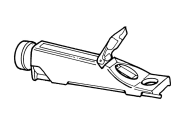
Coolant concentration should be checked when any additional coolant was added to system or after a coolant drain, flush and refill. The coolant mixture offers optimum engine cooling and protection against corrosion when mixed to a freeze point of -37°C (-34°F) to -46°C (-50°F). The a hydrometer or a refractometer can be used to test coolant concentration.
A hydrometer will test the amount of glycol in a mixture by measuring the specific gravity of the mixture. The higher the concentration of ethylene-glycol, the larger the number of balls that will float, and higher the freeze protection (up to a maximum of 60% by volume glycol).
A refractometer, Tool 8286 (Refer to 07 - Cooling - Special Tools) will test the amount of glycol in a coolant mixture by measuring the amount a beam of light bends as it passes through the fluid.
Some coolant manufactures use other types of glycols into their coolant formulations. Propylene-glycol is the most common new coolant. However, propylene-glycol based coolants do not provide the same freezing protection and corrosion protection and is not recommended.
Do not mix types of coolant -
corrosion protection will be severely reduced.
CAUTION: