- Raise and support the vehicle safely. Remove the
tire and wheel assembly.
- Remove and properly support the caliper assembly.
-
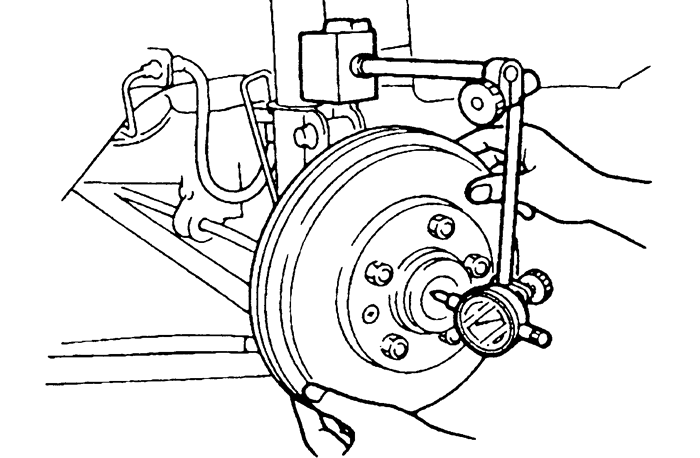
Position a dial indicator gauge against the dust cap. Push and pull
the disc brake rotor or brake drum in and out in the axial direction and
measure the end-play of the wheel bearing.
| Fig. 1: Checking wheel bearing play -- 1993 323,
1993-94 Protege, 1993-95 RX7, MX3 and 1993-97 626 and MX6
|
- End-play should not exceed 0.002 in. (0.05 mm) on
all other vehicles.
- If end-play is excessive, check the hub nut torque
or replace the bearing.
- Raise and support the vehicle safely. Remove the
wheel assembly.
- Remove and properly support the caliper assembly.
- Remove the disc plate.
- Position a dial indicator gauge against the wheel
hub. Push and pull on the hub in the axial direction and measure the end-play
of the wheel bearing.
- Endplay should not exceed 0.002 in. (0.05mm).
- If end-play is excessive, check the hub nut torque
or replace the bearing.
- Install the disc, caliper, and wheel.
- Raise and support the vehicle safely. Remove the
tire and wheel assembly.
- Remove and properly support the caliper assembly.
- Position a dial indicator gauge against the dust
cap. Push and pull the disc brake rotor or brake drum in and out in the
axial direction and measure the end-play of the wheel bearing.
- Endplay should not exceed 0.002 in. (0.05 mm) on
all other vehicles.
- If end-play is excessive, check the hub nut torque
or replace the bearing.
The wheel bearings on these vehicles are not adjustable. To check if
the bearing requires service, remove the wheel and tire assembly, brake
caliper and disc brake rotor. Install a dial indicator with the indicator
foot resting on the wheel hub. Try to move the hub in and out. If there
is more than 0.002 in. (0.05mm) bearing play, check the wheel hub nut
torque or replace the hub and bearing assembly.