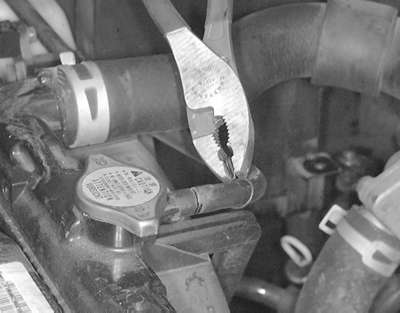
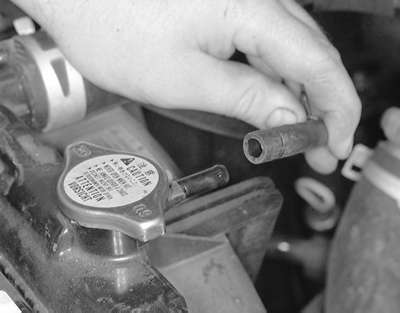
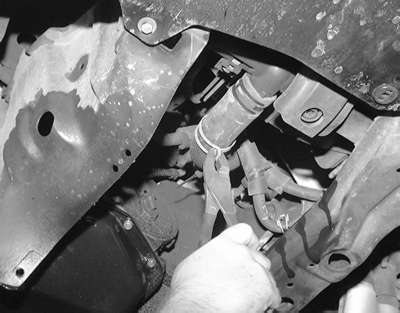
| Fig. 1: Use a pair of pliers to remove the hose clamp
and . . .
|
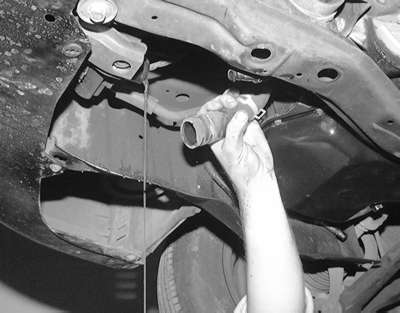
| Fig. 2: . . . then disconnect the overflow hose from
the radiator
|
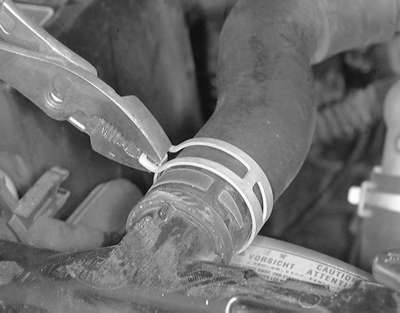
| Fig. 3: Use pliers to release the hose clamp tension
. . .
|
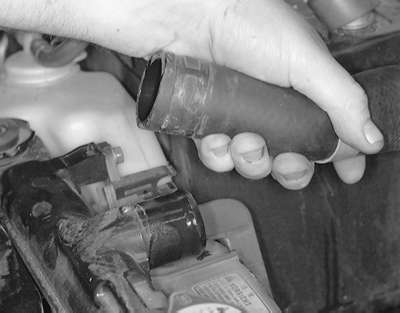
| Fig. 4: . . . then remove the upper radiator hose from
the radiator
|
| Fig. 5: From underneath the vehicle, remove the hose
clamp . . .
|
| Fig. 6: . . . then disconnect the lower radiator hose
|
| Fig. 7: Remove the transaxle hose clamp
|
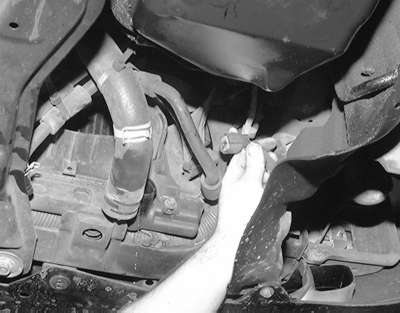
| Fig. 8: Disconnect the transaxle cooler lines on the
passenger side . . .
|
| Fig. 9: . . . and the cooler lines from underneath the
radiator assembly
|
| Fig. 10: After the transaxle cooler lines are removed,
place a plug over the fitting on the radiator to prevent contamination
|
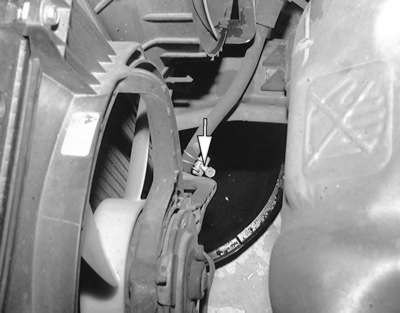
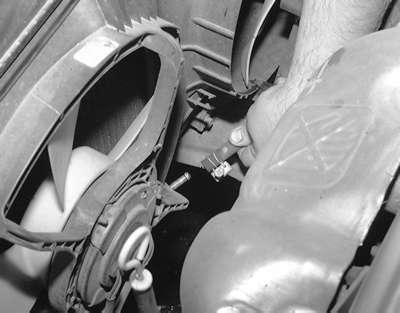
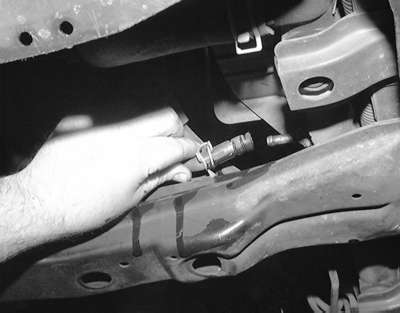
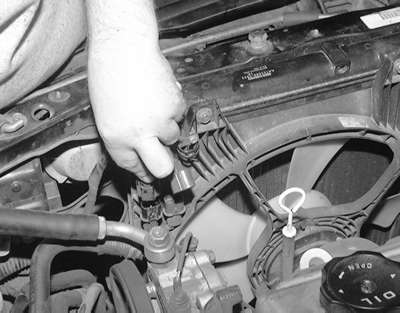
| Fig. 11: Detach the connectors for the electric fans.
The connectors are located on the driver's side top . . .
|
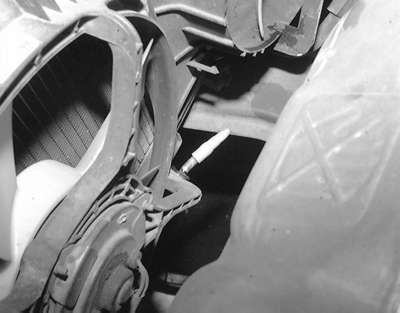
| Fig. 12: . . . there is also a connector on the lower
passenger side of the radiator
|
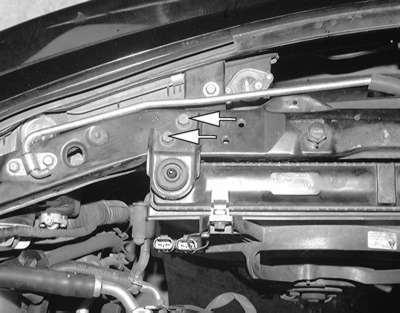
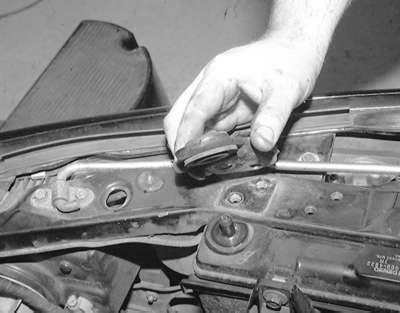
| Fig. 13: Remove the radiator mount bolts . . .
|
| Fig. 14: . . . then remove the mounts from the radiator
and radiator support panel
|
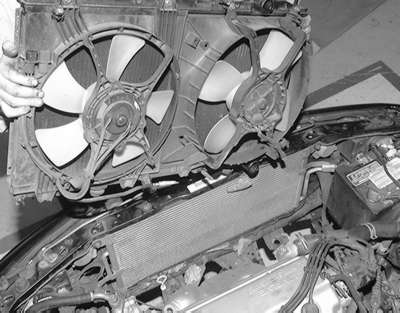
| Fig. 15: Carefully grasp the radiator and lift it out
of the vehicle
|
CAUTION
Never open, service or drain the radiator or cooling system when hot; serious
burns can occur from the steam and hot coolant. Also, when draining engine
coolant, keep in mind that cats and dogs are attracted to ethylene glycol
antifreeze and could drink any that is left in an uncovered container or
in puddles on the ground. This will prove fatal in sufficient quantities.
Always drain coolant into a sealable container. Coolant should be reused
unless it is contaminated or is several years old.
To install: