CAUTION
Older brake pads or shoes may contain asbestos, which has been determined to
be cancer causing agent. Never clean the brake surfaces with compressed air!
Avoid inhaling any dust from any brake surface! When cleaning brake surfaces,
use a commercially available brake cleaning fluid.
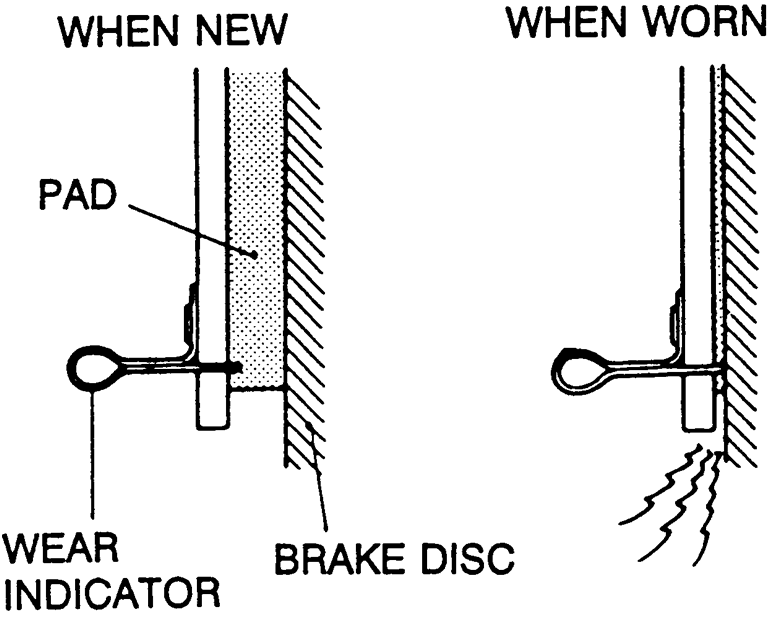
The disc brake pads have wear indicators that contact the brake disc when the brake pad thickness becomes 0.08 in. (2.0mm) and emit a squealing sound to worn the driver.
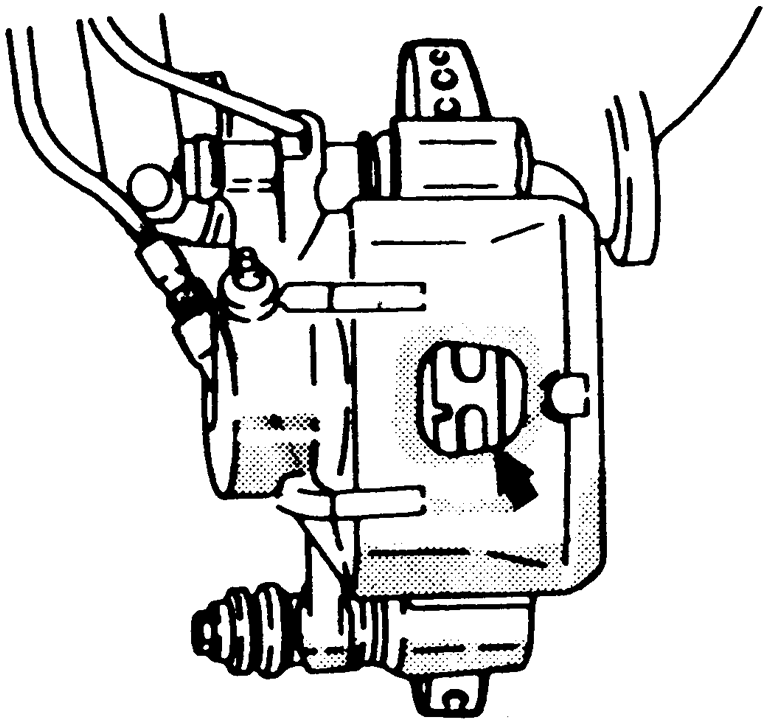
Inspect the thickness of the brake linings by looking through the brake caliper body check port. The standard value of the brake pad is 0.39 in. (10mm). The thickness limit of the lining is 0.08 in. (2.0mm).
When the limit is exceeded, replace the pads on both sides of the brake disc and also the brake pads on the wheel on the opposite side of the vehicle. Do not replace 1 pad on a caliper because the wear indicator is hitting, without replacing the other pad on the same wheel as well as the brake pads on the other front or rear wheel, as applicable.
If there is a significant difference in the thickness of the pads on the left and right sides, check the sliding condition of the piston, lock pin sleeve and guide pin sleeve.
| Fig. 1: Inspect front disc pad thickness through caliper
body check port
|
| Fig. 2: The disc brake pads have wear indicators which
will make a squeaking noise when the pads become worn and need to be replaced
|