Previous Next

INSTALLATION

  1. Remember that if you are installing an oversize piston, you must also use new rings that are also of the correct oversize.
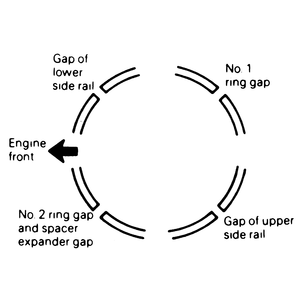
  2. Install the rings on the piston, lowest ring first. Generally the side rails for the oil control ring can be installed by hand with care. The other rings require the use of the ring expander. There is a high risk of ring breakage or piston damage if the rings are installed without the expander. The correct spacing of the ring end-gaps is critical to oil control.No two gaps should align; they should be evenly spaced around the piston with the gap in the oil ring expander facing the front of the piston (aligned with the mark on the top of the piston). Once the rings are installed, the pistons must be handled carefully and protected from dirt and impact.

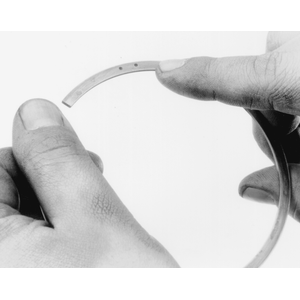
    Fig. 1: Most rings are marked to show which side should face upward

    Fig. 2: Stagger the ring gap when installing

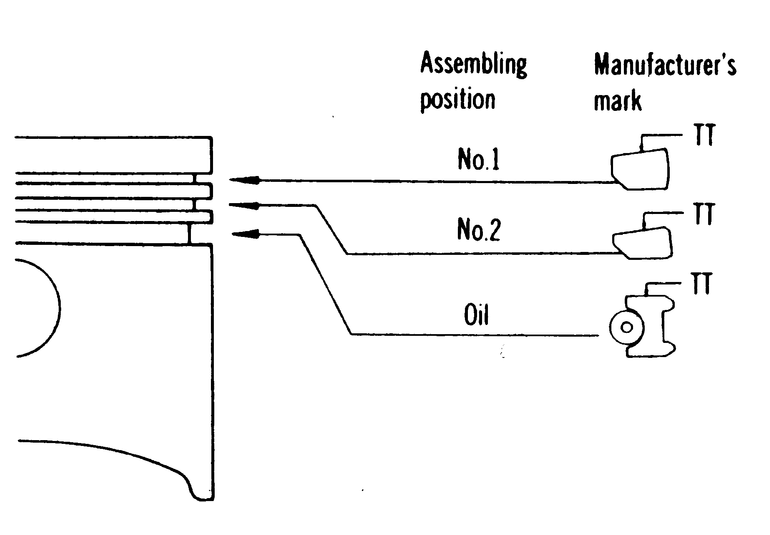
    Fig. 3: Piston ring installation — 2.3L diesel engine

    Fig. 4: Piston installation — 2.3L diesel engine

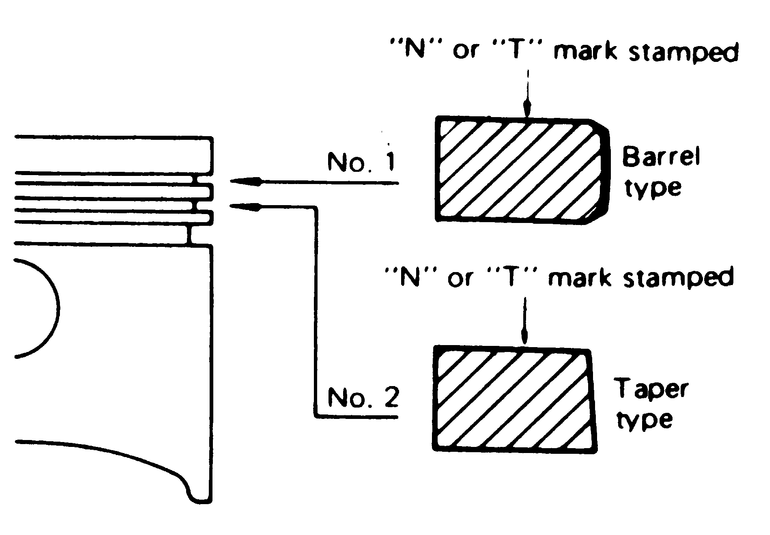
    Fig. 5: Install the rings with the marks upward — the barrel faced chrome plated ring goes in the No. 1 position while the taper type goes in position No. 2

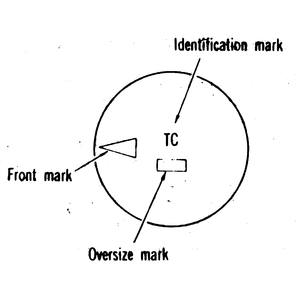
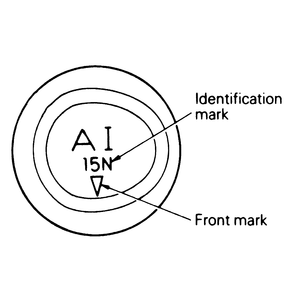
    Fig. 6: Piston identification marks — the V6 pistons use L and R depending on which bank contained the piston

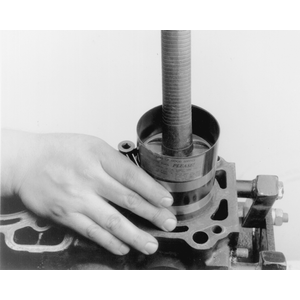
    Fig. 7: Installing the piston into the block using a ring compressor and the handle of a hammer

  3. Install the number two compression ring next and then the top compression ring using a ring expander. Note that these rings have the same thickness but different cross-sections; make sure positioning is correct. Make sure all markings face upward and that the gaps are all staggered. Gaps must also not be in line with either the piston pin or thrust faces of the piston.
  4. All the pistons, rods and caps must be reinstalled in the correct cylinder. Make certain that all labels and stamped numbers are present and legible. Double check the piston rings; make certain that the ring gaps DO NOT line up, but are evenly spaced around the piston at about 120°intervals. Double check the bearing insert at the bottom of the rod for proper mounting. Reinstall the protective rubber hose pieces on the bolts.
  5. Liberally coat the cylinder walls and the crankshaft journals with clean, fresh engine oil. Also apply oil to the bearing surfaces on the connecting rod and the cap.
  6. Identify the front mark on each piston and rod and position the piston loosely in its cylinder with the marks facing the front (pulley end) of the motor.

    WARNING
    Failure to observe the "Front'' marking and its correct placement can lead to sudden engine failure.

  7. Install the ring compressor (piston installation tool) around one piston and tighten it gently until the rings are compressed almost completely.
  8. Gently push down on the piston top with a wooden hammer handle or similar soft-faced tool and drive the piston into the cylinder bore. Once all three rings are within the bore, the piston will move with some ease.

    WARNING
    If any resistance or binding is encountered during the installation, DO NOT apply force. Tighten or adjust the ring compressor and/or reposition the piston. Brute force will break the ring(s) or damage the piston.
  9. From underneath, pull the connecting rod into place on the crankshaft. Remove the rubber hoses from the bolts. Check the rod cap to confirm that the bearing is present and correctly mounted, then install the rod cap (observing the correct number and position) and its nuts. Leaving the nuts finger-tight will make installation of the remaining pistons and rods easier.
  10. Assemble the remaining pistons in the same fashion, repeating steps 7, 8 and 9.
  11. With all the pistons installed and the bearing caps secured finger-tight, the retaining nuts may be tightened to their final setting. Refer to the torque specifications chart for the correct torque for the engine in your vehicle. For each pair of nuts, make three passes alternating between the two nuts on any given rod cap. The three tightening steps should each be about one third of the final torque. The intent is to draw each cap up to the crank straight and under even pressure at the nuts.
  12. Turn the crankshaft through several clockwise rotations, making sure everything moves smoothly and there is no binding. With the piston rods connected, the crank may be stiff to turn. Try to turn it in a smooth continuous motion so that any binding or stiff spots may be felt.
  13. Reinstall the oil pan. Even if the engine is to remain apart for other repairs, install the oil pan to protect the bottom end and tighten the bolts to the correct specification; this eliminates one easily overlooked mistake during future reassembly.
  14. If the engine is to remain apart for other repairs, pack the cylinders with crumpled newspaper or clean rags (to keep out dust and grit) and cover the top of the motor with a large rag. If the engine is on a stand, the whole block can be protected with a large plastic trash bag.
  15. If no further work is to be performed, continue reassembly by installing the head, timing belt, etc.

Previous Next