To operate at peak efficiency, an engine must maintain its internal temperatures within certain upper and lower limits. The cooling system circulates fluid around the combustion cylinders and conducts this heated fluid to the radiator, where the heat is exchanged into the airflow created by the fan and the motion of the vehicle.
While most people realize that an engine running too hot (overheated) is a sign of trouble, few know that an engine can run too cool as well. If the proper internal temperatures are not achieved, fuel is not burned efficiently and the lubricating oil does not reach its best working temperature. While a too cold condition is rarely disabling, it can cause a variety of problems which can be mistaken for tune-up or electrical causes.
The thermostat controls the flow of coolant within the system. It reacts to the heat of the coolant and allows more fluid (or less) to circulate. Depending on the amount of fluid being circulated, more or less heat is drawn away from the inside of the engine. While we are beyond the days of having to install different thermostats for summer and winter driving, it is wise to check the function of the thermostat periodically. Special use of the vehicle such as trailer towing or carrying heavy loads may require the installation of a thermostat with different temperature characteristics.
The thermostat requires replacement if the engine runs too cold, as indicated by low operating temperature on the gauge, low heater output, poor gas mileage and a slight lack of performance. If the engine is overheating, there are a number of different possible causes, including not only low coolant due to leakage, but improper engine tuning and/or a dirty cooling system or partially plugged radiator.
If the engine is overheating, it's best to test the thermostat before getting into more complicated diagnosis. You should also test the thermostat if the water temperature gauge is reading low and you're not sure whether it's a thermostat or a gauge problem. Any time the engine has suffered an overheating period, the thermostat should be changed; high temperature can damage it.
WARNING
Perform this procedure on a cold engine only. If the vehicle has been recently
driven, allow it to cool for at least 1–2 hours. Allowing the engine to
cool overnight is preferred.
CAUTION
When draining the coolant, keep in mind that cats and dogs are attracted
by ethylene glycol antifreeze, and are quite likely to drink any that is
left in an uncovered container or in puddles on the ground. This will prove
fatal in sufficient quantity. Always drain the coolant into a sealable container.
Coolant should be reused unless it is contaminated or several years old.
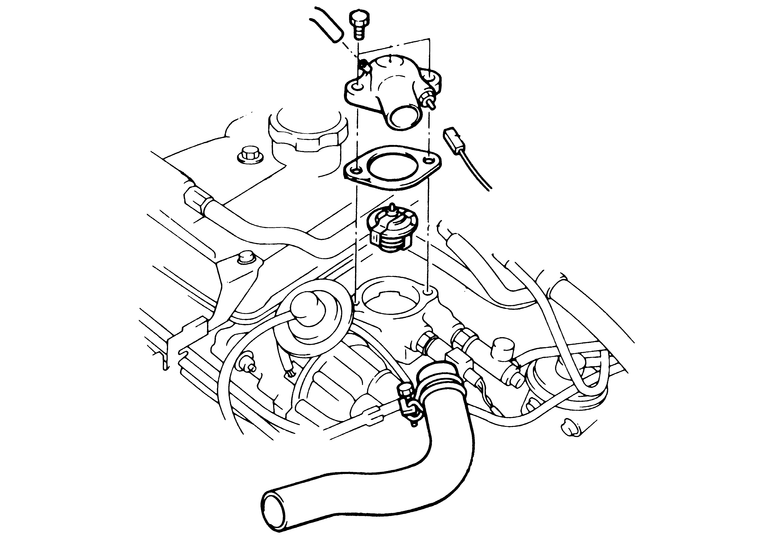
| Fig. 1: Thermostat installation — all
models similar
|
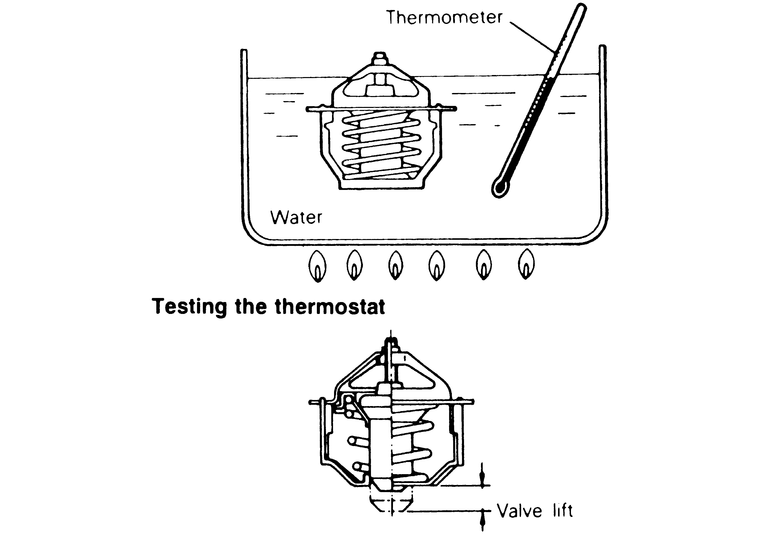
| Fig. 2: Testing the thermostat
|
To install:
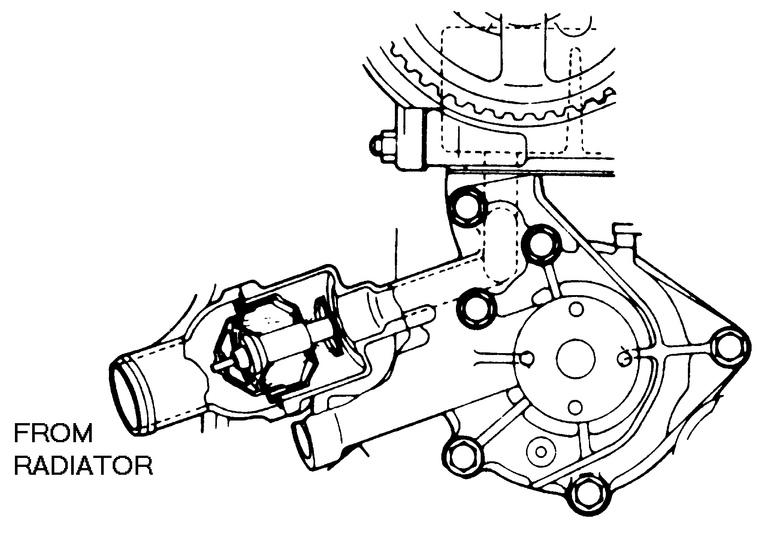
The thermostat for the diesel engine is is located on the water intake side of the cooling system, between the lower radiator hose and the block. The thermostat is equipped with a bypass valve.
CAUTION
When draining the coolant, keep in mind that cats and dogs are attracted
by ethylene glycol antifreeze, and are quite likely to drink any that is
left in an uncovered container or in puddles on the ground. This will prove
fatal in sufficient quantity. Always drain the coolant into a sealable container.
Coolant should be reused unless it is contaminated or several years old.
To install:
| Fig. 3: Location of thermostat — diesel
engine
|