Previous Next

Wheel Speed Sensor

TESTING

  1. Remove the speed sensor and toothed rotor.
  2. Check whether any metallic foreign material has adhered to the pole piece at the speed sensor tip, and, if so, remove it. Also check whether the pole piece is damaged, and, if so, replace it with a new one.

    NOTE: The pole piece can become magnetized because of the magnet built into the speed sensor, with the result that metallic foreign material easily adheres to it. Moreover, the pole piece may not be able to function to correctly sense the wheel rotation speed if it is damaged.

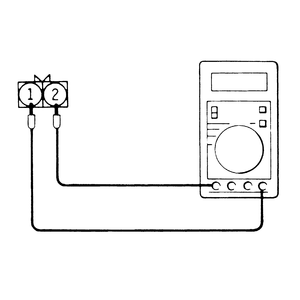
  3. Measure the resistance between the speed sensor terminals. The resistance for the front should be 0.9–1.1 kilo-ohms and the rear should be 1.3–2.1 kilo-ohms. If the internal resistance of the speed sensor is not within the standard value, replace it with a new speed sensor.
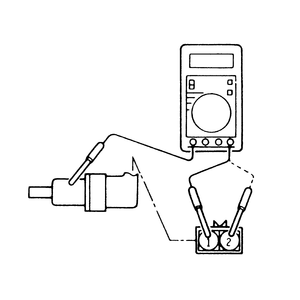
  4. Remove all connections from the speed sensor, and then measure the resistance between terminals 1 and 2 and the body of the speed sensor. The resistance should be 100 kilo-ohms or more. If the speed sensor insulation resistance is outside the standard value range, replace with a new speed sensor.

    Fig. 1: Check the resistance between the two terminals of the speed sensor connector using an ohmmeter

    Fig. 2: Check the resistance from terminal 1 to the sensor body, then test the resistance between terminal 2 and the sensor body

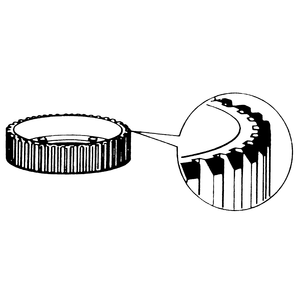
    Fig. 3: Check the toothed rotor for broken or cracked teeth — if the rotor has any cracks or broken teeth, replace it with a new one

  5. Check the speed sensor cable for breakage, damage or disconnection; replace with a new one if a problem is found.

    NOTE: When checking for cable damage, remove the cable clamp part from the body and then bend and pull the cable near the clamp to check whether or not temporary disconnection occurs.
  6. Check whether the rotor teeth are broken or deformed, and , if so, replace the rotor with a new one.

Previous Next