A noticeable lack of engine power, excessive oil consumption and/or poor fuel
mileage measured over an extended period are all indicators of internal wear.
Worn piston rings, scored or worn cylinder bores, blown head gaskets, sticking
or burnt valves and worn valve seats are all possible culprits here. A check
of each cylinder's compression will help you locate the problems.
As mentioned in the Tools and Equipment in Section 1, a screw in type compression
gauge is more accurate than the type that you simply hold against the spark
plug hole, although it takes slightly longer to use. It's worth it to obtain
a more accurate reading. Engine compression is checked in the following manner:
- Warm up the engine to normal operating temperature.
- Tag the plug wires and remove all spark plugs.
- Disconnect the high tension lead from the ignition coil.
- On carbureted cars, fully open the throttle either by operating the carburetor
throttle linkage by hand or by having an assistant floor the accelerator pedal.
On fuel injected cars, disconnect the cold start valve and all injector connections.
- Screw the compression gauge into the No.1 spark plug hole until the fitting
is snug.
WARNING
Be careful not to crossthread the plug hole. On aluminum cylinder heads
use extra care, as the threads in these heads are easily ruined.
- Ask an assistant to depress the accelerator pedal fully on both carbureted
and fuel injected cars. Then while you read the compression gauge, ask the
assistant to crank the engine two or three times in short bursts using the
ignition switch.
- Read the compression gauge at the end of each series of cranks, and record
the highest of these readings. Repeat this procedure for each of the engines
cylinders. Compare the highest reading of each cylinder to the compression
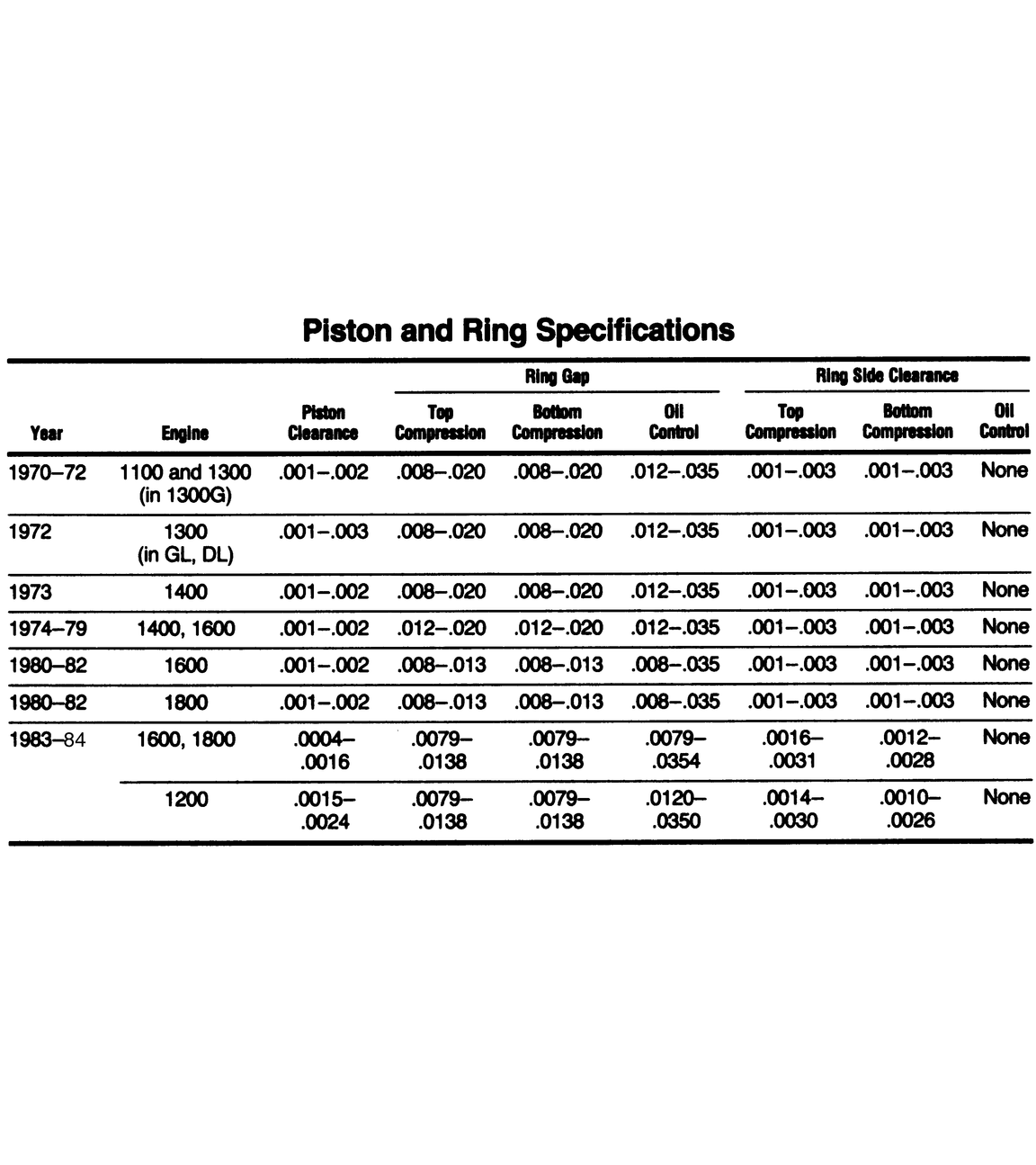
pressure specifications in the Tune-Up Specifications chart in Section 2.
A cylinders compression pressure is usually acceptable if it is not less than
80% of the maximum. The difference between each cylinder should not be more
than 12–14 pounds.
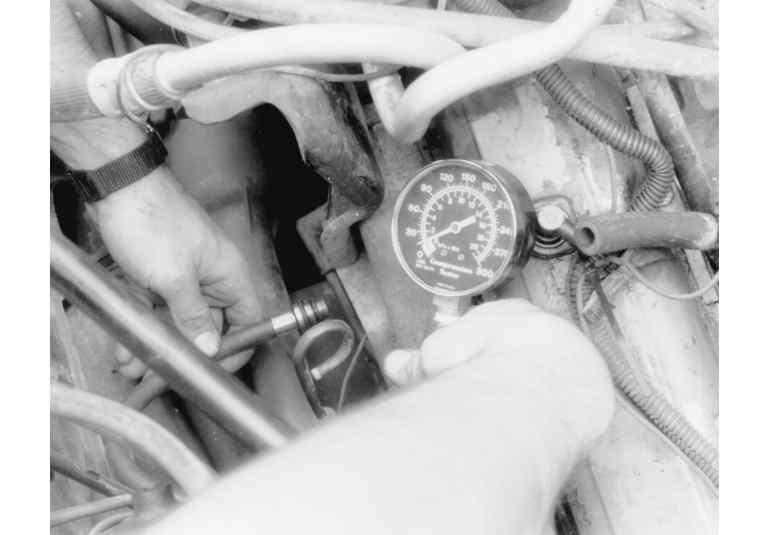
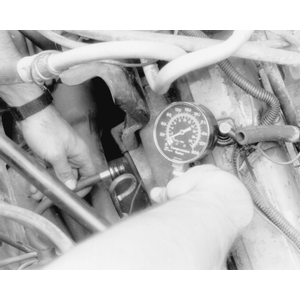
| Fig. 6: A screw–in type compression gauge is
more accurate and easier to use without an assistant
|
- If a cylinder is unusually low, pour a tablespoon of clean engine oil into
the cylinder through the spark plug hole and repeat the compression test.
If the compression comes up after adding the oil, it appears that the cylinder's
piston rings or bore are damaged or worn. If the compression remains low,
the valves may not be seating properly, (a valve job is needed), or the head
gasket may be blown near that cylinder. If the compression in any two adjacent
cylinders is low, and if the addition of oil doesn't help the compression,
there is leakage past the head gasket. Oil and coolant water in the combustion
chamber can result from this problem. There may be evidence of water droplets
on the engine dipstick when a head gasket has blown.